Quick answer: Stucco and log siding respond to the exact same product in opposite ways. Elastomeric coatings are genuinely well-suited to stucco — they stretch and bridge the hairline cracks Big Bear's freeze-thaw cycle causes, while remaining vapor-permeable so trapped moisture can still escape. On log siding, that same flexible membrane can blister and trap moisture instead, which is why we steer log homeowners away from it. The right product depends entirely on what's underneath it.
Why Does Big Bear's Freeze-Thaw Cycle Crack Stucco?
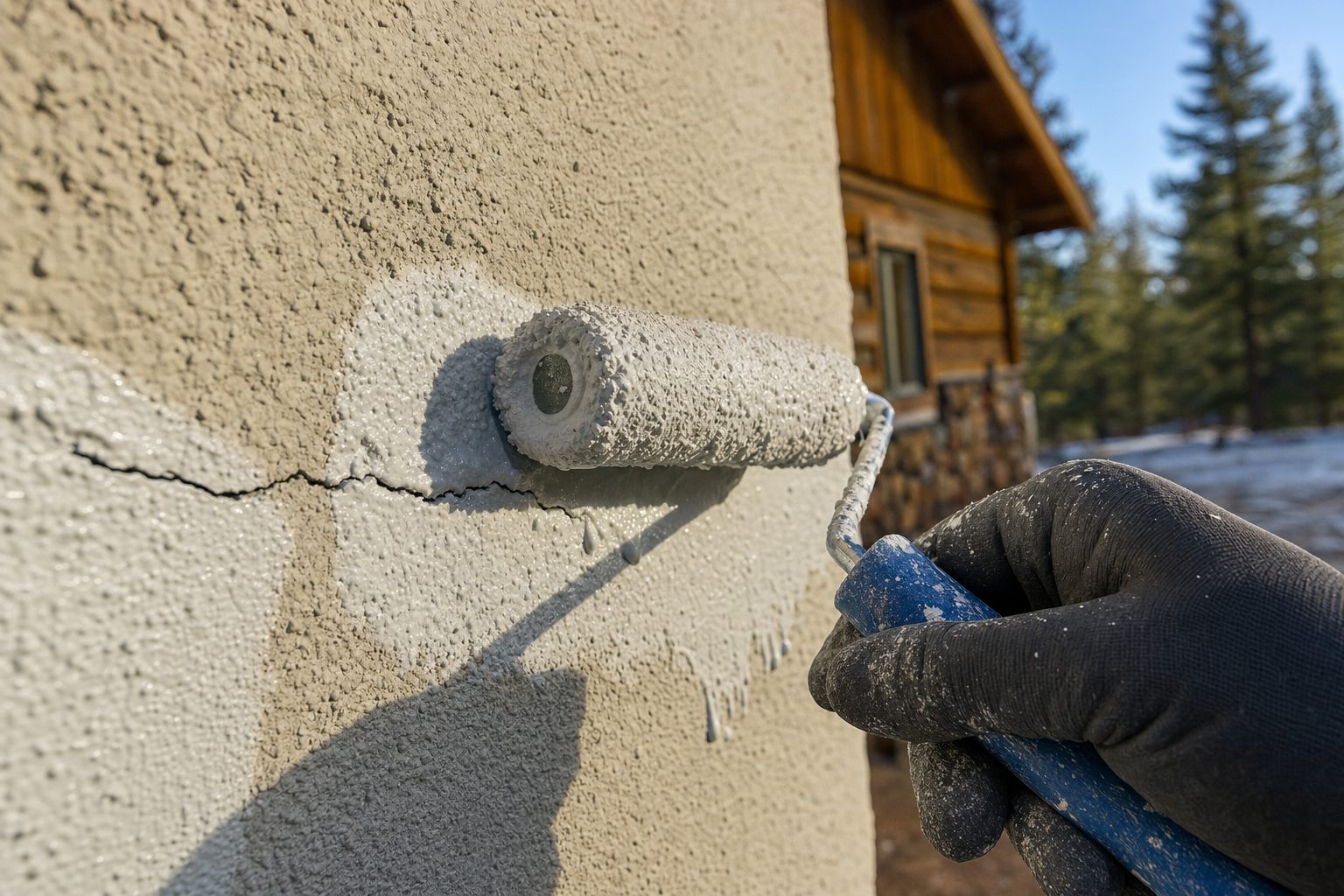
Stucco is porous, and it absorbs a certain amount of water no matter how well it's maintained. When that moisture is present and temperatures drop below freezing — which happens repeatedly through a Big Bear winter — the water trapped inside expands as it freezes, widening any existing hairline cracks and creating new ones over time. Left unaddressed, small spider cracks around window corners and control joints can grow into larger cracks that let in significantly more water, accelerating the whole cycle.
What Makes Elastomeric Coatings Different From Standard Acrylic Paint?
Standard 100% acrylic paint doesn't stretch enough to bridge these cracks — they simply reappear through the paint film as the stucco continues to move seasonally. Elastomeric coatings are formulated specifically to expand and contract with the substrate, bridging hairline cracks while remaining vapor-permeable, meaning the wall can still release moisture vapor from behind the coating even as it blocks liquid water from getting in. That combination — flexible, waterproof, and still breathable — is exactly what a freeze-thaw climate like Big Bear's calls for on a stucco exterior.
Wait — Didn't You Say Elastomeric Was a Problem for Log Siding?
Good catch if you read our
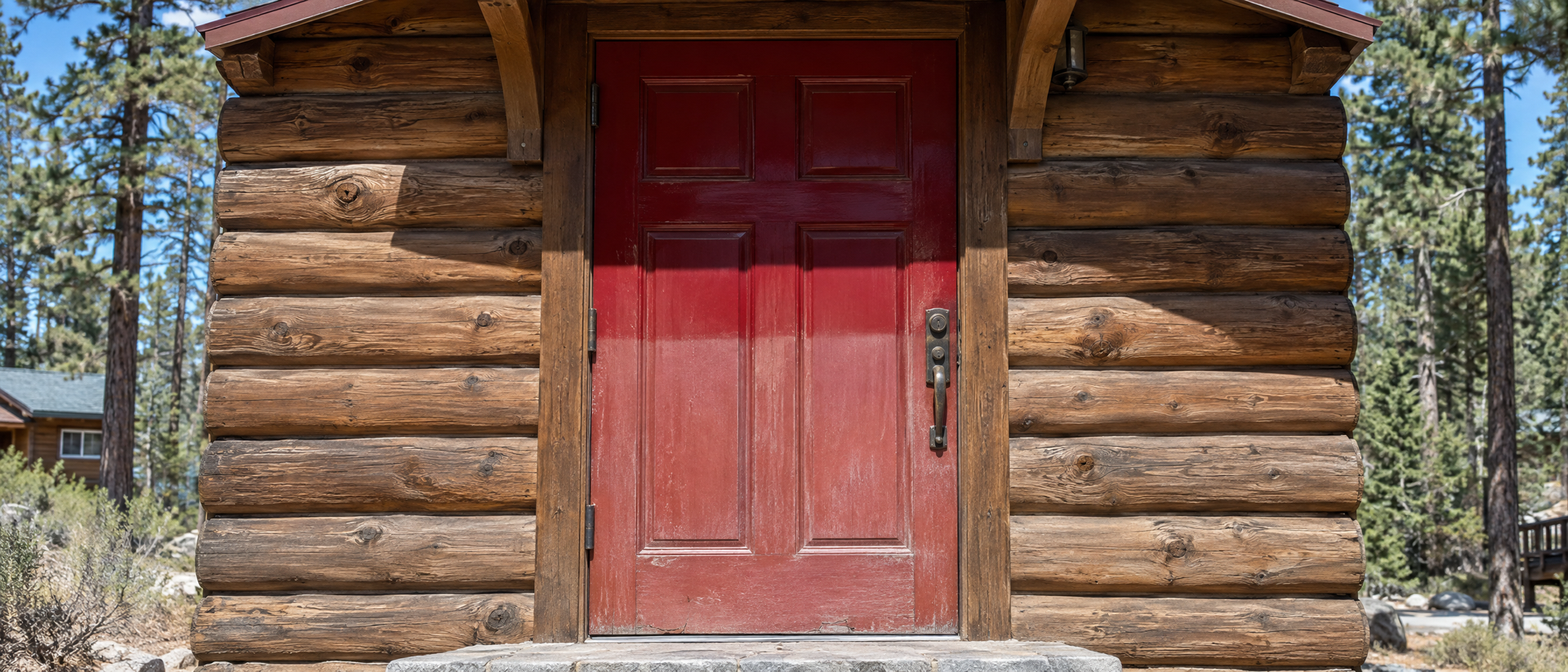
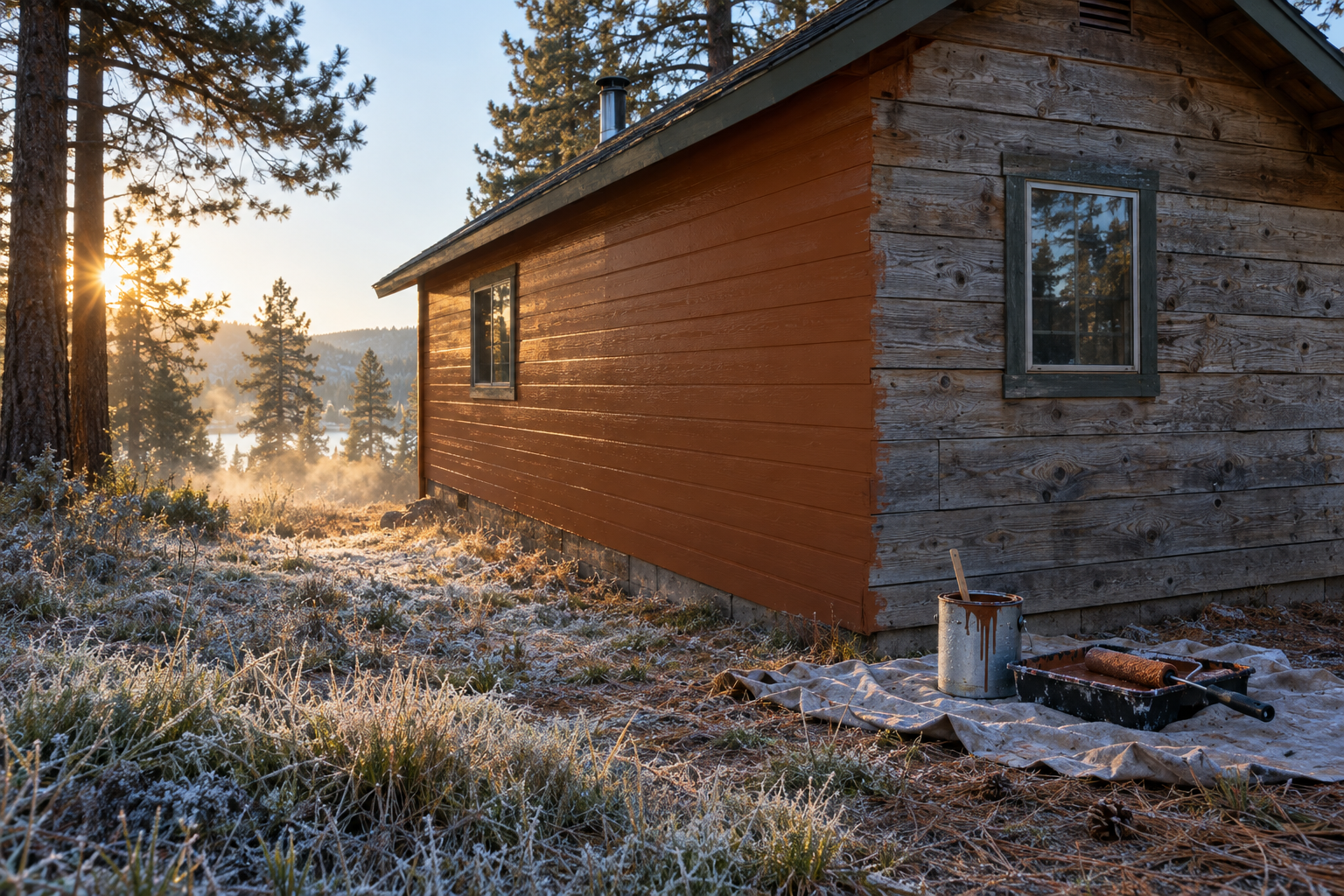
fire-resistant paint guide — and yes, this is a genuinely important distinction, not a contradiction. Wood siding and log construction move and release moisture differently than masonry-based stucco does, and a heavy elastomeric film on wood can blister under heat and trap moisture against the wood itself rather than letting it escape — which is exactly why some fire-zone inspectors have started rejecting elastomeric coatings on wood siding specifically. Stucco is a fundamentally different substrate with different moisture dynamics, and it's exactly the kind of surface elastomeric coatings were designed for in the first place. If your property has both stucco and log or wood elements — common in a lot of Big Bear construction — each surface may genuinely need a different product.
When Are Cracks Too Big for Paint to Fix?
It's worth being honest about the limits here: elastomeric coatings bridge hairline cracks, not structural ones. If you're seeing staircase cracking near corners, gaps wider than a credit card, or cracks that keep reopening no matter what's applied over them, that's a stucco repair issue that needs to be addressed before any coating goes on — not something paint alone can fix. Applying a coating over an unrepaired structural crack just delays the problem and wastes the coating.
How Long Does an Elastomeric Coating Actually Last in Big Bear?
Properly applied elastomeric coatings commonly last in the range of 7 to 12 years in a freeze-thaw climate, which is a meaningfully longer service life than standard acrylic paint typically achieves on stucco under the same conditions. That said, the coating still needs to go over sound, properly repaired stucco — applying it over stucco with existing moisture trapped behind the surface can make problems worse rather than better, which is why a proper inspection before coating matters as much as the product choice itself.
What Does Stucco Painting Cost in Big Bear?
Cost depends on the extent of crack repair needed before coating and whether you're using a standard acrylic system or a premium elastomeric system. Elastomeric coatings cost more per gallon and require careful application for proper mil thickness, but the extended service life often makes the total cost of ownership comparable to or better than repeated shorter-cycle repaints with standard paint.
FAQ
Should I use elastomeric coating on my stucco Big Bear home?
Generally yes, if your stucco has hairline cracking from freeze-thaw cycling, elastomeric coatings are well-suited to bridge those cracks while remaining vapor-permeable, unlike standard acrylic paint.
Why is elastomeric coating bad for log siding but good for stucco?
Wood and log construction move and release moisture differently than masonry-based stucco. On wood, a heavy elastomeric film can blister and trap moisture, while on stucco it bridges cracks while staying breathable.
Can elastomeric coating fix large stucco cracks?
No. It bridges hairline cracks, not structural cracks. Cracks wider than a credit card or staircase cracking near corners need repair before any coating is applied.
How long does elastomeric coating last on stucco in Big Bear?
Commonly 7 to 12 years when properly applied over sound, repaired stucco, meaningfully longer than standard acrylic paint typically lasts under the same freeze-thaw conditions.
What if my home has both stucco and log siding?
Each surface may need a different coating system. We assess each material separately rather than applying one product across the whole exterior.
Get your Big Bear stucco assessed and coated with the right product for this climate.
Call Big Bear Painters at (909) 415-5374 for a free estimate.