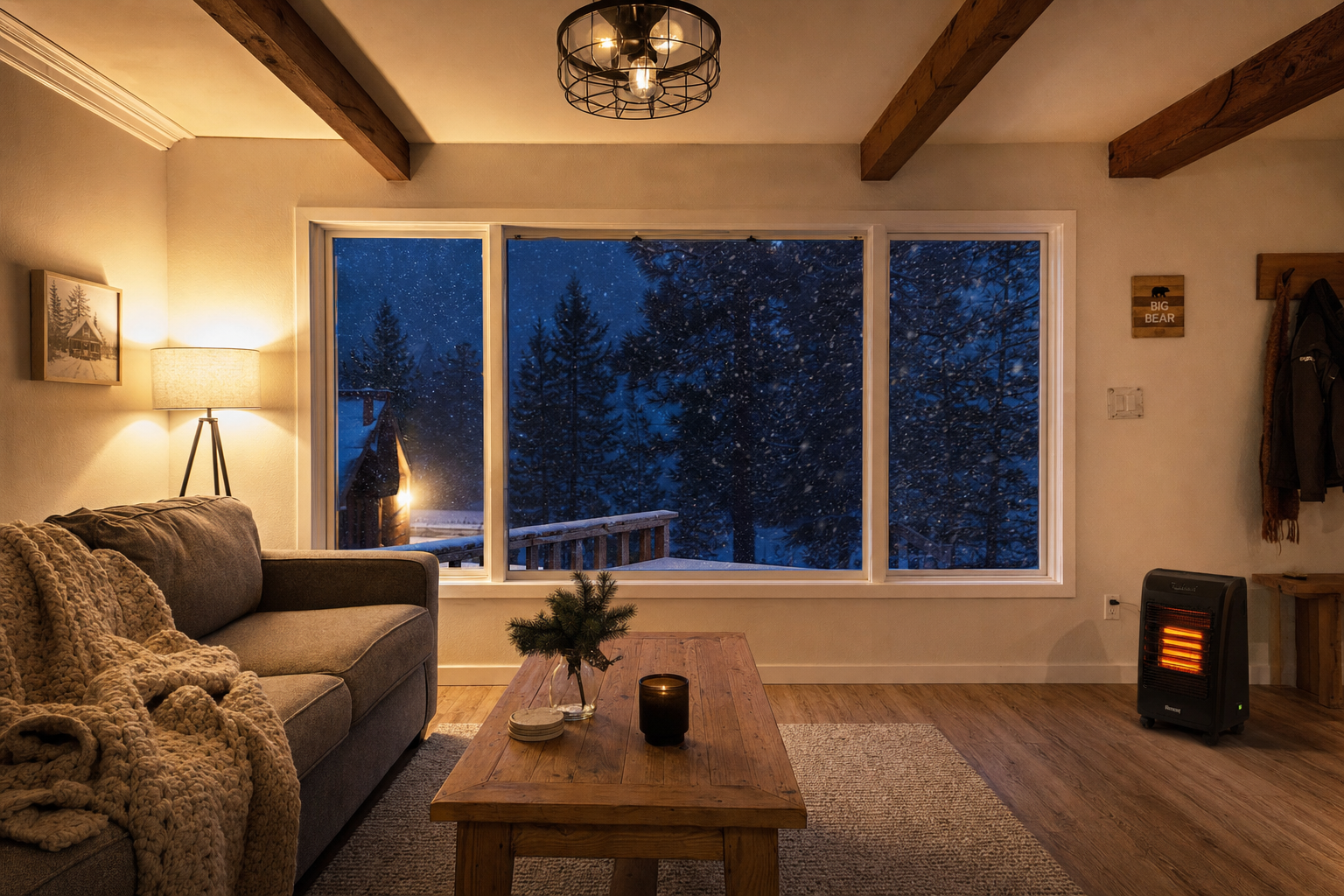
Quick answer: Exterior painting in Big Bear is genuinely limited to a short warm-weather window, but interior painting isn't — your cabin's heating system controls the environment, not the weather outside. Winter is actually when many painting contractors have the most scheduling availability and often offer meaningful discounts compared to peak summer season, making it a smart time to tackle interior projects you've been putting off.
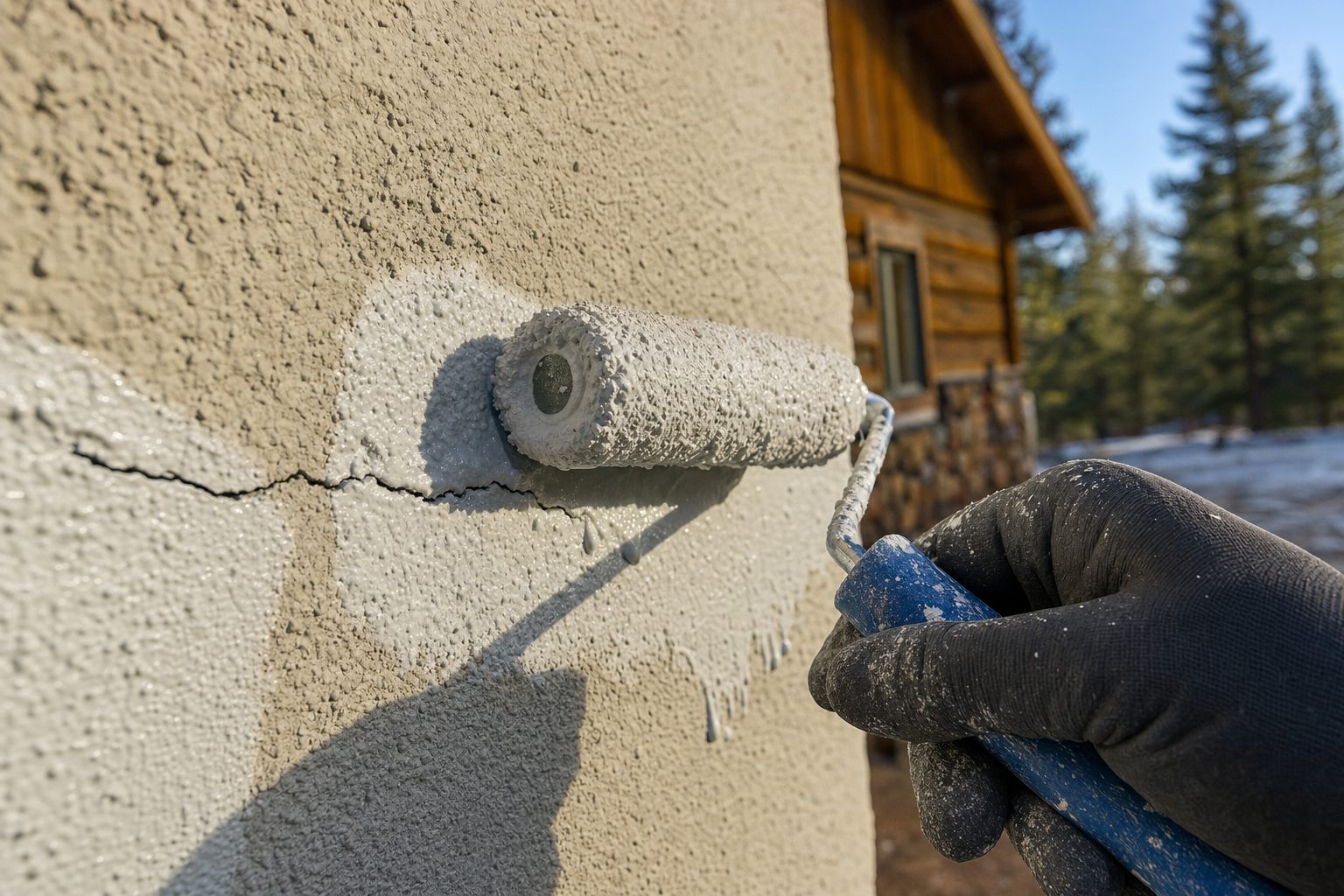
Why Does Exterior Painting Wait for Summer But Interior Painting Doesn't?
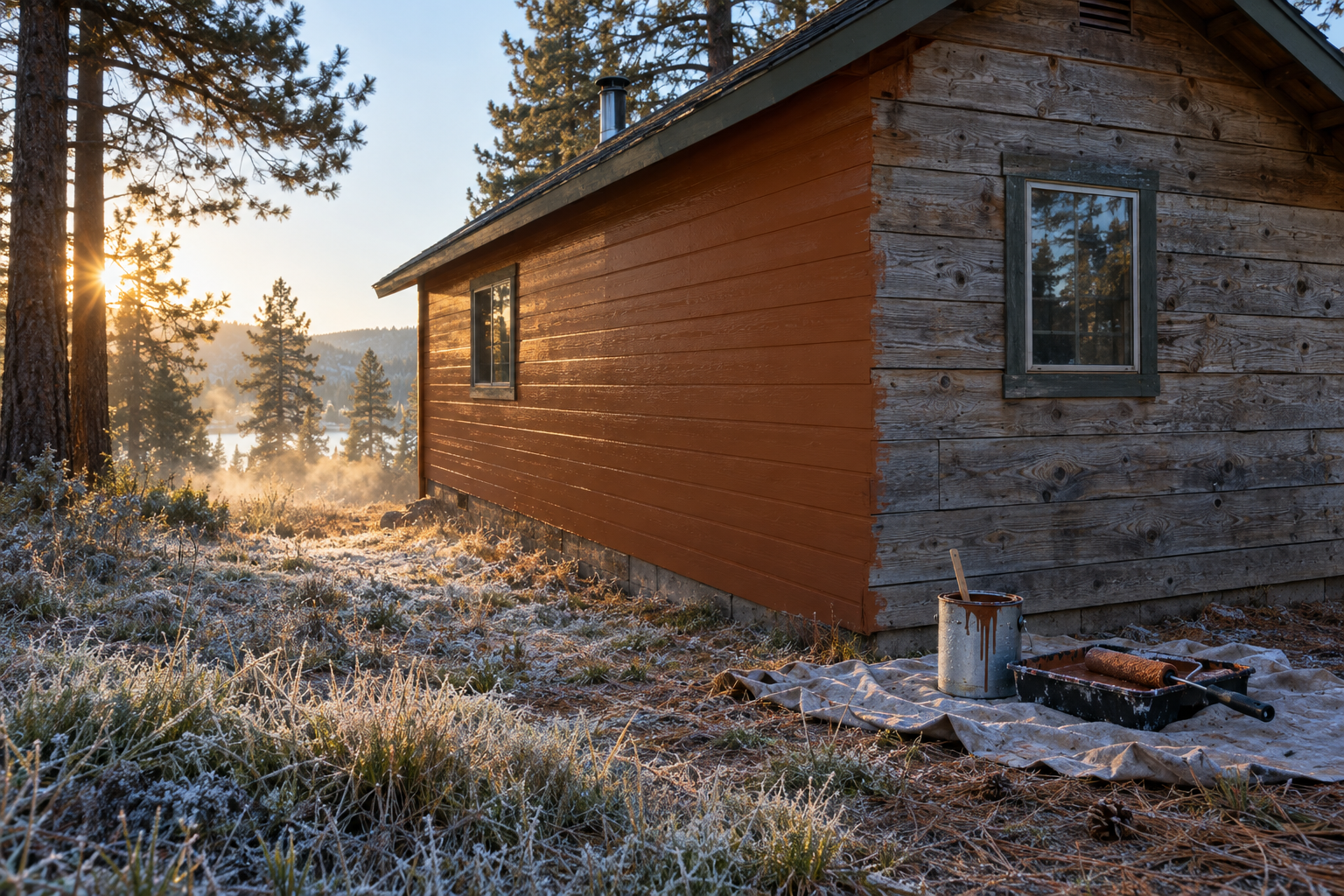
Exterior paint depends entirely on outdoor temperature and weather, which is why we generally recommend
scheduling exterior work between late spring and early fall at this elevation. Interior painting works differently — your cabin's own heating system maintains the temperature the paint actually needs, regardless of what's happening outside. That means the calendar constraint that governs exterior work simply doesn't apply indoors.
What's the Real Cost Advantage of Winter Interior Painting?
This is genuinely worth factoring into your planning. Painting demand drops significantly in the off-season, and many contractors offer real discounts, commonly in the range of 20 to 40 percent off peak summer pricing, to keep crews working through the slower months. Scheduling also opens up considerably — instead of competing for a contractor's time during the busy exterior season, winter often means faster turnaround and more flexibility on timing.
What Temperature Does Your Cabin Actually Need to Be?
Most latex paints need the room and wall surface temperature to be at least 50°F to apply properly, with an ideal range closer to 60-70°F for the best adhesion and finish. This is easily achievable in an occupied, heated Big Bear cabin, but it's worth confirming before starting work on a part-time or vacation property that's been sitting cold — the space needs time to actually reach and stabilize at that temperature, not just have the heat switched on the morning work begins.
What's the Ventilation Problem — and Why Does Low-VOC Paint Solve It?
This is the one genuine winter-specific challenge worth planning around. With windows closed against the cold, paint fumes don't dissipate the way they would with open windows in summer, which is exactly why low-VOC or zero-VOC paint matters more for a winter project than it might in warmer weather. Combined with fans to keep air circulating and, where possible, cracking a window briefly even in cold weather, this fully addresses the ventilation concern without requiring you to leave the cabin for days waiting out the smell.
Does Cold Affect How Long Paint Takes to Dry?
Somewhat, though a properly heated interior minimizes the impact. Latex paint typically needs around 4 hours to dry between coats at 70°F, but that stretches to 6 hours or more at temperatures closer to 50°F. As long as your cabin stays consistently warm throughout the project, drying times stay reasonably close to what you'd expect any time of year — the risk comes from a space that's warm during the day but drops significantly overnight.
What's the One Real Risk: Don't Paint Right Before a Cold Snap
This is worth planning around specifically for a mountain property: avoid scheduling interior painting immediately before an expected hard freeze or major temperature drop, since a significant swing in conditions right after painting can affect how the finish cures, even indoors. Checking the forecast and giving freshly painted surfaces a few stable days before a serious cold snap hits is a simple step that avoids an otherwise avoidable problem.
FAQ
Is winter actually a good time to paint the interior of a Big Bear cabin?
Yes. Interior painting depends on your cabin's heating system, not outdoor weather, and winter often means more contractor availability and lower pricing than peak summer season.
What temperature does my cabin need to be for interior painting?
Most latex paints need at least 50°F, with 60-70°F being ideal for proper adhesion and finish. A consistently heated space achieves this easily.
How do I deal with paint fumes if I can't open the windows in winter?
Low-VOC or zero-VOC paint significantly reduces fumes, combined with fans for air circulation and briefly cracking a window when possible.
Does cold weather make interior paint take longer to dry?
Somewhat. Drying time can stretch from around 4 hours at 70°F to 6 hours or more at 50°F, though a consistently warm interior keeps this close to normal.
Should I avoid painting right before a cold snap?
Yes. A significant temperature drop shortly after painting, even indoors, can affect how the finish cures. Give freshly painted surfaces a few stable days if a hard freeze is expected.
Book your interior painting project for the off-season and get better scheduling and pricing.
Call Big Bear Painters at (909) 415-5374 for a free estimate.