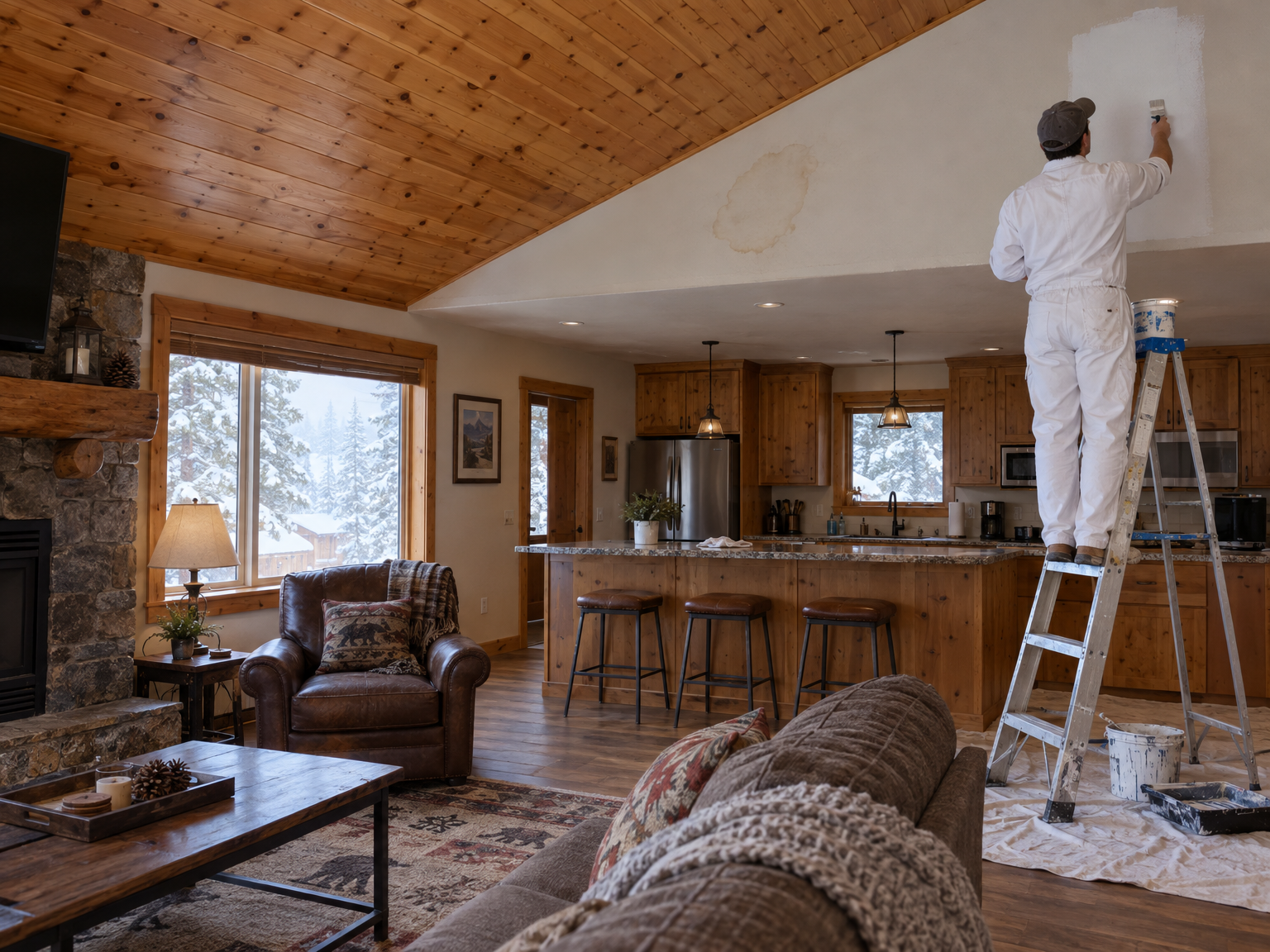
You came up to the cabin after the storm and found a brown ring spreading across the ceiling above the kitchen. It's the kind of stain you can't un-see. The first thought is usually the easy one: grab a can of white ceiling paint and cover it before the next guests arrive.
Don't, at least not yet. In my experience, that's the move that sends people back to the same ceiling three weeks later, looking at the same brown ring coming through the fresh paint.
Why paint alone doesn't fix a water stain
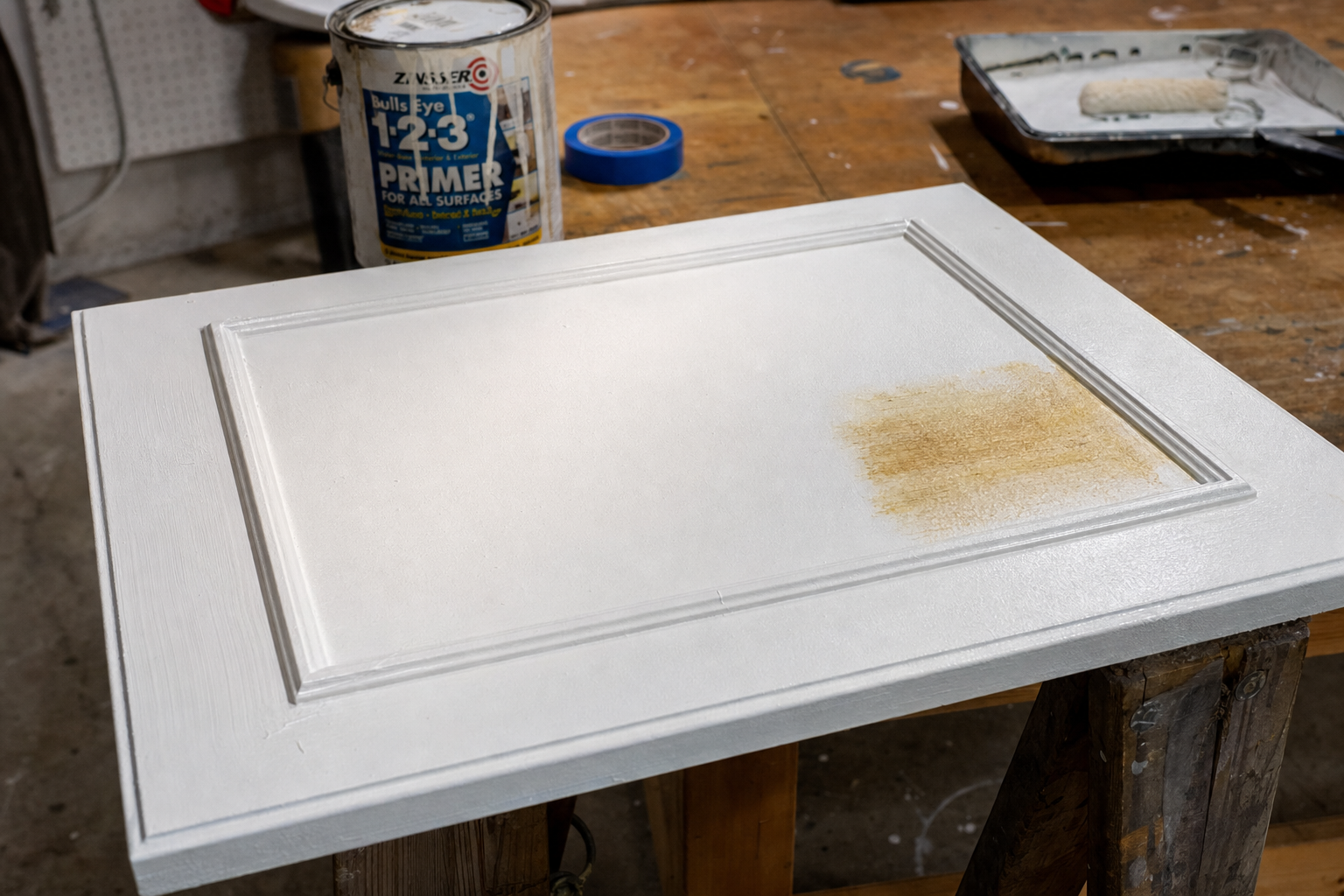
Water moving through a ceiling carries tannins and minerals with it, and when the area dries, they stay behind as a stain. Ordinary ceiling paint is water-based, so a coat or two of it can re-wet that residue and let it bleed straight through. The fix is a
stain-blocking primer, a coating that seals the stain in so the topcoat has nothing to pull up. And before any primer, the source of the water has to be dealt with.
Painting over a leak that's still active just traps moisture behind the paint, and the stain comes back.
What the storm did
The remnants of Tropical Storm Rachel moved through Southern California on October 10 and 11. The National Weather Service issued a Flood Watch and a Flood Advisory covering Big Bear Lake on the 11th, and its rainfall forecast showed totals as high as
1.5 to 2 inches near Big Bear Lake. After a dry summer, the first heavy rain is often when a worn spot in flashing, a cracked sealant line, or a clogged gutter shows itself, and the stain is how you find out.
Winter will test the same roof again. Snow load, ice dams, and spring melt all put water where it doesn't belong, so a leak that's only been patched is likely to show up again.
How to do it right, in order
- Find and fix the source first. That's a roofer's or plumber's job. We paint, we don't repair roofs, and no primer will outlast a leak.
- Let it dry completely. Don't trust your fingers. A ceiling can feel dry on the surface while the material behind it is still damp. A moisture meter gives a real reading, and it's worth asking whoever fixes the leak to check.
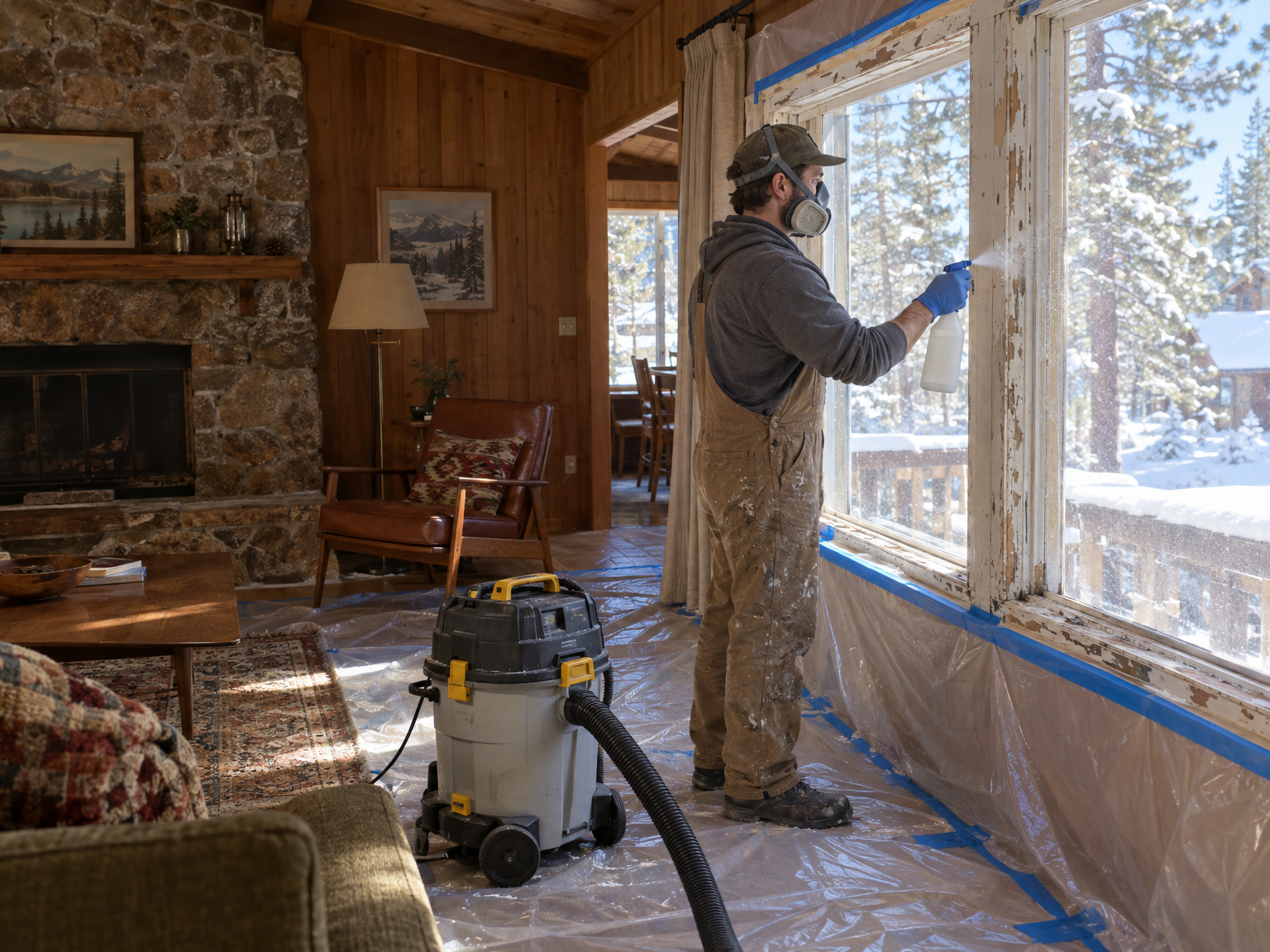
- Look for mold. If the area stayed wet for more than a day or two, check before you paint. The CDC and EPA treat 24 to 48 hours as the window for drying wet materials, after which porous materials may need to be removed. The CDC's
guide to mold cleanup explains when to call a professional, and widespread mold is one of those times. Don't paint over it.
- Remove anything loose. Scrape flaking paint, and if the drywall is soft, swollen, or crumbling, it has to be repaired or replaced, not painted.
- Prime with a stain blocker. For dark or stubborn stains, a shellac-based or oil-based stain-blocking primer is what most professionals use. Water-based stain blockers have improved a lot and can handle lighter stains. Extend the primer a few inches beyond the visible edge, because the stain often reaches farther than it looks.
- Topcoat the whole ceiling. Spot-painting a ceiling usually leaves a visible patch where the new paint meets the old. Painting the ceiling from corner to corner, usually in two coats, hides the repair. A flat ceiling paint is also forgiving of small imperfections.
If your ceiling is pine
A lot of Big Bear cabins have knotty pine or cedar ceilings, and wood plays by slightly different rules. Water stains on bare wood and tannin bleed from the wood itself can both show through paint, which is the same reason knotty pine needs a different primer on cabinets. Our guides to
painting knotty pine cabinets and
painting over wood paneling cover the primer choices, and the same logic applies overhead.
When the stain keeps coming back
If a stain returns every spring, the problem isn't the paint. Repeated stains often point to a leak that was only patched, roof ventilation or insulation that lets heat melt snow and refreeze at the eaves, or condensation in a poorly ventilated space. Painting will make the ceiling look better, but only a repair fixes the cause.
When to wait
- The leak isn't fixed yet.
- The ceiling sags, feels soft, or has been wet for several days.
- There's visible mold, or you can smell it.
- You haven't confirmed it's dry.
Interior painting doesn't have to wait for summer, either. Our guide to
interior painting in Big Bear during winter explains why this is a good season to book it.
What a good estimate for a stain repair covers
Questions about painting over water stains
How long should I wait after the leak is fixed before I prime?
There's no single number. The area needs to be completely dry, and a moisture meter is the reliable way to know. A cabin that's cold and closed up can take longer than you'd think.
Can I use regular primer on a faint stain?
For a faint, dry stain that has never bled before, a quality water-based stain blocker may do the job. For anything dark, large, or that has returned, use a shellac-based or oil-based blocker.
Can I just paint the stain and leave the rest?
You can, but a patch usually shows. Painting the whole ceiling plane gives a cleaner result.
Got a stain on the ceiling, or a cabin that took on water in the storm?
Call Big Bear Painters at (909) 415-5374 for a free painting estimate.
We'll look at the stain, tell you what's needed, and give you a straight answer on price.