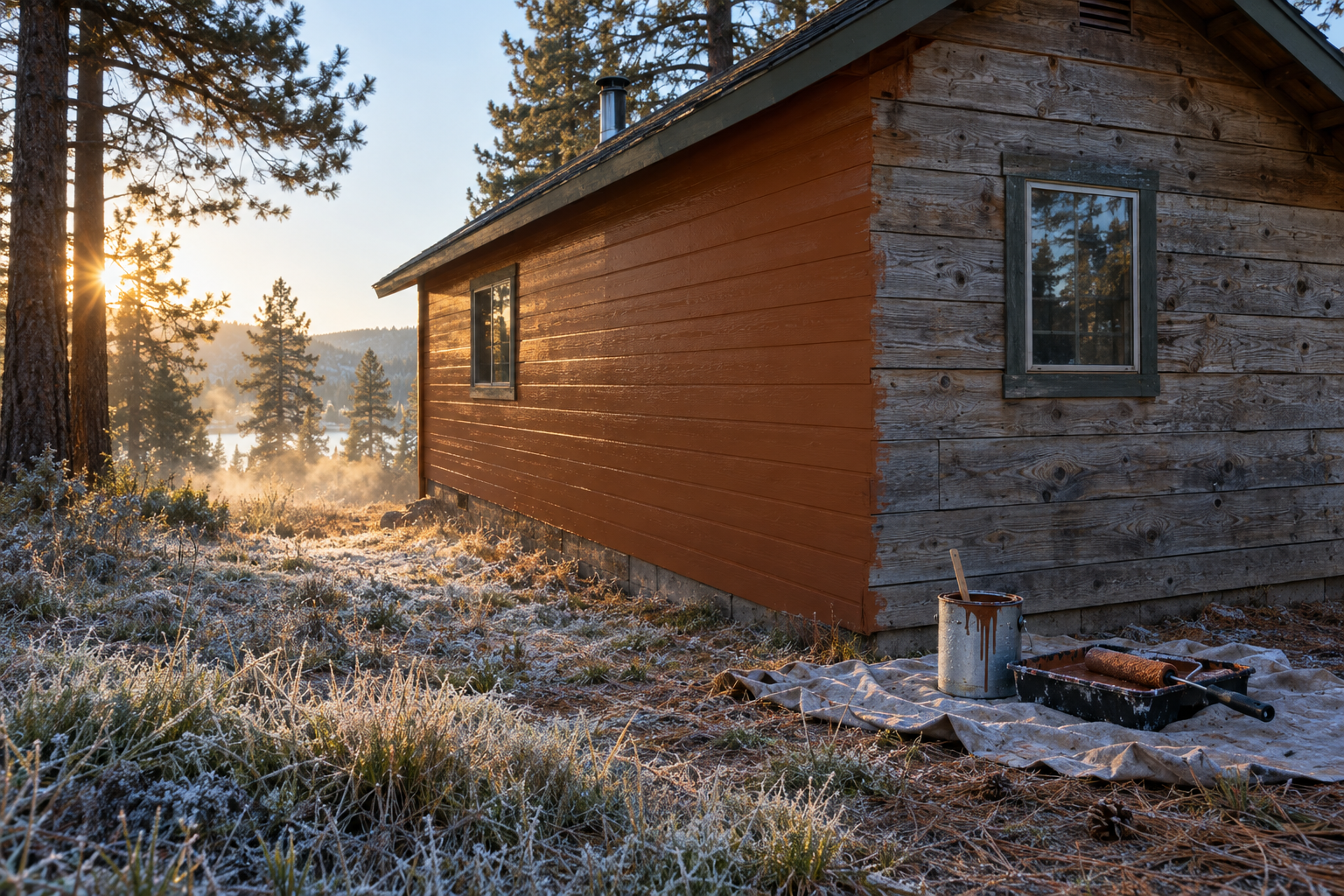
You're standing in the hallway of your family's cabin with a scraper, looking at a window frame where the paint has been peeling for years. It would take ten minutes to clean it up and repaint. The fine dust that comes off, though, might be more than old paint.
If your cabin was built before 1978, there's a real chance that somewhere under the layers of newer paint, there's lead. This is the part of painting an older Big Bear cabin that most people have never heard about, and it's the one that matters most if there are kids, grandkids, or guests in the house.
Why older cabins matter
The federal government banned lead in residential paint in 1978. According to the EPA, about half of homes built before 1978 have lead-based paint, and nine out of ten homes built before 1940 do. Big Bear has plenty of older cabins, and old lead paint doesn't disappear when you paint over it. It often sits underneath newer coats, which is why scraping, sanding, and demolition are the risks, not a fresh coat over intact paint.
Not sure when yours was built? County assessor records and your title paperwork usually list the year. If you can't find it, the EPA's advice is to assume an older home may contain lead.
What the EPA rule requires of painters
The EPA's Renovation, Repair and Painting Rule applies to anyone paid to do work that disturbs paint in homes built before 1978. In plain terms:
- The firm must be EPA-certified. All firms paid to renovate, repair, or paint in pre-1978 housing must be certified, and the work must be done by or under a certified renovator, with other workers trained in lead-safe practices.
- You must receive the EPA's Renovate Right pamphlet before work begins, and sign to confirm you got it.
- Lead-safe work practices are required. That includes containing the work area, controlling dust, and cleaning up properly.
- Certain practices are prohibited, including open-flame burning or torching of paint, dry sanding or grinding without a HEPA-equipped tool, and using a heat gun above 1,100°F.
The EPA's
program page lists the requirements, and the
Renovate Right pamphlet explains the risks in plain language.
How small the threshold is
The rule exempts "minor repair and maintenance," and the exemption is smaller than most people expect:
- Inside: six square feet or less of painted surface per room. That's about the size of a poster.
- Outside: 20 square feet or less per project, about the size of a door.
Window replacement and demolition aren't covered by the exemption, and neither are the prohibited practices. Prepping a whole room or a full exterior blows past those numbers almost immediately. The EPA's guidance also covers painting preparation activities, not just the painting itself.
Doing it yourself
The rule doesn't apply to homeowners working on their own homes, according to EPA summaries. That doesn't make the dust safe. If you do the work yourself, the EPA recommends following the same lead-safe practices described in the Renovate Right pamphlet, especially with children or pregnant women in the house.
Questions to ask any painter
If your cabin predates 1978, ask these before anyone picks up a scraper:
- Are you EPA Lead-Safe Certified? Ask for the firm's certification, and check it with the EPA's
Find a Lead-Safe Certified Firm tool.
- Will I get the Renovate Right pamphlet before work starts?
- How will you contain the work area and clean up?
- Will you test the paint or assume it contains lead? A certified renovator can use an EPA-recognized test kit. Otherwise, the work should be done as if lead is present, which is often the simpler choice.
- How will you remove loose paint? Dry sanding without a HEPA tool and open-flame burning are off the table.
- Is lead-safe prep itemized in the estimate? It adds time and cost, and you should see it listed.
What lead-safe prep looks like
A properly run job in a pre-1978 cabin typically looks different from an ordinary paint job:
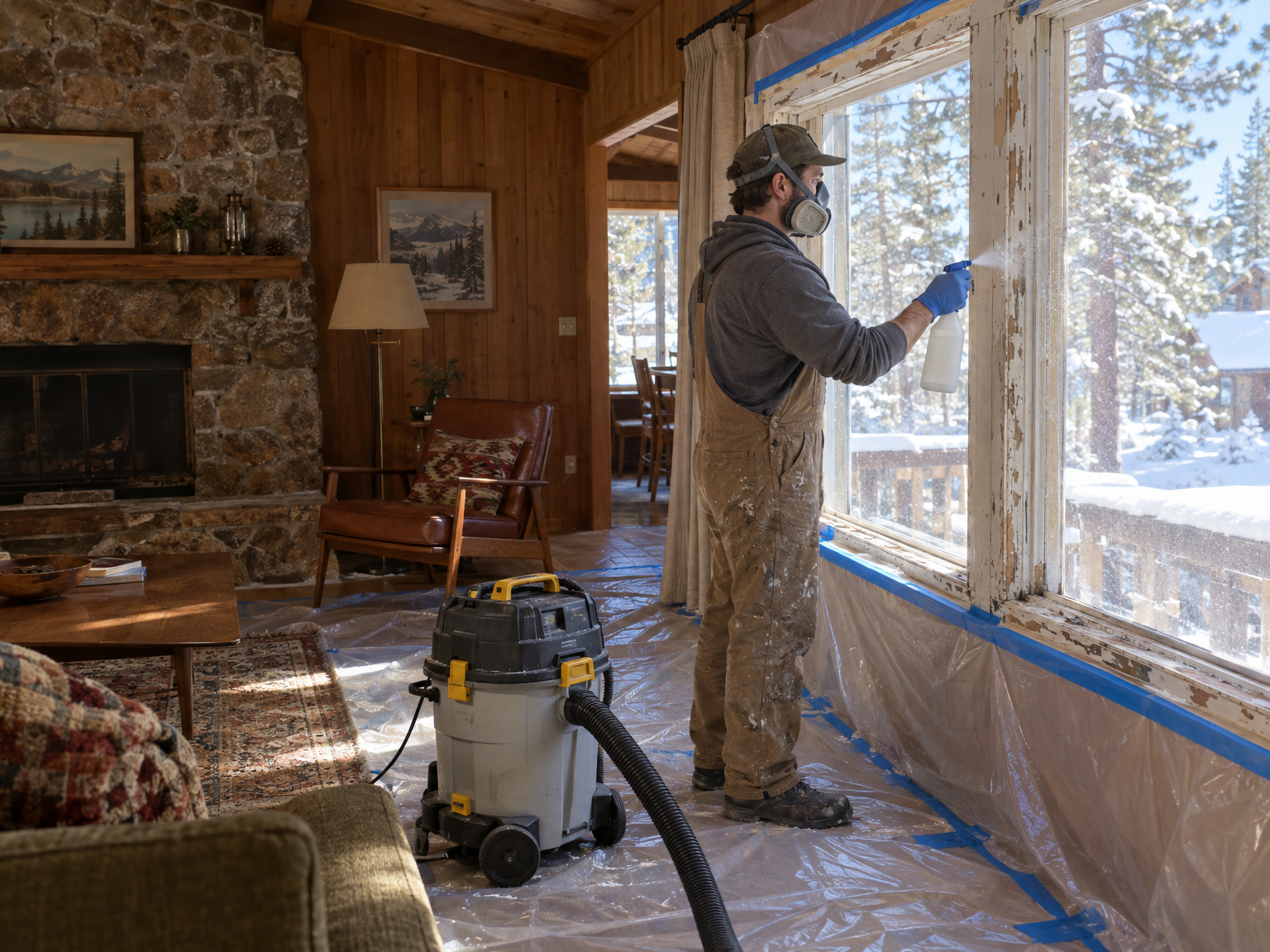
- Plastic sheeting to contain the work area, and signs to keep people out.
- Doors and windows closed near the work, which the EPA's guide calls for within 20 feet of the renovation.
- Wet scraping and misting to keep dust down, instead of dry sanding.
- HEPA vacuuming and wet wiping for cleanup, instead of sweeping.
- Careful disposal of debris.
None of that is exotic, but it takes planning and time, which is why a legitimate estimate for an old cabin may be higher than one that skips it.
Where lead hides in a cabin
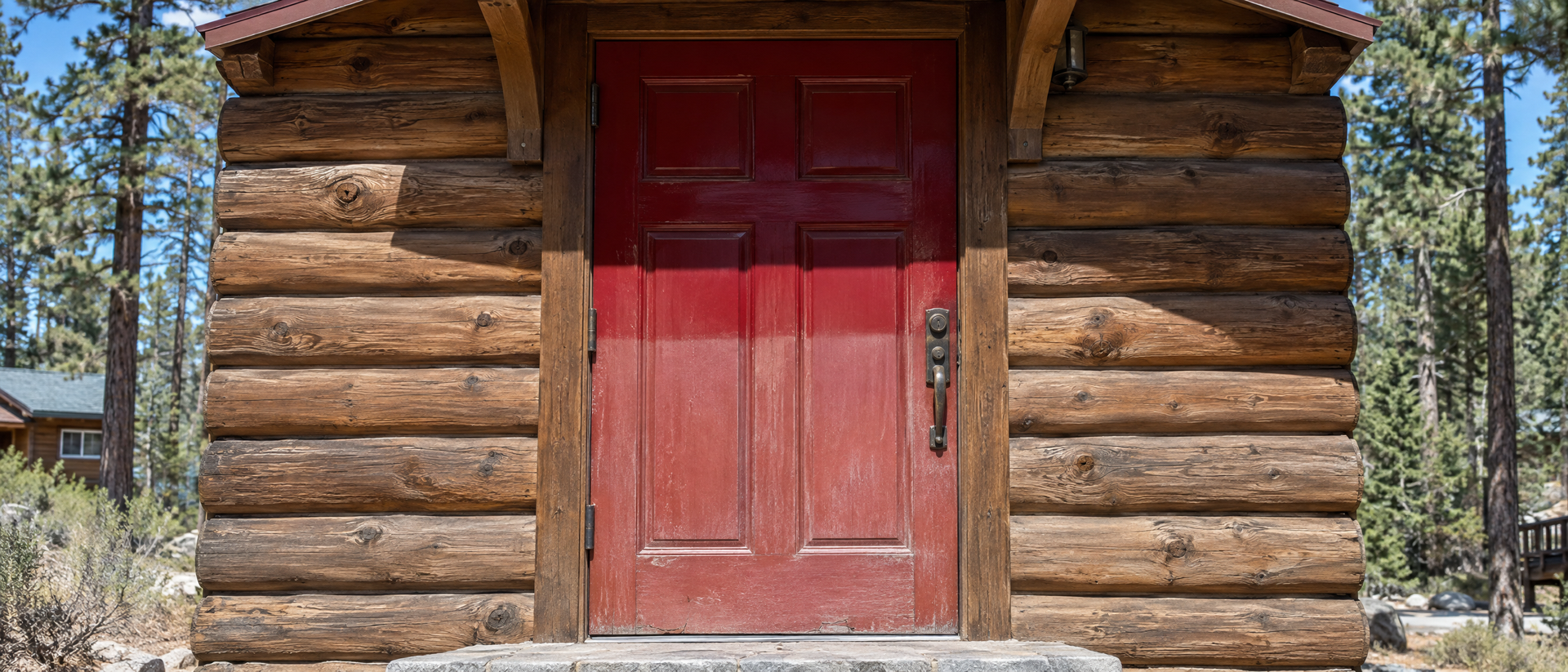
- Window and door trim and sashes. Surfaces that rub or slide, like windows and doors, wear paint into dust over decades.
- Exterior siding and trim in older cabins, especially when paint is peeling or chalking.
- Interior woodwork and cabinetry painted before 1978.
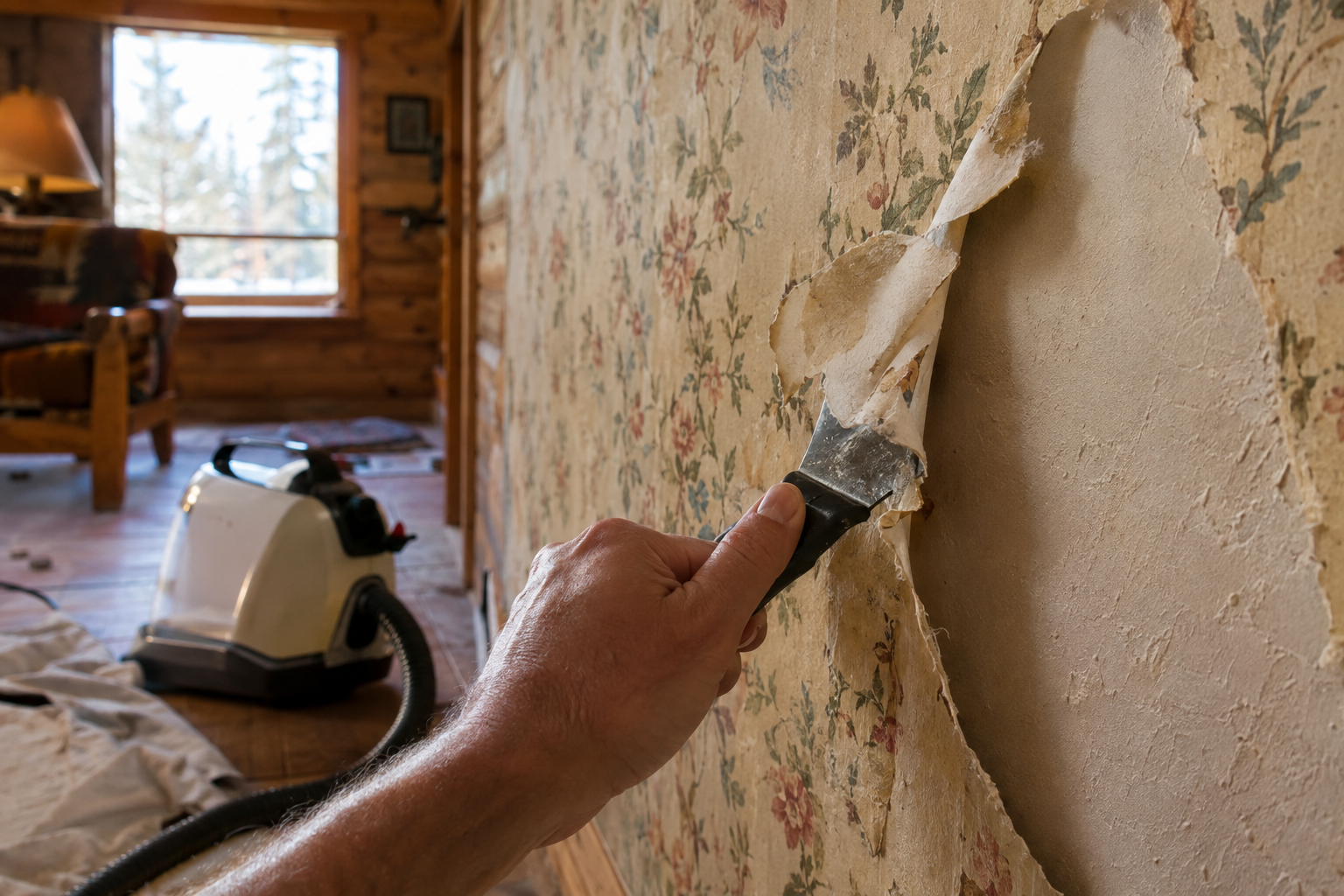
- Older wallpaper and layers underneath. If you're removing old paper from a painted wall, see our guide to
removing old wallpaper in a Big Bear cabin.
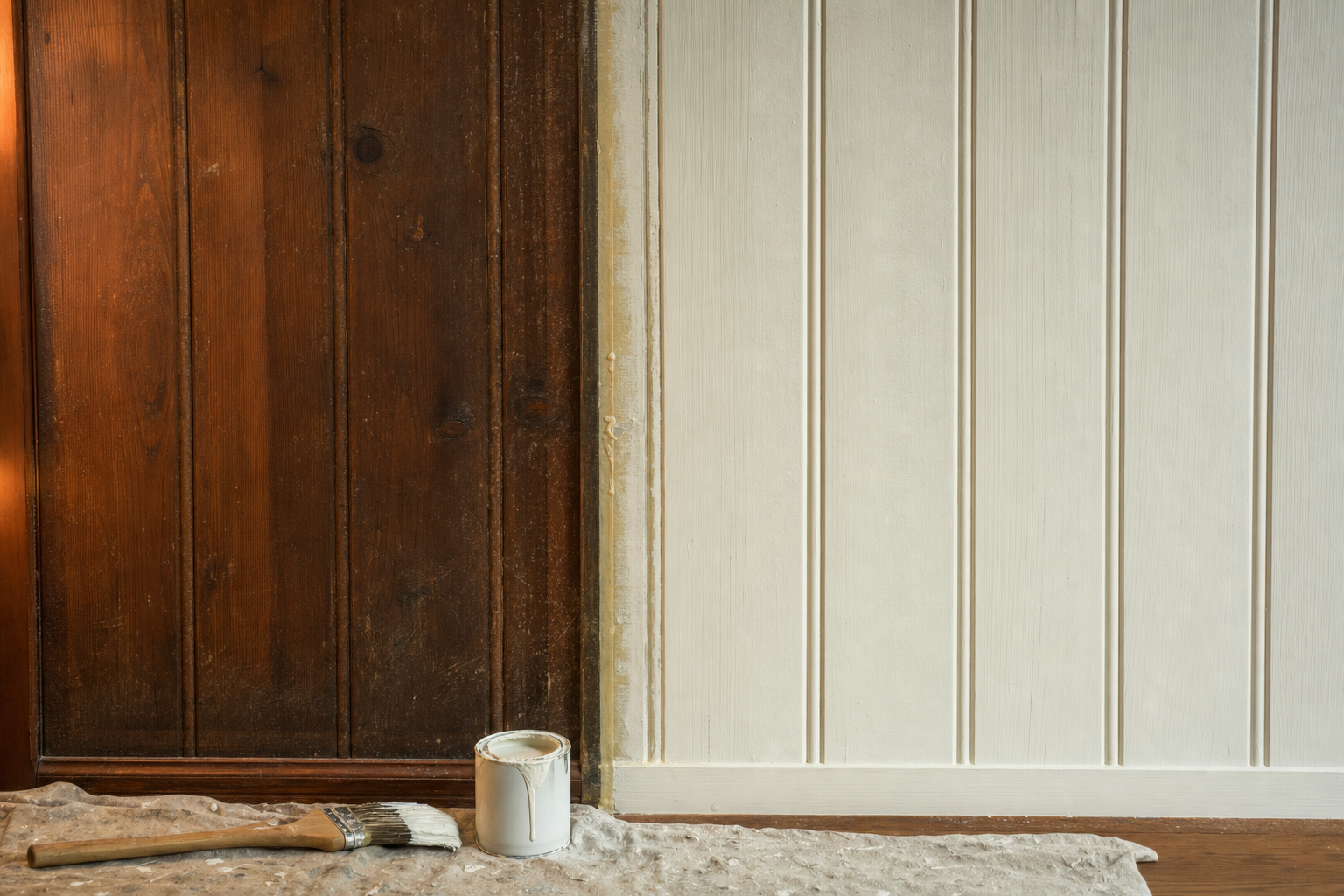
If you're painting over wood paneling or cabinets, our guides to
painting wood paneling and
painting knotty pine cabinets explain the primer side of the job.
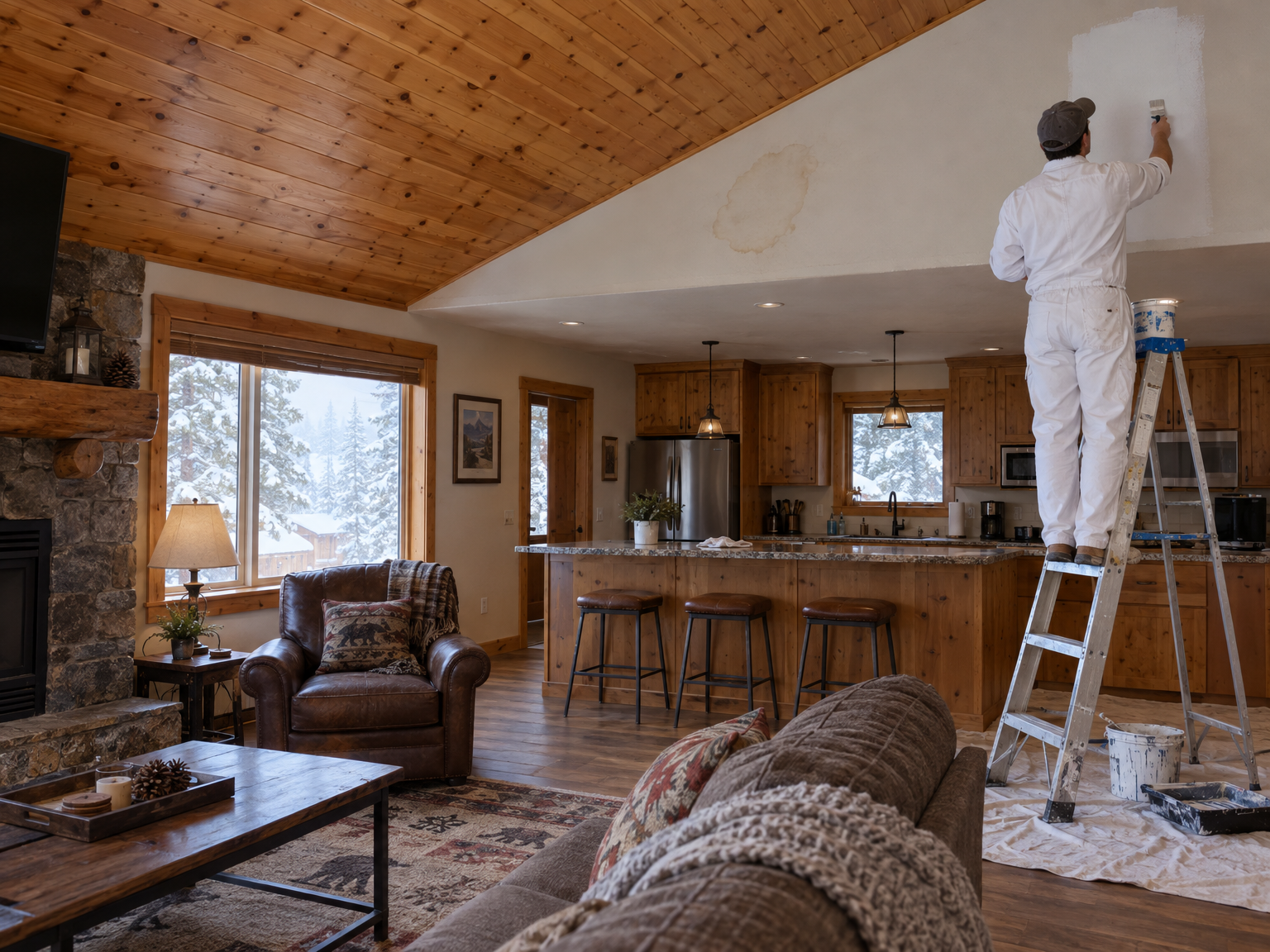
If there's a water stain or peeling
Peeling paint often shows up where moisture got in. If a leak caused it, fix the leak first. Our guide to
painting over water stains covers the order of operations, and if your cabin is pre-1978, tell whoever does the work before they start scraping.
Questions about lead paint and painting
Does the rule apply if I paint my own cabin?
No. EPA summaries say it doesn't apply to homeowners doing their own work in their own pre-1978 home, though the EPA still recommends lead-safe practices, especially around children.
Does painting over lead paint count as disturbing it?
Rolling fresh paint over intact paint is a different matter than scraping or sanding it. But the rule covers painting preparation, and prep is where lead dust comes from, so ask how the surface will be prepared.
How do I find out when my cabin was built?
The year built is usually listed in county assessor records and your title documents. If you can't confirm, treat an older cabin as if it may contain lead.
Planning to repaint an older Big Bear cabin?
Call Big Bear Painters at (909) 415-5374 for a free painting estimate.
If your cabin was built before 1978, tell us when you call so we can factor it into the estimate.