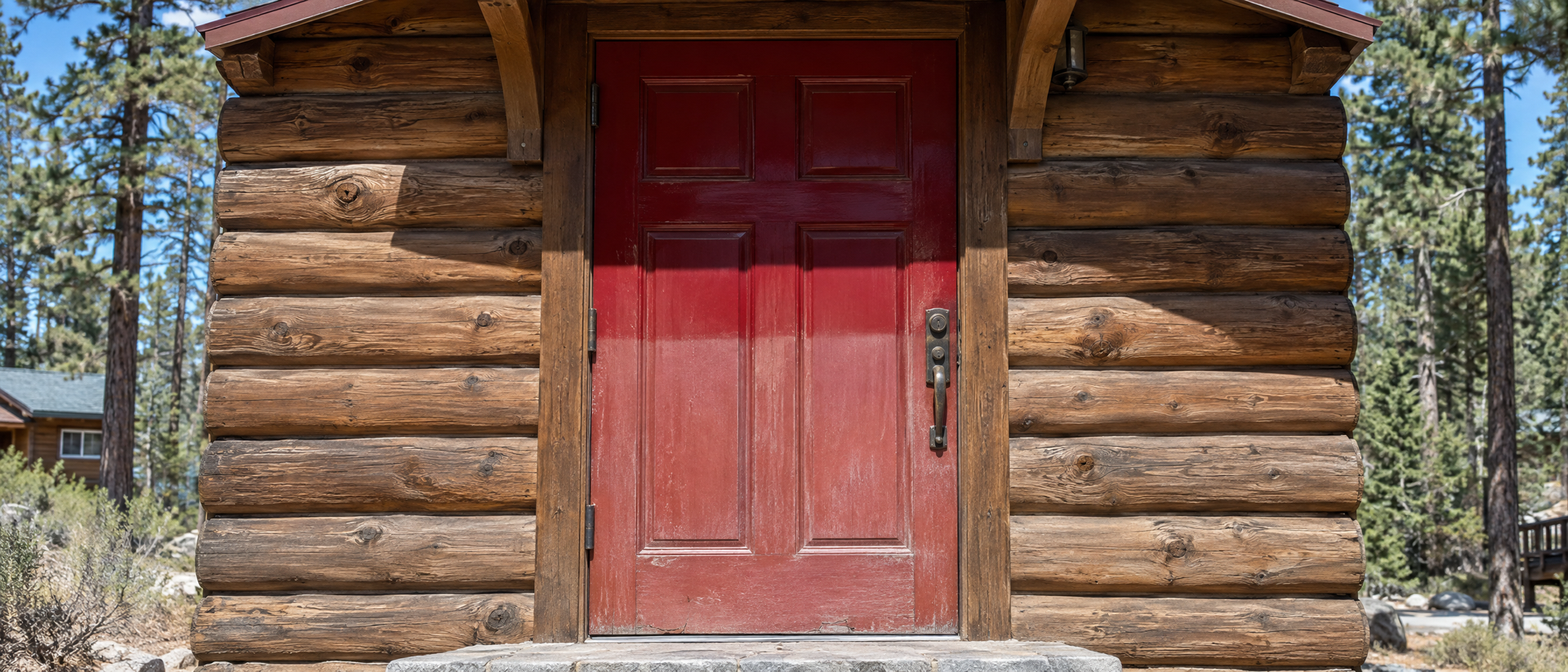
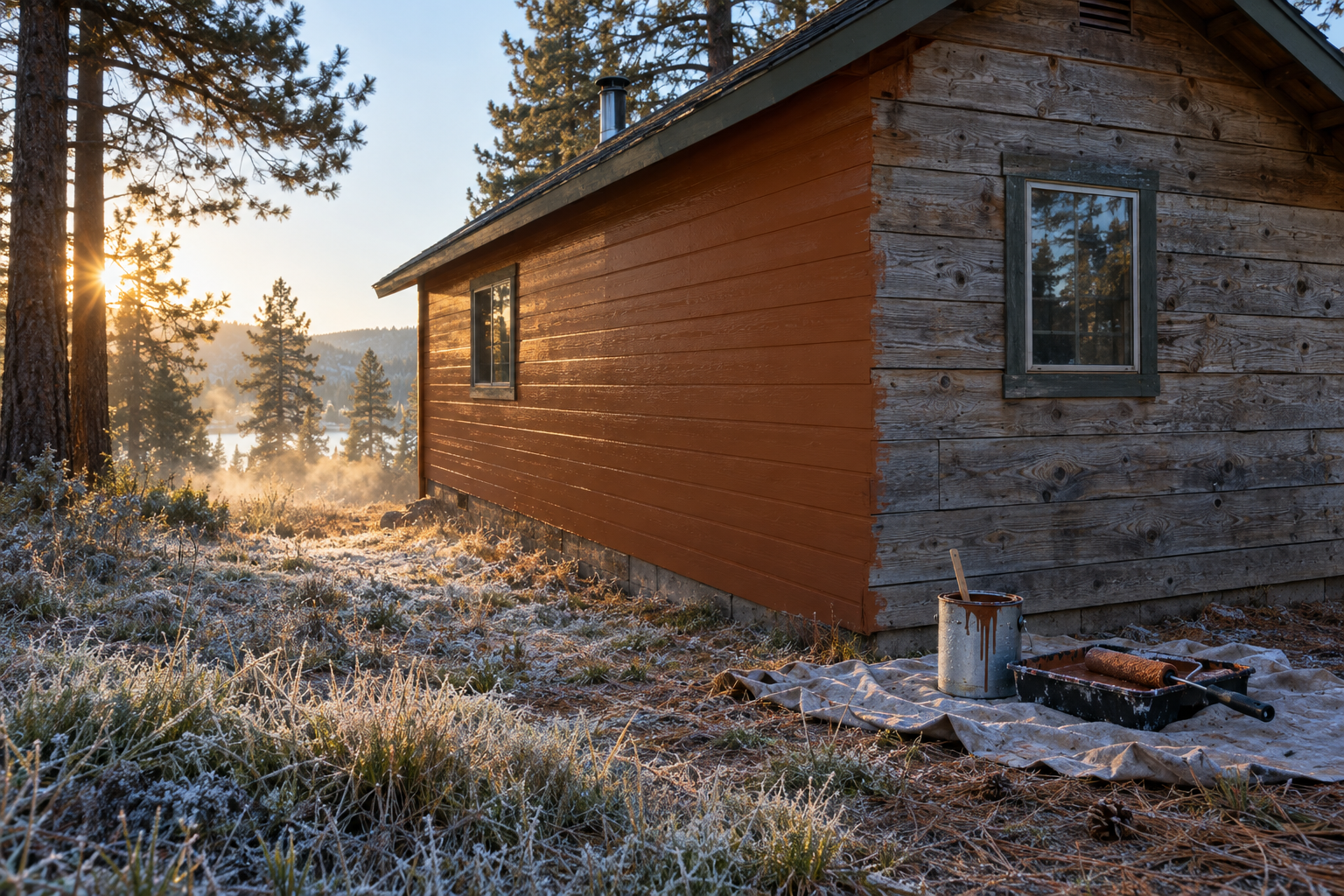
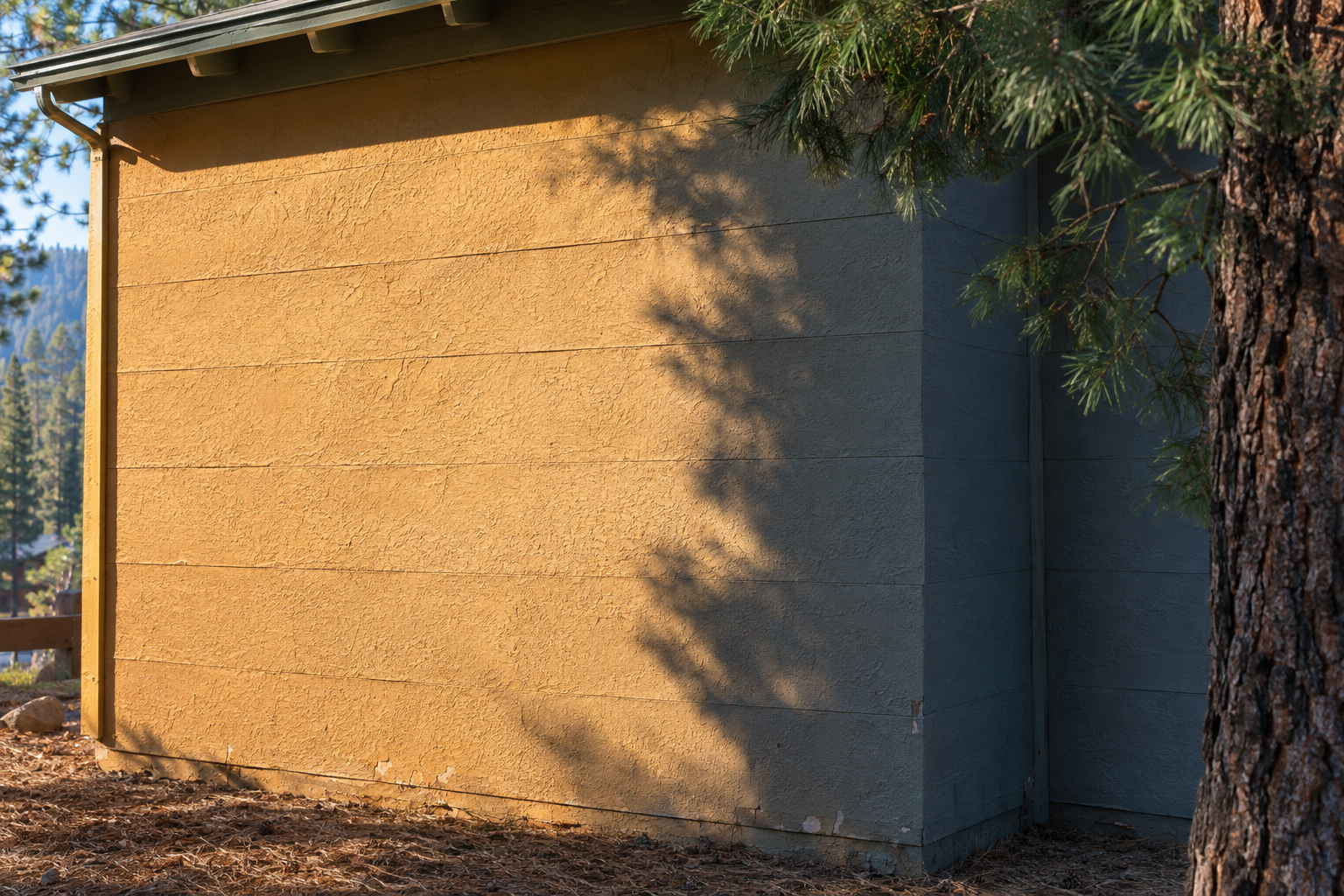
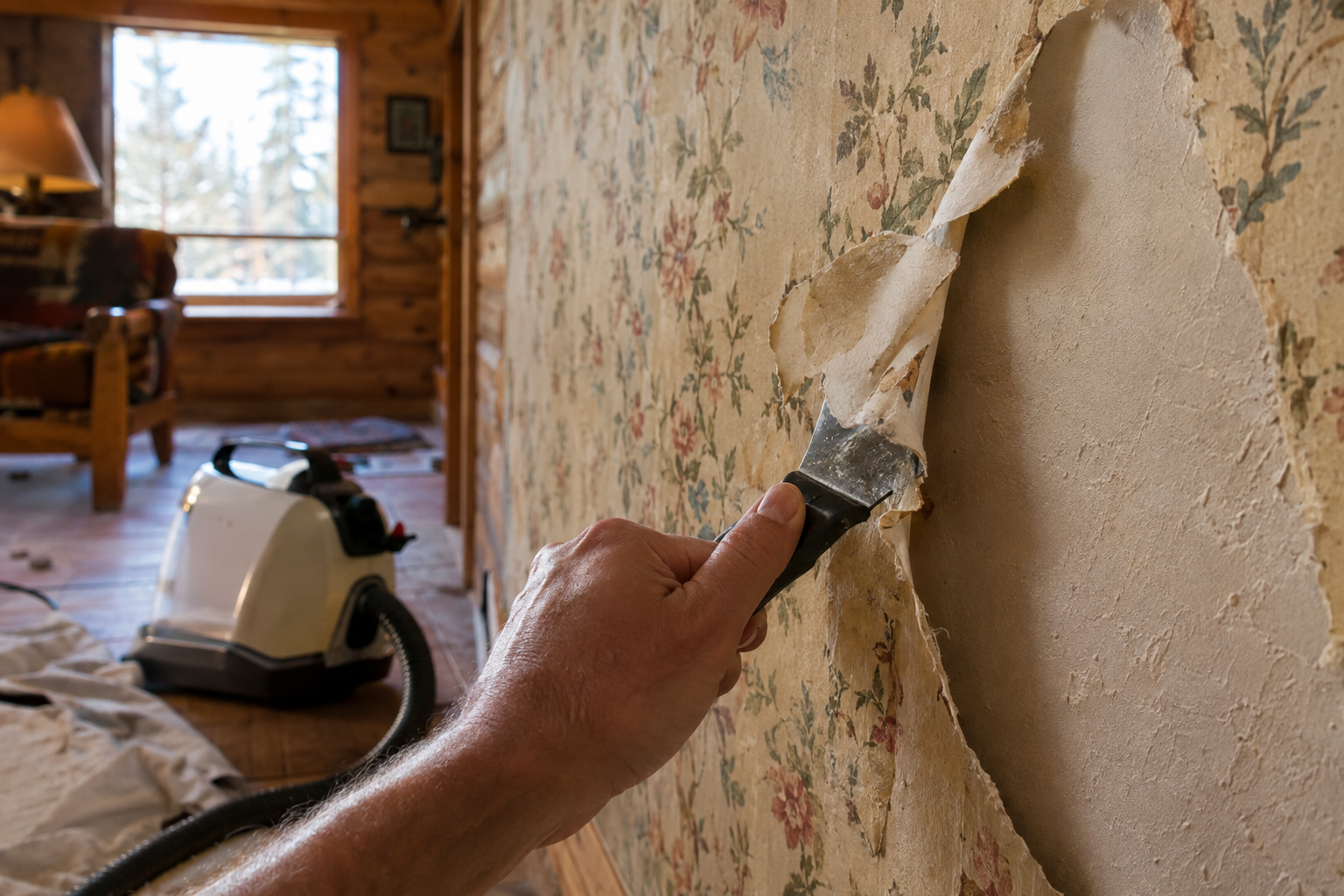
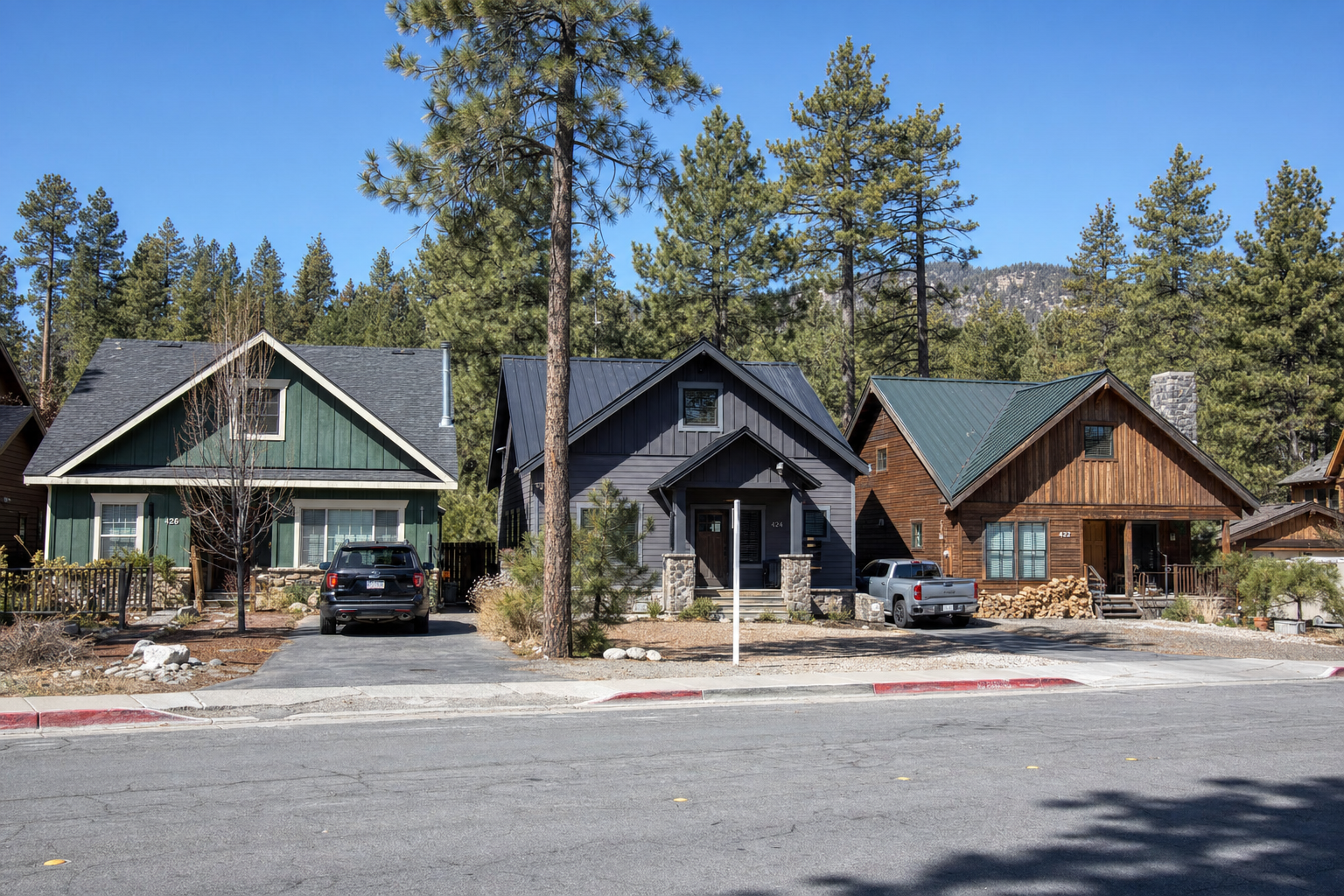
Of everything on the exterior of a Big Bear property, the front door usually takes the most direct, repeated sun exposure of any single surface — no roof overhang shading it in some cases, full south or west exposure in others, and none of the partial relief a wall gets from a passing cloud shadow moving across a larger area. Combined with the elevated UV intensity already at play up here, a front door is often the first thing to visibly fade, chalk, or peel long before the rest of the house shows its age.
How Much Faster Does Fading Actually Happen by Door Material?
The material your door is actually made of matters more than most people realize before they pick a color. Wood doors, without a covering overhang, can start showing real fading in as little as a year — they rely entirely on their paint or stain film as the UV shield, and once that layer breaks down, there's nothing else protecting the wood underneath. Fiberglass doors generally hold up longest, often 6 to 8 years before noticeable fading, largely because most come with a factory UV coating baked in. Steel doors sit in between — they don't fade quite as fast as unprotected wood, but the metal itself heats up more under direct sun, which stresses the paint film and accelerates breakdown compared to fiberglass. Steel also expands and contracts with heat more than either wood or fiberglass, which over time can create small gaps at the frame that make the door harder to seal properly, on top of whatever's happening to the paint itself.
Why Does Elevation Make This Genuinely Worse Here Than Almost Anywhere Else?
This isn't a generic sun-exposure problem — it's a specifically amplified one at this elevation. We've covered before how UV radiation intensifies roughly 4-6% for every 1,000 feet of elevation gain, which at Big Bear's 6,750 feet works out to somewhere in the range of 25-40% more UV exposure than an identical door would face at sea level. A fiberglass door's typical 6-to-8-year factory coating lifespan, rated under standard testing conditions, doesn't necessarily hold up to that same schedule once you're absorbing that much additional UV every single day. The practical takeaway: whatever fade-resistance numbers you see quoted for a door product, treat them as an optimistic upper bound here, not a guarantee.
What Actually Slows Fading, Regardless of Door Material?
A few things genuinely help regardless of which material you're working with. Lighter colors with a higher light reflectance value absorb less solar heat than dark colors, which slows the whole degradation process — a rich, dark door color will always face a harder fight against fading than a lighter one in the same sun exposure. Sheen matters too: higher-gloss finishes reflect more sunlight away from the surface than a flat or satin finish does, which is part of why so many professional exterior door recommendations lean toward semi-gloss or high-gloss rather than the flatter sheens common on walls. And a paint or stain specifically labeled UV-resistant or fade-resistant contains additives a standard exterior paint doesn't, built specifically to slow this exact process rather than just look good on day one.
Does the Direction Your Door Faces Change Anything?
Significantly. South- and west-facing doors take the most direct, sustained sun exposure through the day and fail measurably faster than north- or east-facing entries on the exact same house, in the exact same paint. If your front door happens to face south or west — a common orientation for mountain homes designed to maximize daylight or a specific view — that's worth factoring into both your color choice and your expectations for how often you'll need to refresh it. A north-facing door in deep shade under a covered porch might go years longer between touch-ups than a south-facing door with no overhang at all, even with the identical paint can used on both.
What Does This Mean for the Color You Actually Want?
None of this means you can't have the deep, saturated door color you actually want — it just means a dark color on a south-facing wood door is going to need more frequent attention than the same shade on a shaded, north-facing fiberglass entry. If you've got your heart set on a bold, dark color for curb appeal, pairing it with a high-gloss, UV-rated product and planning for a shorter maintenance cycle is a completely reasonable trade-off, as long as it's a choice you're making knowingly rather than a surprise you discover a year later when the color's noticeably duller than the day it went on.
How Often Should You Plan to Refresh a Big Bear Front Door?
Given the elevation factor stacked on top of standard fade timelines, a reasonable planning assumption is toward the shorter end of typical ranges: fiberglass doors that might otherwise go 6-8 years elsewhere are worth checking closer to the 4-6 year mark here, and unprotected wood doors in full sun are worth a genuine annual inspection rather than assuming they'll match a lower-elevation timeline. Catching fading or chalking early, before the underlying material is exposed, is a much smaller job than waiting until real damage has set in.
Not sure what color, material, and finish combination will actually hold up on your specific door's sun exposure?
Call Big Bear Painters at (909) 415-5374 for a real color consultation, not a guess.