Quick answer: Real wood paneling — common throughout Big Bear cabins built during the 1960s and 70s construction boom — often carries the same tannin-bleeding problem we've covered with knotty pine cabinets, and cedar and redwood paneling specifically are among the worst offenders. An oil-based or shellac-based stain-blocking primer solves this reliably; a standard latex primer usually doesn't.
Why Do So Many Older Big Bear Cabins Have Wood Paneling?
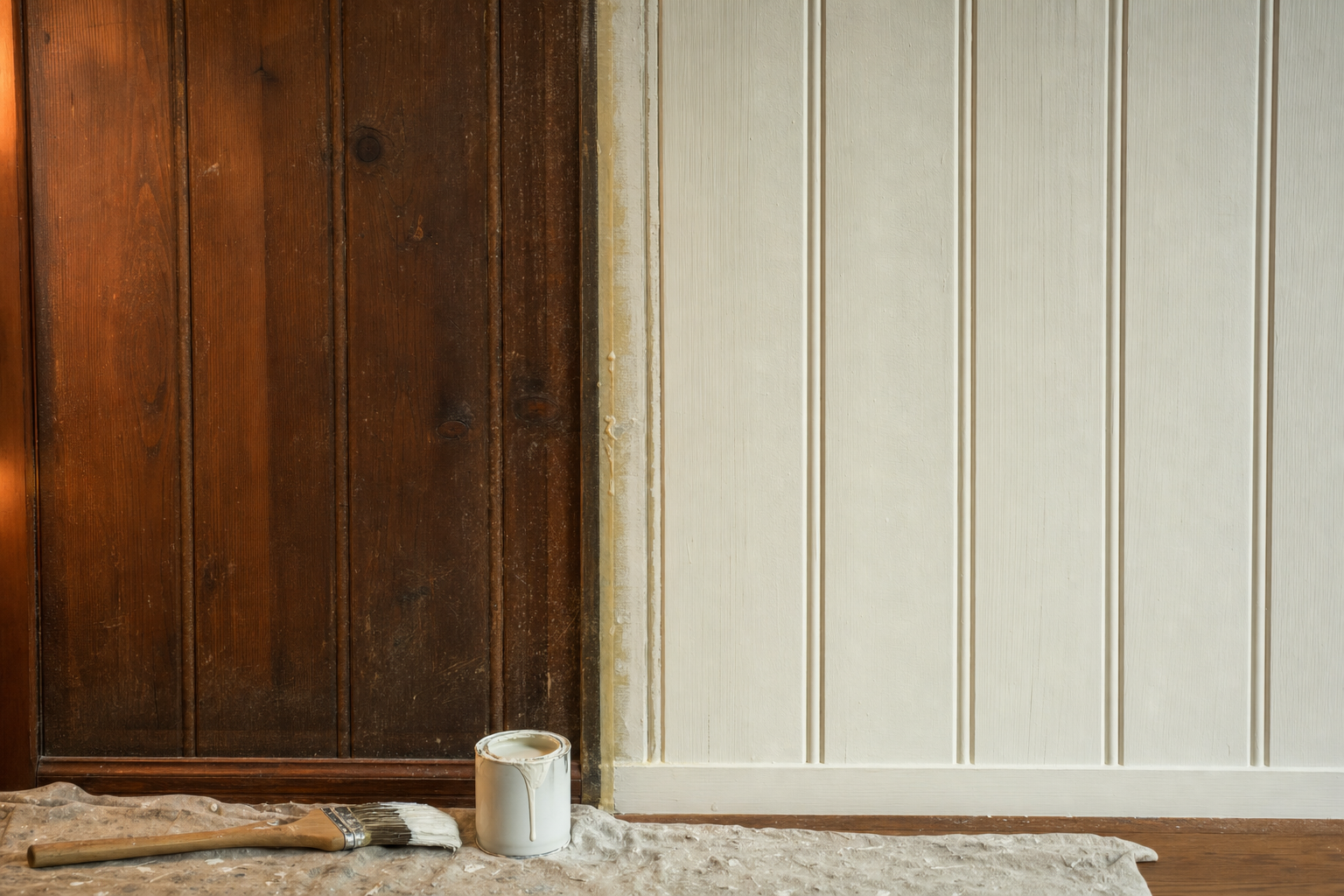
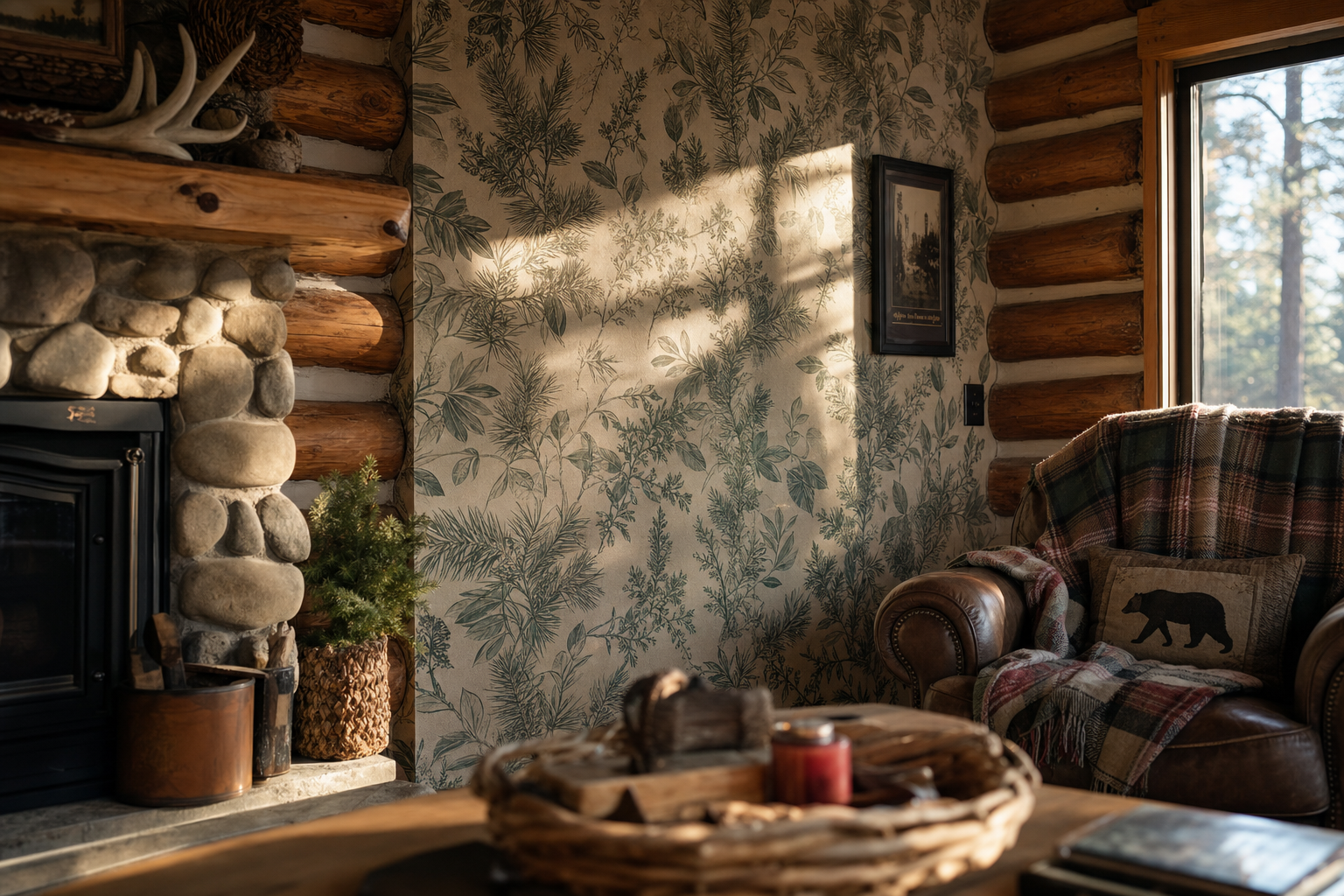
Wood paneling was one of the defining interior finishes of mid-century mountain cabin construction, prized for its rustic look and relatively simple installation over existing walls. Decades later, a lot of homeowners want to lighten or modernize those same rooms without tearing out the paneling entirely — and the good news is, you almost never have to. Paneling can be painted directly, whether it's cheaper faux paneling or genuine solid wood.
Is This the Same Tannin Problem, Just a Different Wood?
Yes, and it's worth taking just as seriously as we do with
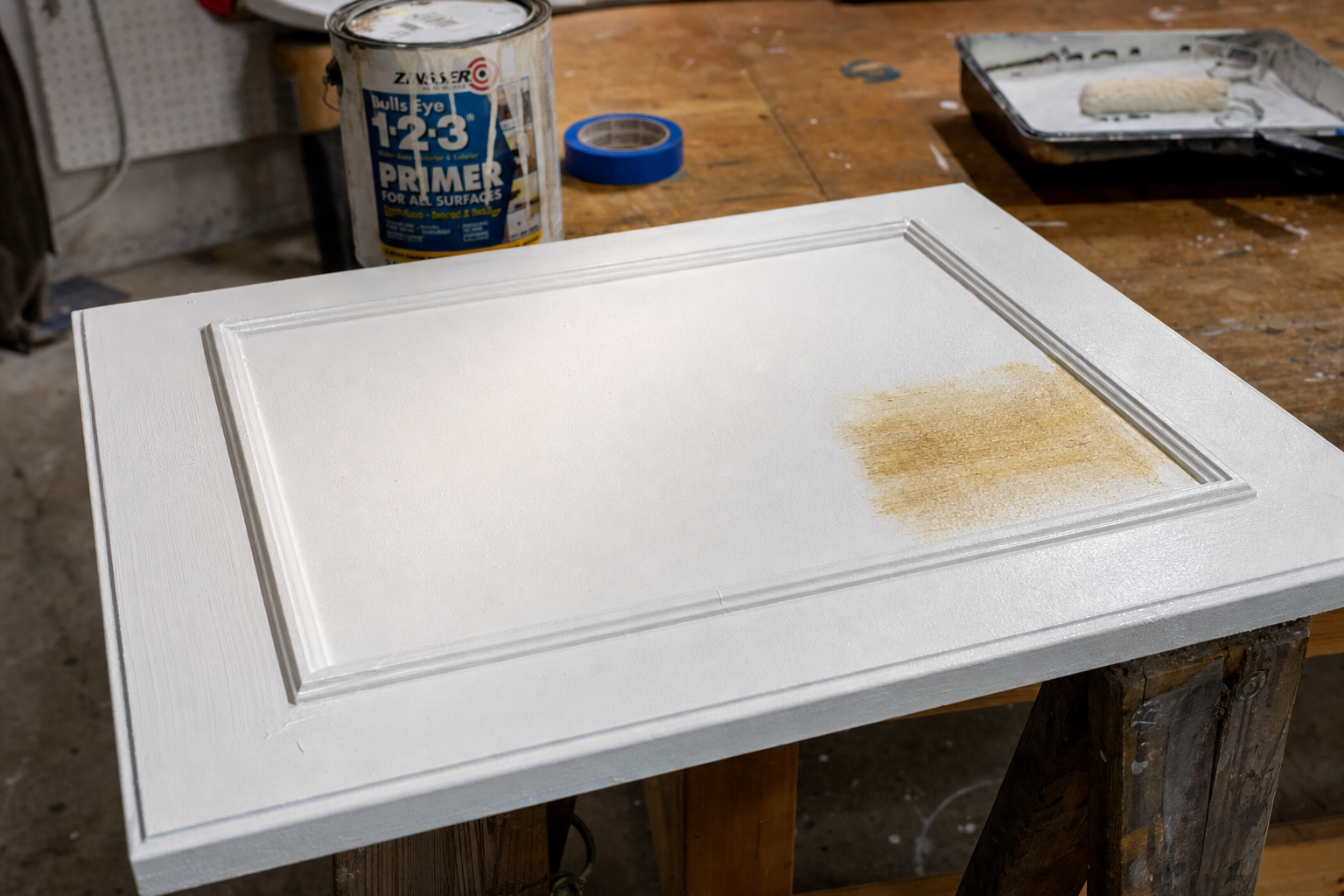
knotty pine cabinets. Cedar and redwood — both common in real wood paneling from this era — are tannin-rich woods, meaning they release natural compounds that can bleed through a standard latex primer and paint job, showing up as yellow-brown discoloration weeks or months after a repaint. An oil-based or shellac-based stain-blocking primer is the reliable fix, sealing in those tannins before they have a chance to migrate through to the finish coat. Skipping this step on tannin-heavy paneling is one of the most common reasons a paneling repaint looks great on day one and disappointing within a season.
Should You Go Smooth or Keep the Grooves?
This is a genuine style decision worth making upfront, since it changes the prep work involved. Leaving the grooves visible and simply priming and painting over them keeps a more traditional, cottage-style look — the paneling reads as intentional, structured wall detail rather than something being disguised. Filling the grooves with joint compound or caulk before priming creates a fully smooth, modern wall surface that no longer reads as paneling at all once painted. Caulk is generally the better choice for the grooves themselves since it can flex slightly as the panels naturally shift over time, while rigid joint compound is more prone to cracking at those seams.
Why Does Light Sanding Still Matter Even With the Right Primer?
A quick scuff sand — 100 to 160 grit is the standard range — before priming isn't about removing the existing finish, it's about giving the new primer something to grip. Paneling often has a slight factory sheen or sealed surface that a primer won't bond to as reliably without this step, even a high-quality stain-blocking primer. This is a fast step, not a full strip-down, but skipping it entirely raises the risk of peeling down the line.
What's the Brush-Then-Roller Technique for Grooved Paneling?
If you're keeping the grooves visible rather than filling them, technique matters for a clean result: work primer and paint into the vertical grooves first with a brush, then follow quickly with a roller across the flat sections before the brushed grooves have a chance to dry unevenly. Working in manageable sections rather than brushing all the grooves across an entire wall before rolling helps avoid visible lap marks where the two techniques meet.
What Does Painting Over Wood Paneling Cost in Big Bear?
Cost depends on room size, whether you're filling the grooves for a smooth finish or keeping them visible, and how much prep the existing paneling needs. Grooved-finish projects typically cost less than smooth-finish conversions, since filling and sanding every groove across a full wall adds real labor time compared to priming and painting over the existing texture.
FAQ
Can real wood paneling actually be painted, or does it need to be removed?
Yes, it can be painted directly in almost all cases. Removal is rarely necessary and often risks damaging the wall behind it, since paneling is frequently installed with both nails and adhesive.
Why does my paneling show yellow stains after painting?
This is tannin bleed-through, especially common with cedar and redwood paneling. It happens when a standard latex primer was used instead of an oil-based or shellac-based stain-blocking primer.
Should I fill the grooves in my paneling or leave them?
It's a style choice. Leaving grooves visible keeps a traditional cottage look with less prep work. Filling them with caulk creates a smooth, modern wall but requires more labor.
Do I need to sand paneling before priming it?
Yes, a light scuff sand with 100-160 grit sandpaper, even with a high-quality primer, since it helps the primer grip a factory sheen or sealed surface.
What's the best primer for wood paneling?
An oil-based or shellac-based stain-blocking primer for tannin-rich woods like cedar and redwood. A bonding primer designed for glossy surfaces works for laminate or veneer paneling instead.
Ready to lighten up your Big Bear cabin's paneled walls?
Call Big Bear Painters at (909) 415-5374 for a free estimate.