Quick answer: Knotty pine — the classic mountain cabin cabinet material found throughout Big Bear — is one of the most tannin-heavy woods you can paint, and standard primer simply doesn't block it. Skip the right primer and yellowish-brown stains bleed straight through your fresh white paint within weeks, sometimes days. A shellac-based, stain-blocking primer solves this reliably; almost nothing else does.
Why Do So Many Big Bear Cabins Have Knotty Pine Cabinets?
Knotty pine has been a defining material in mountain cabin construction for decades — affordable, readily available, and visually right at home in a rustic setting. It's also one of the most common cabinet materials we're asked to repaint, usually because a homeowner wants to modernize a kitchen without a full remodel, or because a knotty pine finish that felt right for the cabin's original era doesn't match a current design vision.
What's the Tannin Problem, and Why Does Standard Primer Fail on Knotty Pine?
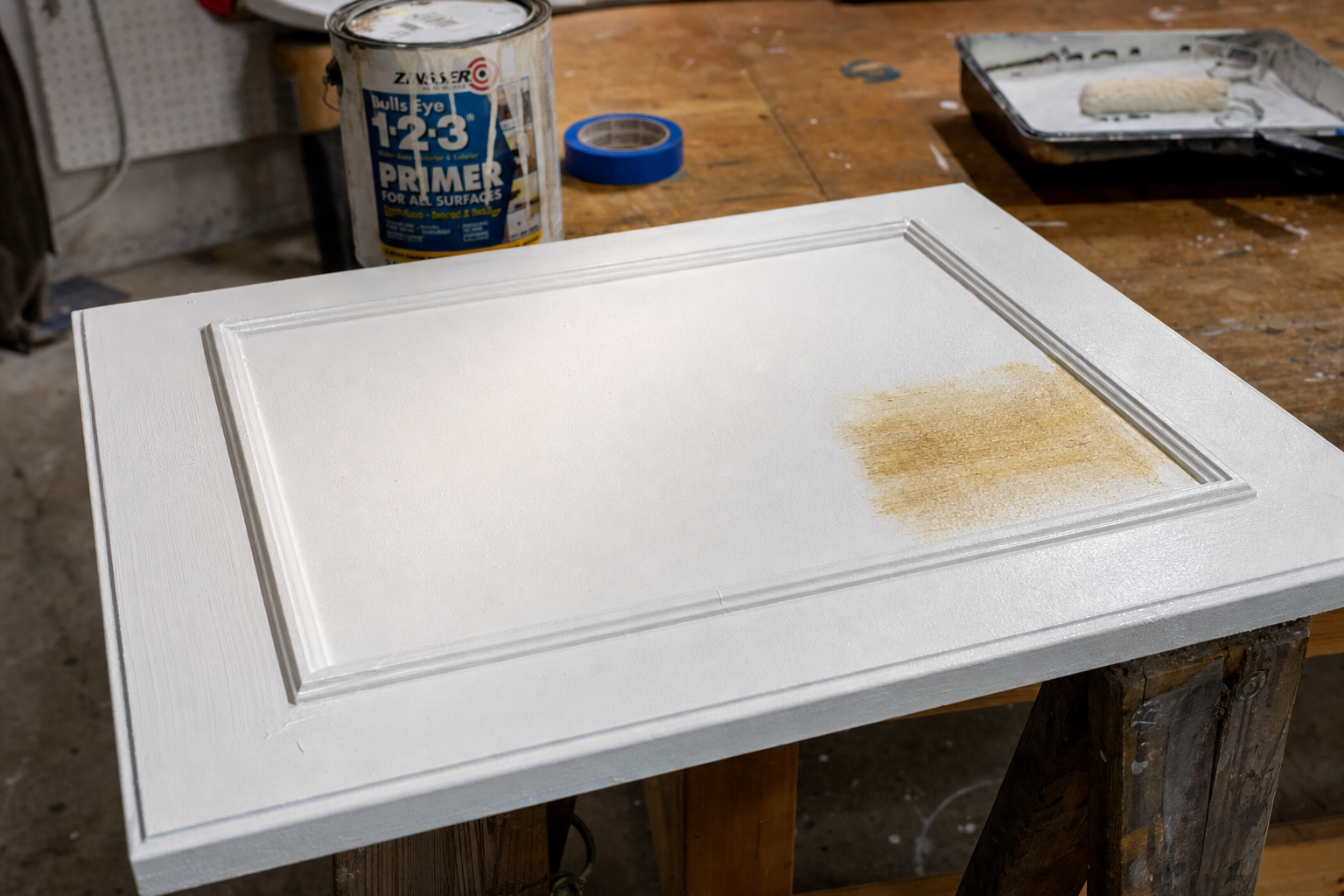
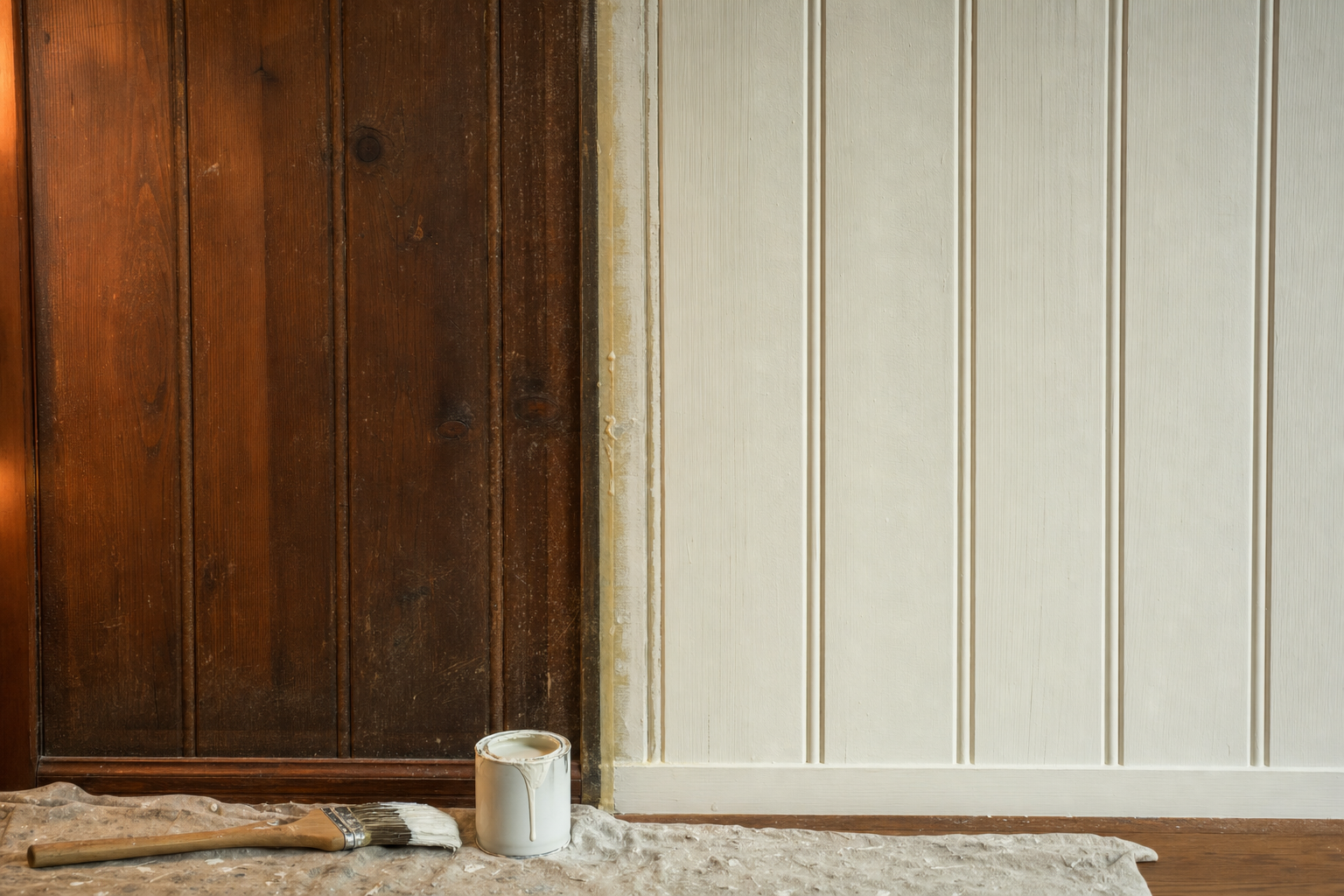
This is the single most important thing to get right on this project. Pine — knotty pine especially, given how many knots concentrate resin and tannin — releases natural compounds that migrate up through paint over time if they aren't properly sealed first. A standard wall primer, or even a basic all-purpose primer, often isn't formulated to block this migration, which means a homeowner can end up with a beautifully painted white cabinet that develops yellow-brown blotches and streaks within weeks. A shellac-based, stain-blocking primer is specifically formulated to seal in tannins before they have a chance to bleed through, and it's the difference between a repaint that looks good on day one and one that still looks good a year later.
Refinishing vs. Repainting: Which Does Your Kitchen Actually Need?
These aren't the same project, and knowing which one you need changes both cost and process.
Repainting works when your existing cabinet finish is sound — clean, sand for grip, prime, and paint, no stripping required.
Refinishing is the more involved process: stripping the existing finish entirely, sanding down to bare or near-bare wood, then priming and applying a new finish — generally necessary when the existing coating has failed, peeled, or is too heavily built up to paint over cleanly.
Why Is Grease the Silent Killer of a Cabinet Paint Job?
This is a mistake we see constantly, even on projects that otherwise get the primer right. Kitchen cabinets accumulate cooking grease and residue that sanding alone doesn't remove — a degreasing cleaner has to come first, or primer ends up bonding to a thin layer of grease rather than to the actual cabinet surface. That's a recipe for peeling within months, regardless of how good the primer and paint themselves are.
Does Elevation and Humidity Affect Cure Time Here Too?
Yes, the same underlying principle we cover in our
guide to interior painting during Big Bear winters applies directly to cabinet work. Humidity slows how quickly primer and paint fully cure, and cabinets specifically need full cure time — commonly 7 to 14 days — before they're back in daily use, not just dry to the touch. Rushing this step by rehanging doors and reloading drawers too soon is one of the most common causes of early chipping and peeling on an otherwise well-executed cabinet project.
What Sheen Actually Holds Up in a Kitchen?
Semi-gloss or satin finishes are the standard recommendation for kitchen cabinets specifically, since they hold up to the constant touching, wiping, and cleaning a kitchen sees far better than a flat or eggshell finish would — the same sheen logic we cover in our
guide to durable paint for vacation rentals, where kitchens get the same satin-to-semi-gloss recommendation for exactly the same durability reasons.
What Does Cabinet Painting Cost in Big Bear?
Cost depends heavily on cabinet count, current condition, and whether the project is a repaint or a full refinish requiring stripping. Knotty pine specifically may add a modest premium given the extra priming step required to properly block tannin bleed-through — a cost worth paying upfront rather than repainting a second time after the stains show through.
FAQ
Why do my cabinets keep showing yellow stains after painting?
This is almost always tannin bleed-through from the wood, especially common with knotty pine. It happens when a standard primer wasn't used, or when a shellac-based stain-blocking primer wasn't applied first.
What's the difference between cabinet refinishing and repainting?
Repainting cleans, sands, and paints over an existing sound finish. Refinishing strips the old finish entirely down to bare or near-bare wood before applying a new one, needed when the existing coating has failed.
Do I need to degrease my cabinets before painting them?
Yes. Sanding alone doesn't remove cooking grease, and primer applied over grease will peel within months regardless of paint quality.
How long should I wait before using my cabinets after painting?
Full cure typically takes 7 to 14 days, longer than the primer or paint feels dry to the touch. Using cabinets before full cure is a common cause of early chipping.
What paint sheen is best for kitchen cabinets?
Semi-gloss or satin, since both hold up better to frequent touching and cleaning than flat or eggshell finishes.
Get your knotty pine or wood cabinets primed and painted the right way the first time.
Call Big Bear Painters at (909) 415-5374 for a free estimate.