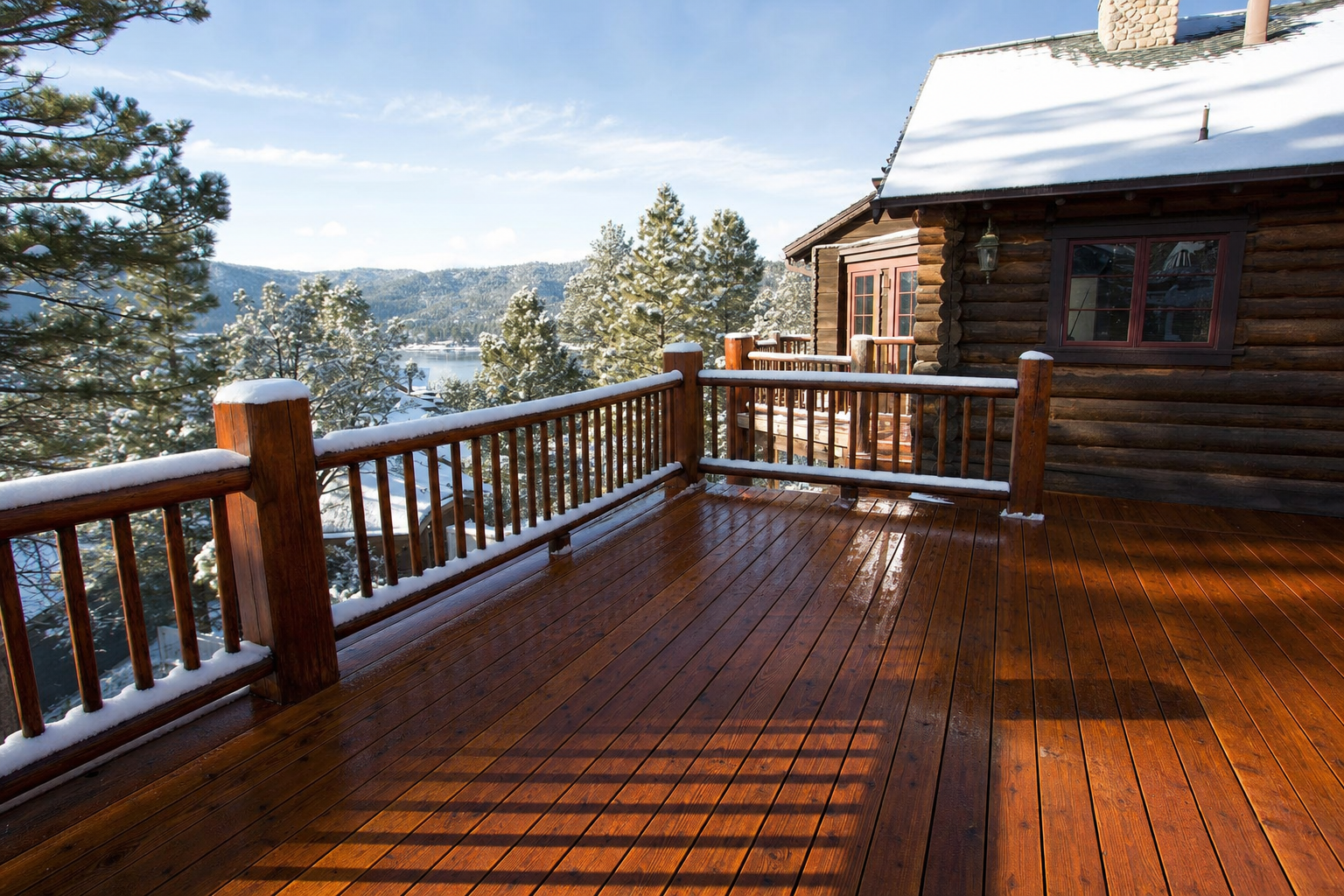
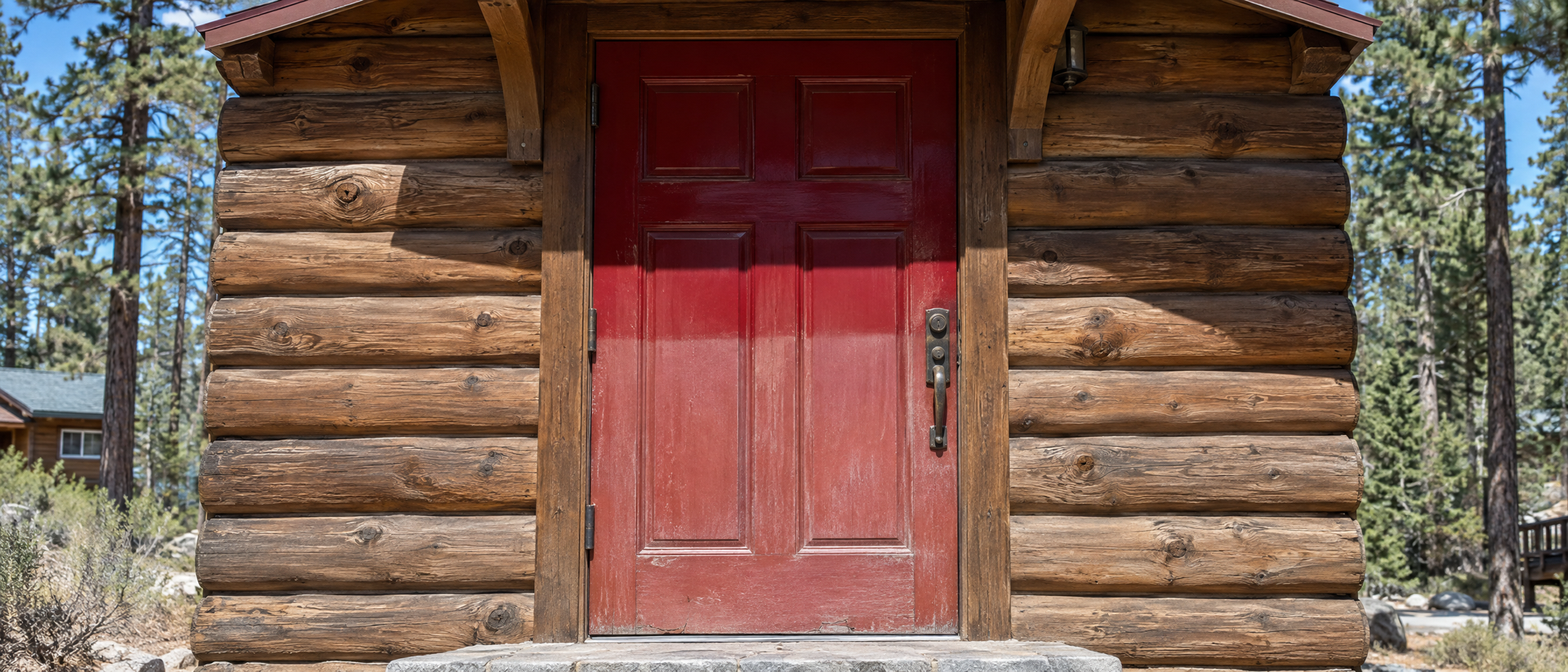
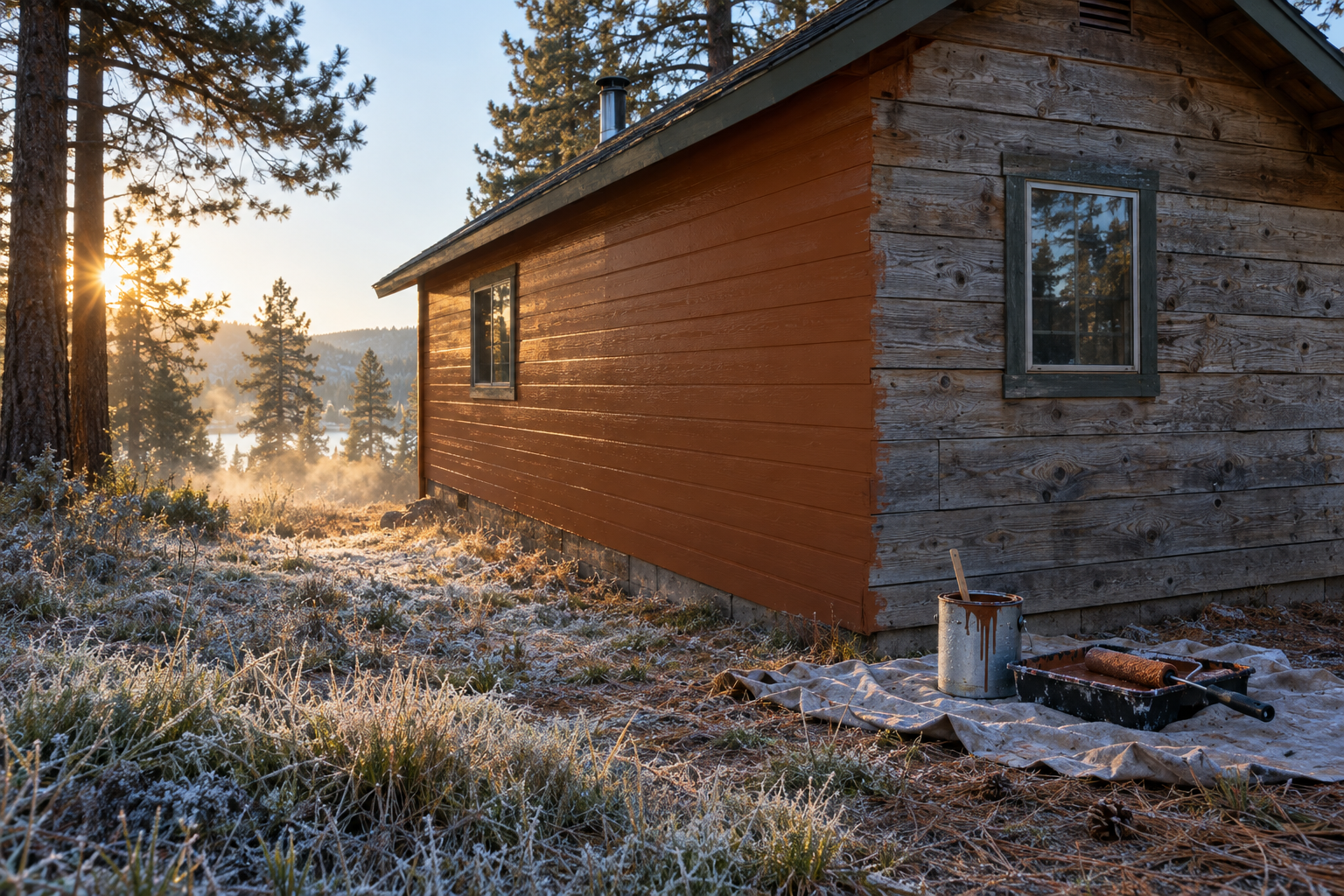
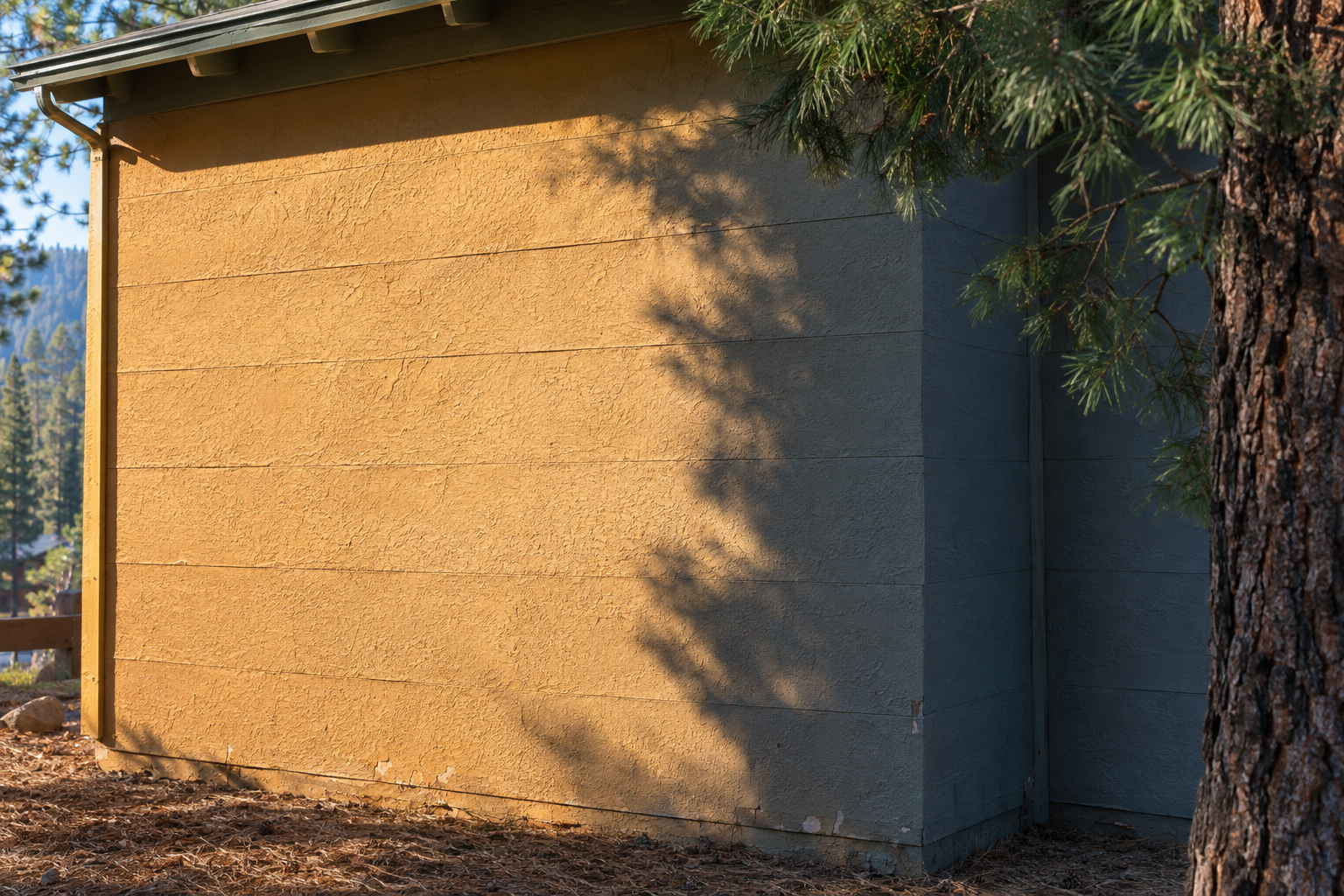
Quick answer: Deck boards wear significantly faster than vertical siding or log walls because horizontal surfaces collect direct sun, standing moisture, foot traffic, and — in Big Bear specifically — UV reflected back up off snow all winter long. While a quality exterior siding job can last 5-8 years at this elevation, most Big Bear decks need restaining every 1-3 years depending on the product used and how much sun and snow exposure the deck actually gets.
Why Do Horizontal Deck Boards Wear So Much Faster Than Vertical Siding?
The physics are straightforward once you think about it: a vertical wall sheds rain and snow, while a horizontal deck surface collects it. That means repeated wetting-and-drying cycles that accelerate surface checking and moisture retention at the end grain, combined with direct foot traffic wearing down the finish in the exact paths people actually walk. Railings and vertical deck components hold up closer to siding's timeline since they're not walked on and don't pool water — it's specifically the horizontal walking surface that takes the brunt of it.
The Hidden Culprit: UV Reflecting Off Snow
This is the part most homeowners never think about. Big Bear's intense elevation-driven UV exposure — the same factor we cover in our
guide to timing an exterior repaint at this elevation — doesn't take a break in winter. Snow reflects a significant portion of UV radiation back upward, meaning a deck gets hit with intensified sun exposure twice: once from the sun directly, and again bounced back off the snowpack surrounding it. That's a genuine, elevation-and-climate-specific reason Big Bear decks fade and break down faster than an equivalent deck at lower elevation or in a climate without sustained snow cover.
Why Are Solid Stain and Paint the Wrong Choice for Deck Boards and Stair Treads?
This is a widely recommended distinction in the decking industry, and it's worth following: solid-color stains and paint show wear conspicuously on high-traffic walking paths — the exact areas that get the most foot contact show through first, creating an uneven, patchy look faster than a semi-transparent product would. A clear water-repellent or semi-transparent stain is the standard recommendation specifically for decking boards and stair treads, reserving solid color coverage for railings, trim, and vertical elements that don't take direct foot traffic.
Snow Load and Your Deck: What Should You Actually Be Watching For?
Beyond finish wear, it's worth monitoring how much snow is actually accumulating on your deck relative to its structural design. Residential decks are typically designed for a live load around 40 pounds per square foot under standard building code, and heavy, wet, accumulated snow can approach that threshold faster than people expect, especially if snow isn't being cleared between storms. This is a structural consideration separate from the finish itself, but it's worth keeping in mind alongside your maintenance routine.
What's the One Rule for Clearing Snow and Ice Off a Stained or Sealed Deck?
Never use a metal shovel or metal ice-removal tool directly on a stained or sealed deck surface. Metal tools scrape and gouge the finish, creating exactly the kind of damage that lets moisture penetrate the wood underneath. Use a plastic shovel or scraper instead, and clear drainage paths so meltwater doesn't sit and pool against the boards, which accelerates rot at exactly the areas already most vulnerable to it.
How Often Should You Restain a Big Bear Deck?
Realistically, plan for a 1-3 year cycle depending on the product and your deck's specific sun and snow exposure — clear sealers need the most frequent attention since they offer no UV-blocking pigment, while semi-transparent stains with UV inhibitors can stretch toward the longer end of that range. A simple water-bead test tells you when it's time: if water still beads up on the surface, your finish is doing its job; if it soaks in, it's time to recoat. Complete any deck refinishing work by mid-fall, before freezing temperatures arrive, to give the product proper time to cure.
What Does Deck Staining Cost in Big Bear?
Cost depends on deck size, current condition, and whether prep work like sanding or stripping a failed previous coating is needed. Decks in rougher condition or with significant existing wear cost more to properly prep than a deck that's been maintained on schedule — which is part of why staying ahead of the recoat cycle saves money over time rather than waiting until the deck looks obviously worn.
FAQ
How often should I restain my deck in Big Bear?
Most Big Bear decks need restaining every 1-3 years, depending on the product used and how much direct sun and snow exposure the deck receives, notably shorter than the 5-8 year cycle typical for exterior siding at this elevation.
Why does my deck fade faster than the rest of my house?
Horizontal surfaces collect direct sun, standing moisture, and foot traffic that vertical siding simply doesn't experience, and in Big Bear specifically, UV reflecting off snow adds extra winter sun exposure a wall surface doesn't get.
Should I use solid stain or semi-transparent stain on my deck?
Semi-transparent or clear stain is generally recommended for deck boards and stair treads, since solid stains show wear unevenly on high-traffic walking paths. Solid color is better reserved for railings and vertical trim.
Can I use a metal shovel to clear snow off my stained deck?
No. Metal tools scrape and gouge the finish, creating openings for moisture to penetrate the wood. Use a plastic shovel or scraper instead.
How do I know if my deck needs to be restained?
A simple test: sprinkle water on the surface. If it beads up, your finish is still protecting the wood. If it soaks in, it's time for a fresh coat.
Get your Big Bear deck on a maintenance schedule built for this elevation, not a generic timeline.
Call Big Bear Painters at (909) 415-5374 for a free estimate.