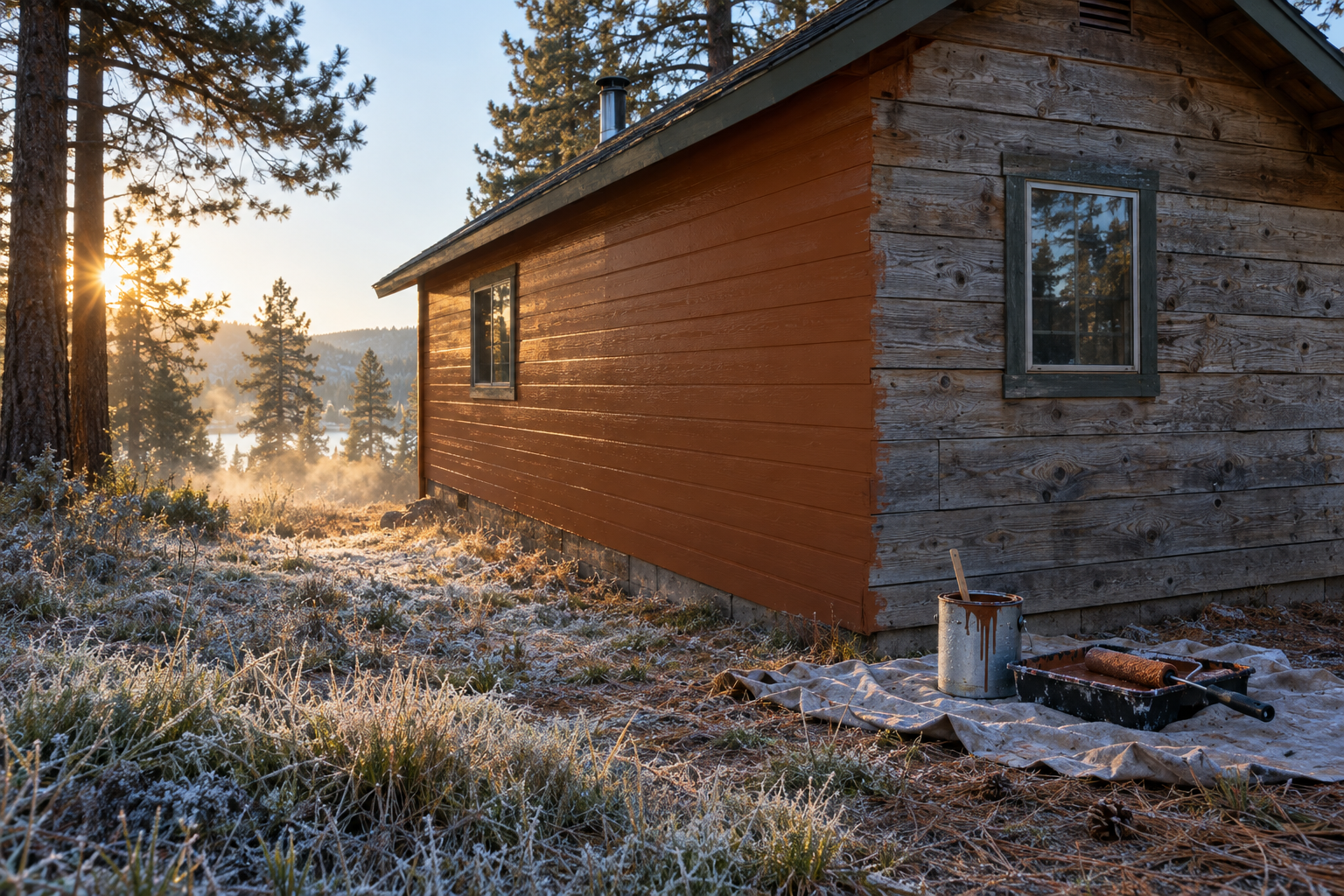
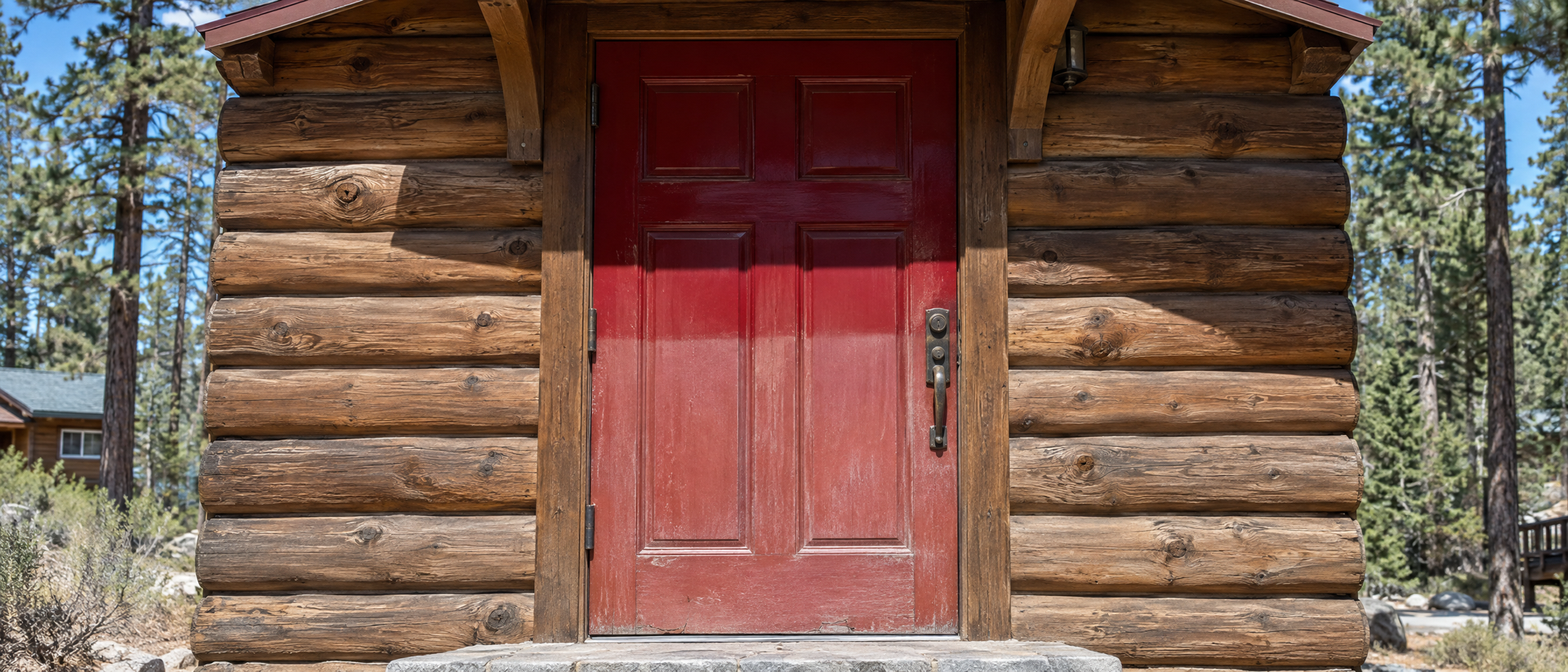
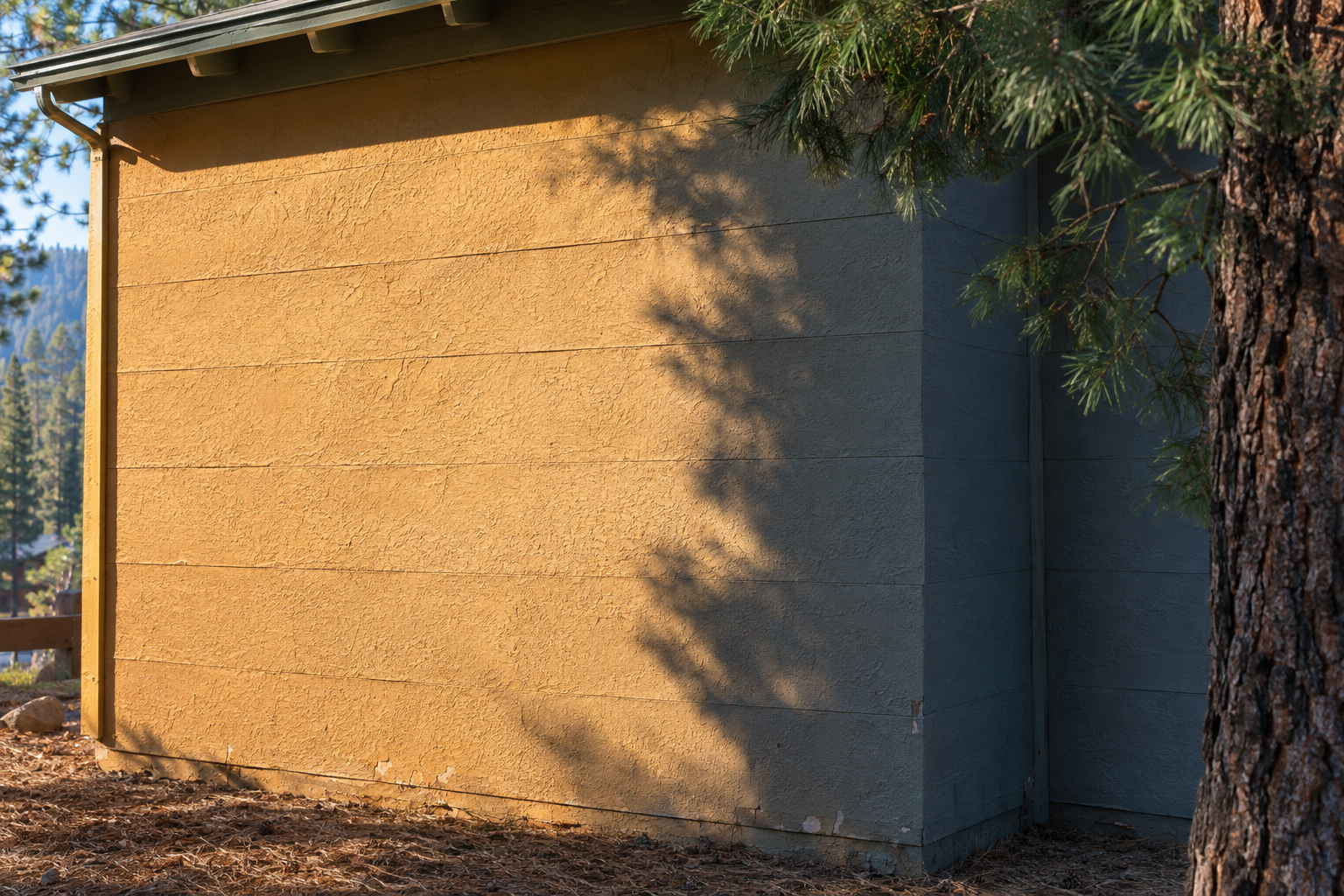
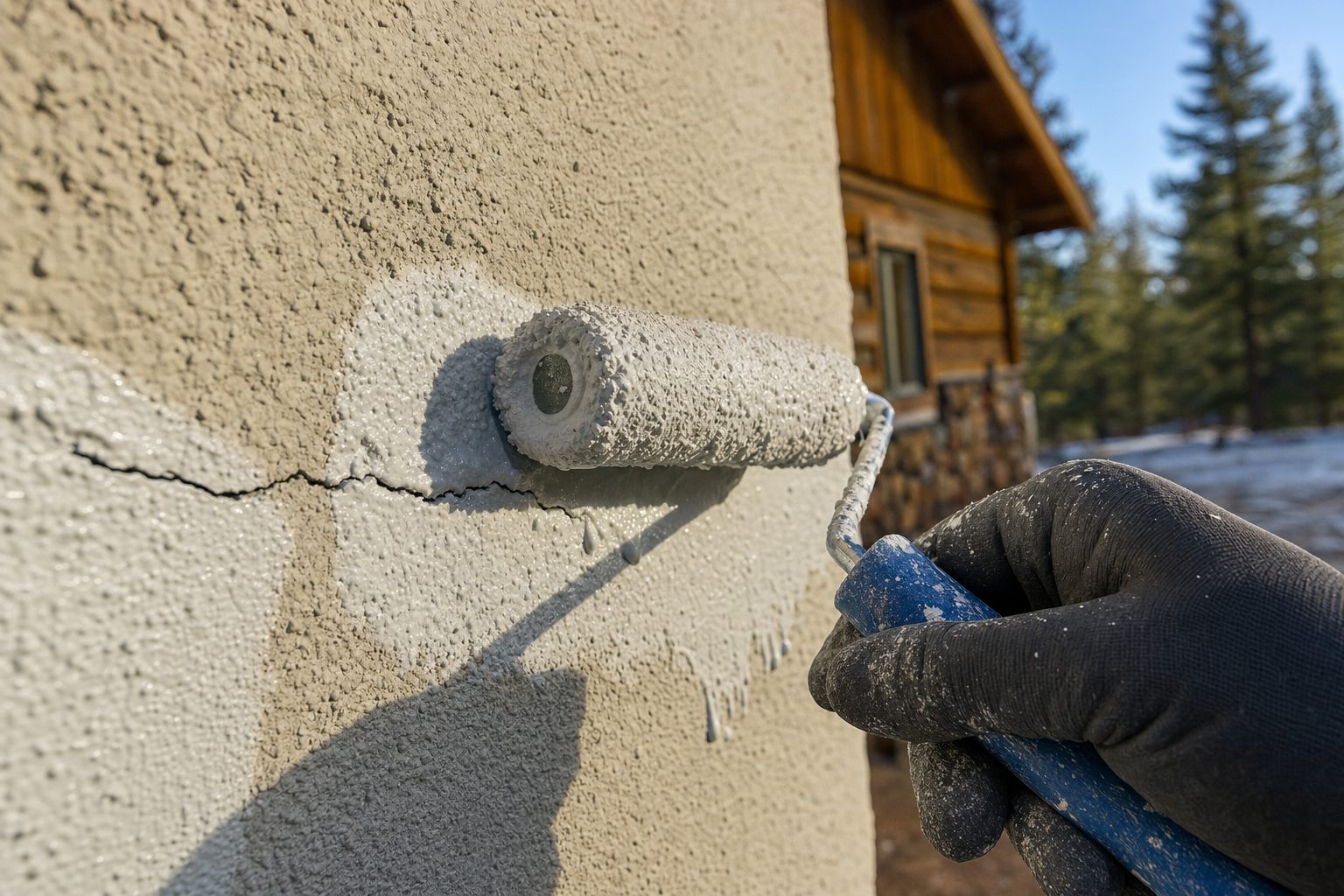
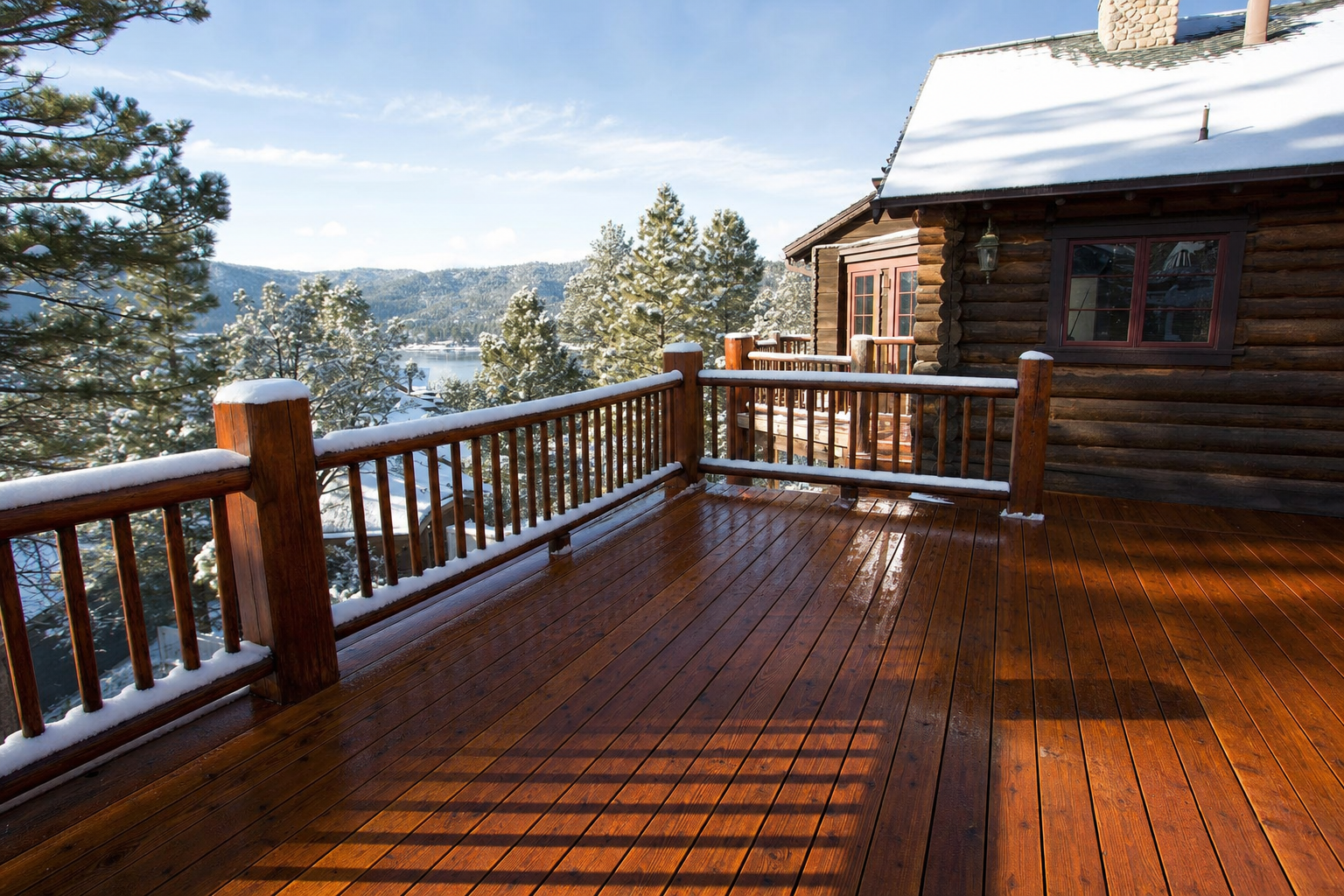
If you've been meaning to get your Big Bear exterior painted this year, the calendar just got a lot less forgiving. Local frost data puts the odds of hitting 32°F at roughly 50% by September 24 — less than a week from now — and the window where frost risk becomes real technically opened back on September 6. The average first fall frost for Big Bear Lake lands around September 29, which means we're not approaching the end of the painting season. We're in it.
This matters because exterior paint needs sustained temperatures above roughly 50°F to cure properly, and it needs that temperature window to hold, not just hit briefly during the warmest part of the day. Once nighttime lows start dropping into frost territory, even a bright, pleasant afternoon isn't enough to guarantee a coat of paint actually cures the way it's supposed to overnight. A project that goes down in a rush during a warm afternoon this week can still fail if the temperature drops hard once the sun goes down, which is exactly the pattern this elevation produces as fall sets in.
What the Actual Frost Odds Look Like This Month
The numbers are worth spelling out, because "fall is coming" and "there's a real, dated 50% chance of freezing within six days" call for very different levels of urgency. Big Bear's frost probability data shows roughly a 20% chance of a 32°F night by September 12 — a date that's already passed — climbing to that 50% mark by September 24, and reaching an 80% chance by October 6. In other words, the odds aren't gradually creeping up somewhere off in the distance. They're climbing fast, right now, over the course of about three weeks total. Whatever exterior project has been sitting on your list is genuinely racing that curve, not a vague seasonal calendar.
Why a Warm Afternoon Doesn't Mean It's Safe to Paint
This is the detail that catches people off guard every year. At 6,750 feet, the gap between daytime highs and overnight lows widens significantly as fall sets in — a comfortable, sunny 65-degree afternoon can still be followed by an overnight drop well below the 50-degree threshold paint actually needs to cure properly. Paint that goes on under a clear blue sky at 2pm doesn't finish curing at 2pm; it's still working through that process well into the evening and overnight hours, exactly when temperatures at this elevation fall the fastest. Judging paint-readiness by how the day feels, rather than what the overnight low is actually going to do, is one of the most common ways a rushed late-season project ends up needing to be redone.
What Happens If You Paint Too Close to the Line
Painting right at the edge of this window isn't necessarily a disaster, but it does raise real risk: incomplete curing can mean poor adhesion, a softer finish that's more vulnerable to damage, and in some cases, visible texture or sheen problems that show up once the coating fully sets under conditions it wasn't designed for. None of that is guaranteed to happen from one cold night, but the closer a project gets to the actual frost date, the less margin there is if the forecast shifts even slightly colder than expected — which, at this elevation, it often does.
What This Means Practically for Your Timeline
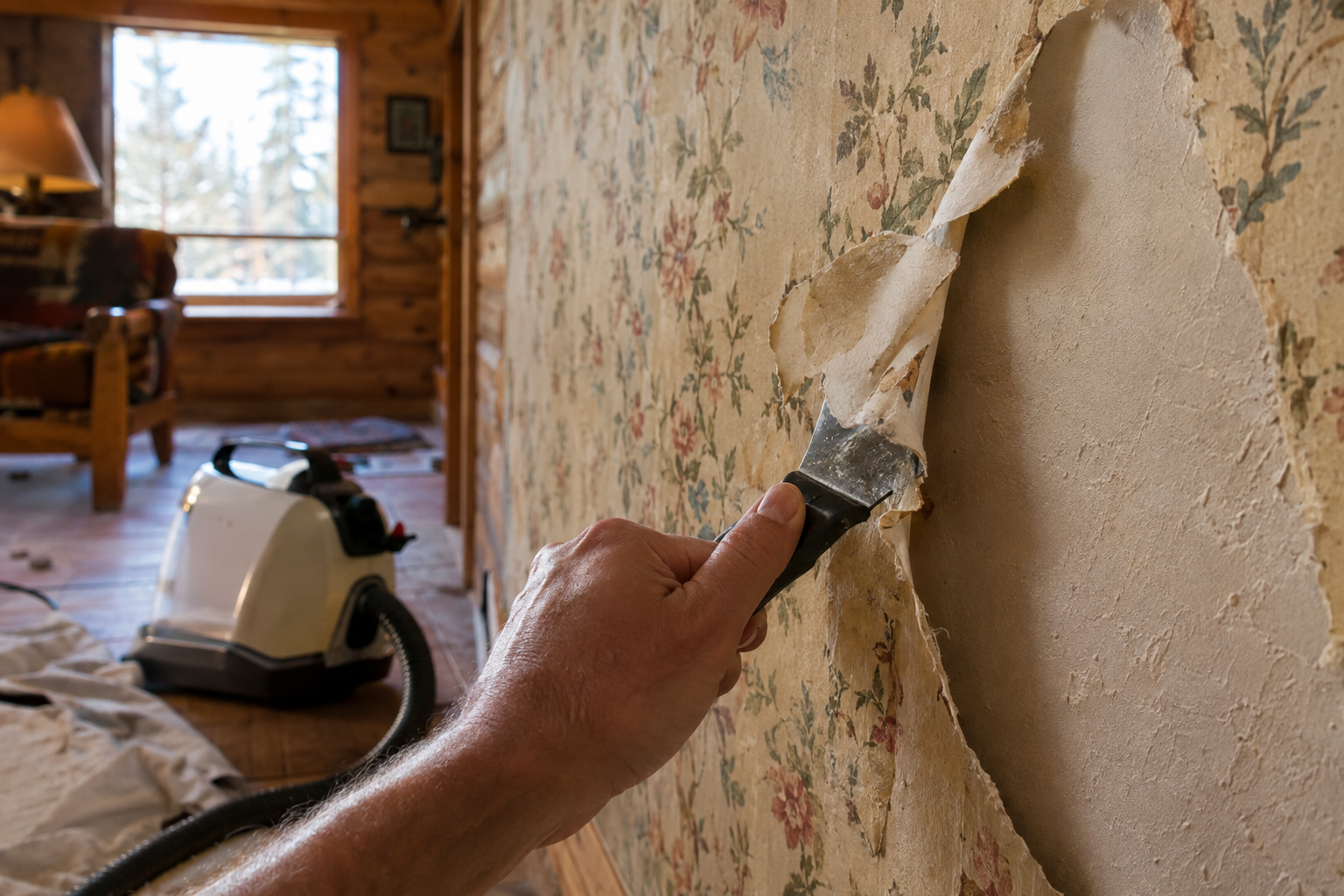
If you have exterior work you've been putting off, the next week or two is genuinely the last realistic window before the odds tip against you. This isn't a "sometime this fall" situation — it's closer to "before the weekend after next." Once that first real frost hits, most exterior projects are better off waiting for spring than risking a rushed job in marginal, unpredictable conditions. Interior work, by contrast, isn't affected by any of this — if your project can wait, moving it indoors sidesteps the whole timing problem entirely.
If you're not sure whether your specific project still fits in the window, that's exactly the kind of question worth a quick call rather than guessing based on how warm today happens to feel. A clear afternoon in late September at 6,750 feet can be deceiving — it's the overnight low that actually determines whether paint applied that day has a real chance to cure properly.
A Few Things Worth Knowing
How much time is actually left to paint exteriors in Big Bear this year?
Realistically, about one to two weeks from now, given that frost probability climbs from roughly 20% to 50% between September 12 and September 24, and reaches 80% by early October.
Can I still paint if it's warm during the day, even if nights are getting cold?
Not reliably. Paint continues curing well into the evening and overnight hours, so a cold night after a warm day can still compromise the finish even if the application itself happened in good conditions.
What happens if paint doesn't fully cure before a frost?
It can result in poor adhesion, a softer or more vulnerable finish, and visible texture or sheen issues once the coating fully sets under conditions it wasn't designed to cure in.
Should I just wait until spring at this point?
For exterior projects with real time constraints, waiting until reliable warm-season conditions return in late spring is often the safer call than rushing a job into a shrinking window.
Does this timing issue affect interior painting too?
No. Interior projects aren't affected by outdoor overnight temperatures and can proceed regardless of the exterior season closing.
Don't let this window close on an exterior project you've been planning all year.
Call Big Bear Painters today at (909) 415-5374 — we'll tell you honestly whether there's still enough time to do it right, or whether it makes more sense to wait for spring.