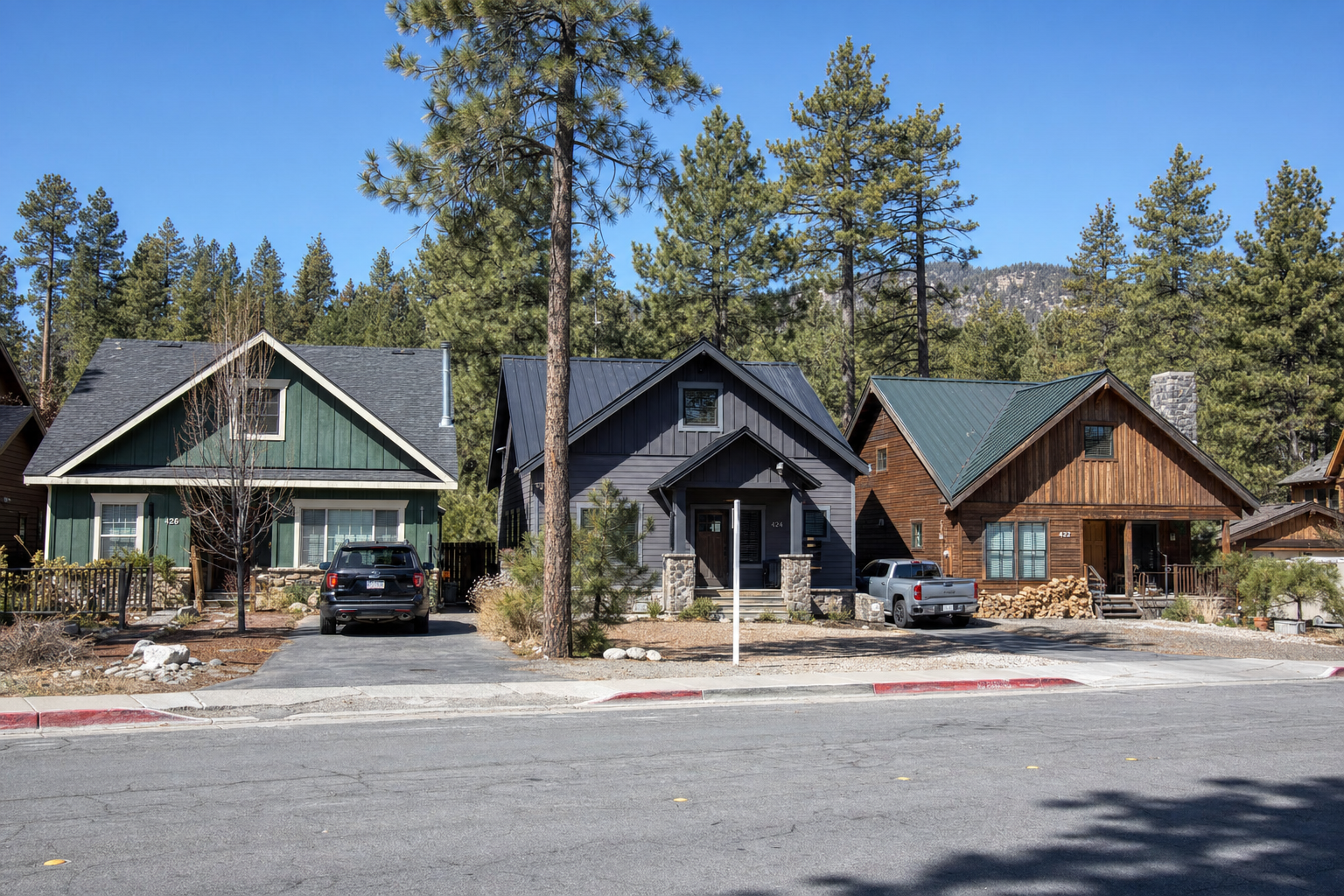
Quick answer: Big Bear sits within a CAL FIRE-designated Very High Fire Hazard Severity Zone, and under California's existing defensible space law (Public Resources Code §4291), some jurisdictions and HOAs in these zones already require Class A fire-rated exterior paint. A separate, newer rule — "Zone 0," covering the first five feet around a structure — is still in draft form statewide and not yet enforceable, but insurers are already factoring documented fire-resistant upgrades into coverage decisions. Not every paint product qualifies, and some common coatings are now being rejected outright in fire zones.
What Does "Class A Fire-Rated" Paint Actually Mean?
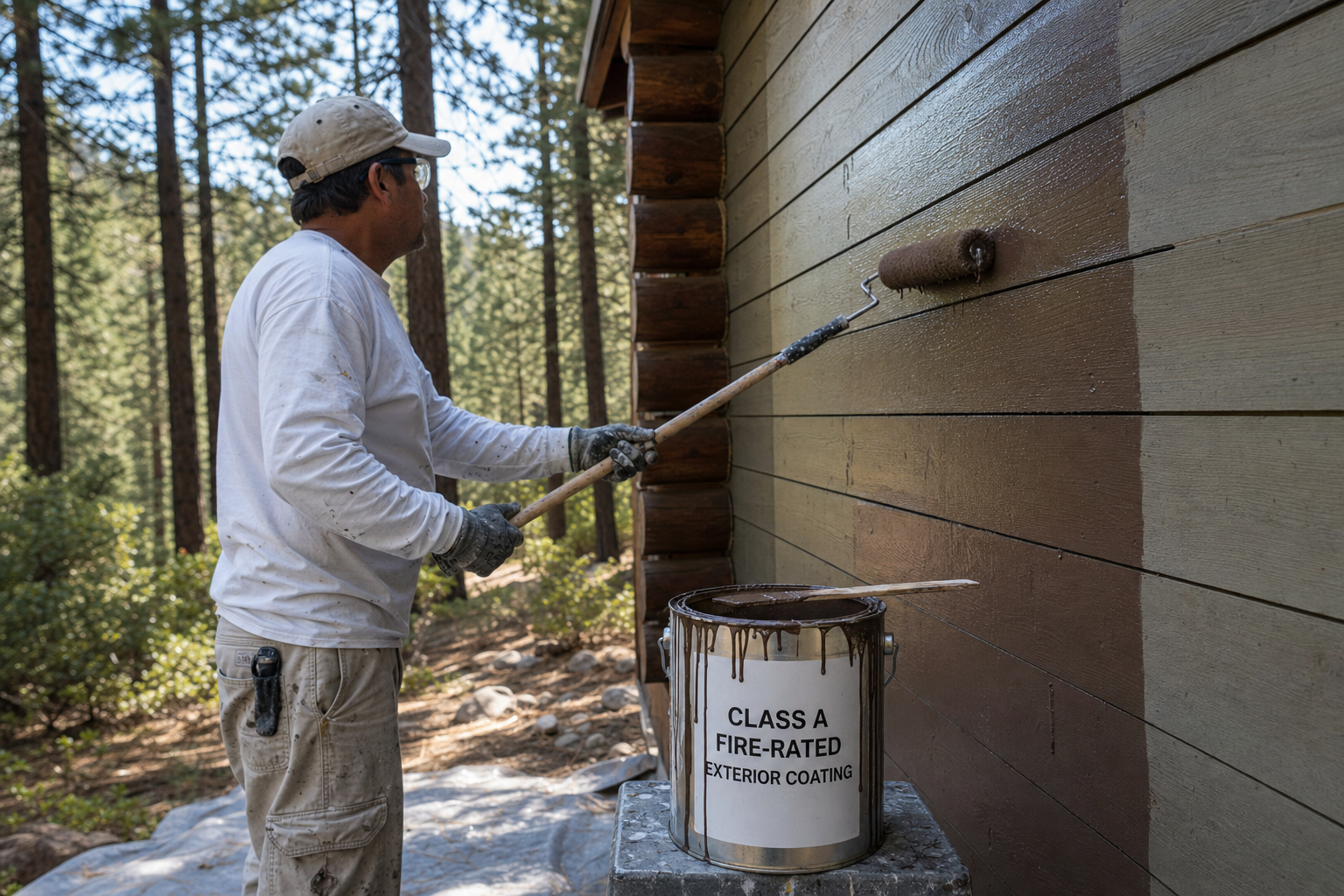
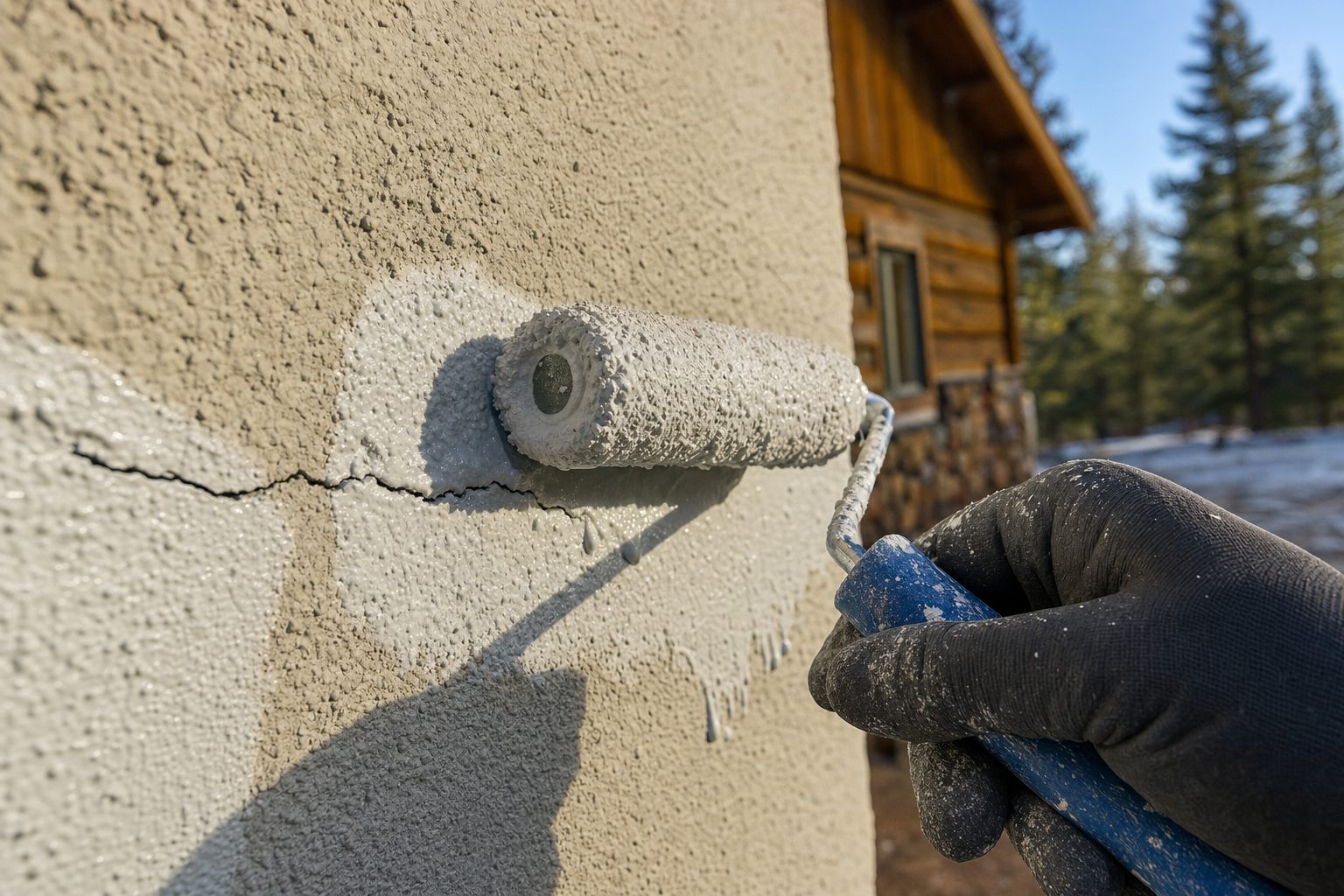
Paint and coating products are tested under ASTM E84 and rated by how much they slow flame spread across a surface, with Class A being the highest rating available for exterior use. Several major manufacturers — Sherwin-Williams Loxon XP, Dunn-Edwards EVERSHIELD, and Benjamin Moore Aura Exterior among them — meet Class A when applied according to manufacturer specification. That last part matters: a Class A-rated product applied incorrectly, at the wrong thickness or over the wrong substrate, doesn't necessarily deliver Class A performance in practice.
Is Fire-Resistant Paint Actually Required in Big Bear?
It depends on your specific jurisdiction, HOA, and insurer, but the underlying exposure is real: Big Bear falls within CAL FIRE's Very High Fire Hazard Severity Zone designation, the same category driving stricter defensible space enforcement statewide following the 2025 Palisades and Eaton fires. Some California counties and HOAs in high and very-high fire hazard zones already require Class A fire-rated exterior paint under existing defensible space law, and that trend has been accelerating rather than slowing down. Whether or not a specific requirement currently applies to your property, it's worth checking with your HOA or local building department before your next repaint — being ahead of a requirement is a lot cheaper than repainting to meet one after the fact.
What's Coming: California's "Zone 0" Ember-Resistant Rule
It's worth being precise here rather than overselling it: Zone 0 — a proposed rule covering the first five feet around a structure — was created by Assembly Bill 3074 back in 2020, but as of today it's still in draft form at the state level, with the Board of Forestry's latest draft released in April 2026 and a phased, multi-year implementation planned once it's finalized. A few cities, including San Diego, have already adopted their own local Zone 0 ordinances ahead of the state. It isn't statewide law yet — but it's clearly the direction things are heading, and getting ahead of it now, especially on a repaint you were planning anyway, avoids paying twice.
The Coating Type That's Getting Rejected in Fire Zones
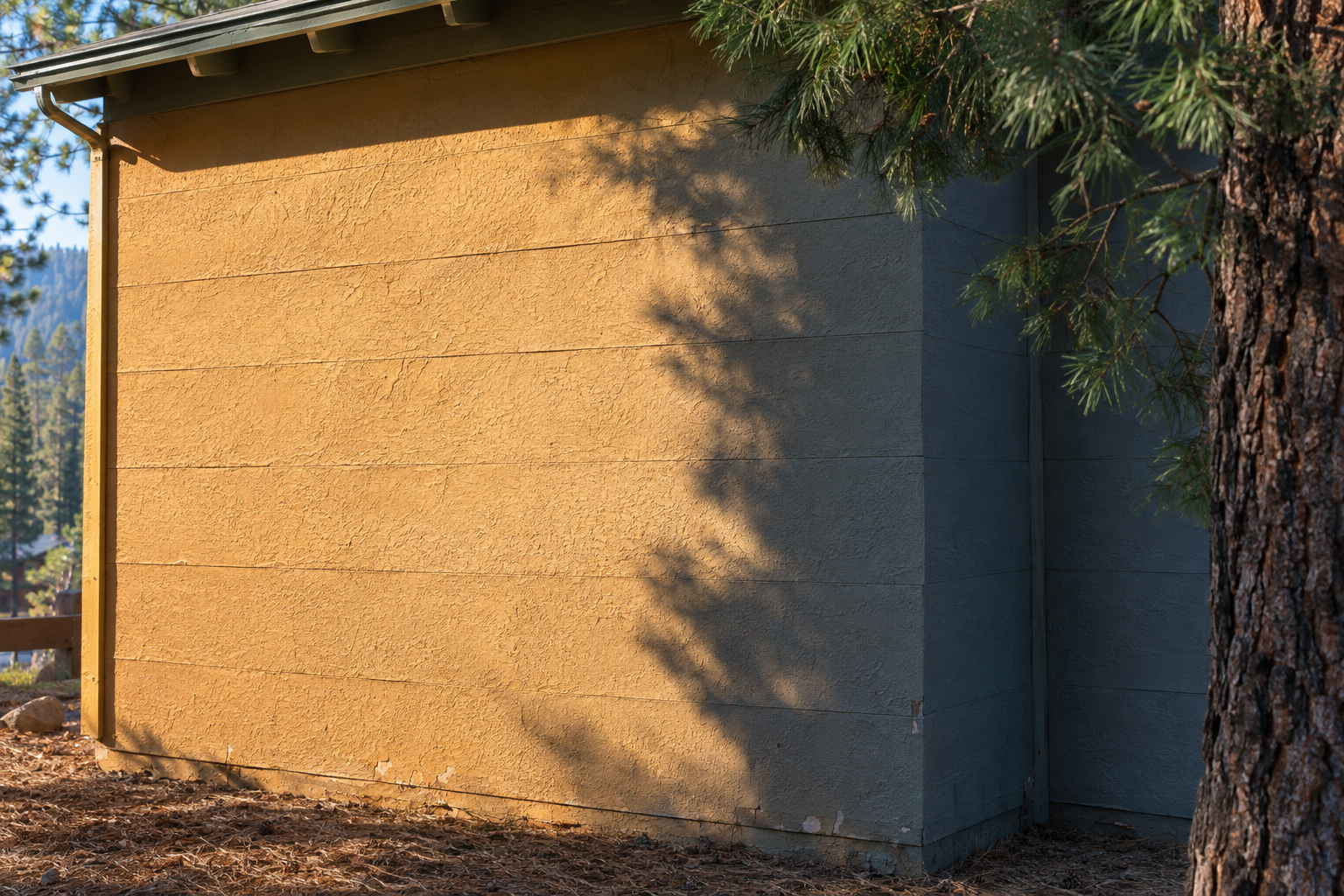
This is the kind of thing worth knowing before you pick a product, not after: heavy-bodied elastomeric coatings on wood siding are increasingly being rejected by HOAs and inspectors in fire-hazard zones, because they can blister under heat exposure and create gaps where wind-blown embers can catch — the exact failure mode defensible space rules are trying to prevent. If a previous paint job on your Big Bear property used an elastomeric coating, that's worth flagging before your next repaint rather than defaulting back to the same product.
Does Fire-Resistant Paint Actually Affect Your Insurance?
Increasingly, yes. Major insurers have tightened underwriting in California's wildfire-prone areas, and documented compliance with defensible space standards is now something several carriers factor into coverage decisions — with some offering premium discounts in the range of 10-15% for documented mitigation work. A dated invoice and product documentation showing a Class A-rated exterior coating is exactly the kind of paper trail an insurance agent can use to support a renewal or a discount request, the same way a documented electrical panel upgrade does.
What Should You Do Before Your Next Big Bear Repaint?
If a repaint is already on your list, this is the moment to address it — not after your HOA sends a notice or your insurer asks a question you can't answer. A quick pre-project checklist:
- Check your HOA's current paint requirements, since fire-zone HOAs are updating these faster than general awareness is catching up
- Confirm your coating choice is Class A-rated and appropriate for your siding material — not every fire-rated product works the same way on every substrate
- Avoid elastomeric coatings on wood siding in fire-hazard areas unless your specific HOA or inspector has explicitly approved it
- Keep your documentation — product data sheets and a dated invoice are what you'll want on hand if your insurer asks
FAQ
Is fire-resistant paint legally required in Big Bear right now?
It depends on your specific HOA, jurisdiction, and property. Some fire-hazard zones already require Class A fire-rated exterior paint under existing defensible space law, while the newer statewide Zone 0 rule is still in draft form and not yet enforceable.
What paint brands meet Class A fire rating for exterior use?
Sherwin-Williams Loxon XP, Dunn-Edwards EVERSHIELD, and Benjamin Moore Aura Exterior are commonly cited as meeting Class A per ASTM E84 testing when applied according to manufacturer specification.
Why are elastomeric coatings being rejected in fire zones?
Heavy-bodied elastomeric coatings can blister under heat exposure, creating gaps where wind-blown embers can catch — the opposite of what defensible space standards are trying to prevent.
Can fire-resistant paint lower my homeowners insurance premium?
Some insurers offer discounts, often in the 10-15% range, for documented wildfire mitigation work, though this varies by carrier. Keeping product documentation and a dated invoice supports that conversation with your agent.
What is California's Zone 0 rule, and does it apply to Big Bear yet?
Zone 0 is a proposed rule covering the first five feet around a structure, created by AB 3074 in 2020. As of today it's still a statewide draft, not yet enforceable, though it's expected to phase in over several years once finalized.
Planning a repaint in Big Bear? Get it done right the first time with a fire-zone-appropriate coating.
Contact Big Bear Painters for a free estimate.