If you own a cabin, A-frame, or vacation rental in the
Big Bear Valley and you're pricing out an exterior repaint, expect numbers that run higher than what your neighbor paid to paint a house in the valley below. That's not a contractor trying to take advantage of you — it's the reality of painting at 6,752 feet inside the
San Bernardino National Forest, where altitude, UV intensity, and the winter snowpack demand more prep, better materials, and more labor than any job at sea level in
Southern California.
This guide breaks down what exterior painting actually costs in Big Bear Lake, what drives the price up or down, and what to expect from any legitimate contractor working in
San Bernardino County.
What Does Exterior Cabin Painting Cost in Big Bear Lake?
Most exterior paint jobs on a standard single-family cabin in Big Bear Lake run between
$4,000 and $7,000, with the final number depending on square footage, siding type, story count, and how much prep work is required. Here's a rough breakdown by project type:
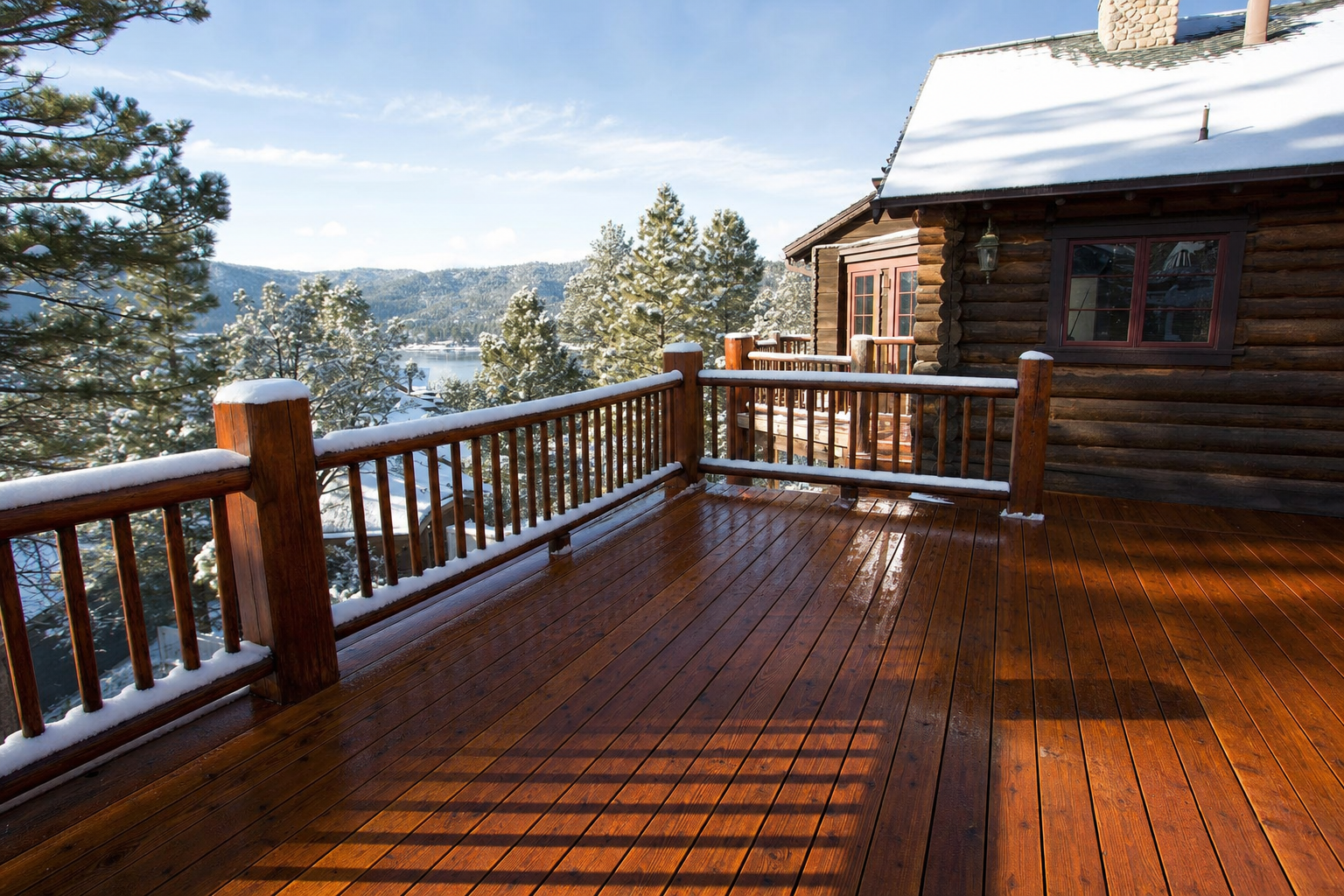
Project TypeTypical RangeStandard cabin exterior (1,000–1,500 sq ft)$4,000–$5,500Larger home or two-story exterior (1,500–2,500 sq ft)$5,500–$7,500Log home or T&G siding repaint/restain$5,000–$8,500Deck staining (standard mountain deck)$1,200–$2,500Cabin refinishing (strip, repair, prime, repaint)$6,500–$12,000+
These are Big Bear Valley contractor prices for 2026 and assume full prep — pressure washing, scraping, sanding, caulking, and priming — is included in every job, because in this environment it always needs to be.
Why Does It Cost More to Paint a Cabin at Big Bear's Elevation?
Three factors make exterior painting in Big Bear Lake more expensive than a comparable job in Redlands, Riverside, or anywhere else below 4,000 feet.
UV radiation. At 6,752 feet in the San Bernardino National Forest, UV intensity runs roughly 25–30% higher than at sea level. Paint degrades faster. Primers have to bond harder. The products that hold up at this elevation —
Sherwin-Williams Duration Exterior and
Dunn-Edwards EVERSHIELD — cost significantly more per gallon than the builder-grade products a generalist contractor might spec. A contractor who cuts corners on product selection will offer a cheaper bid and a paint job that starts fading and chalking within two seasons.
Freeze-thaw cycles. Big Bear Lake sits at the edge of the
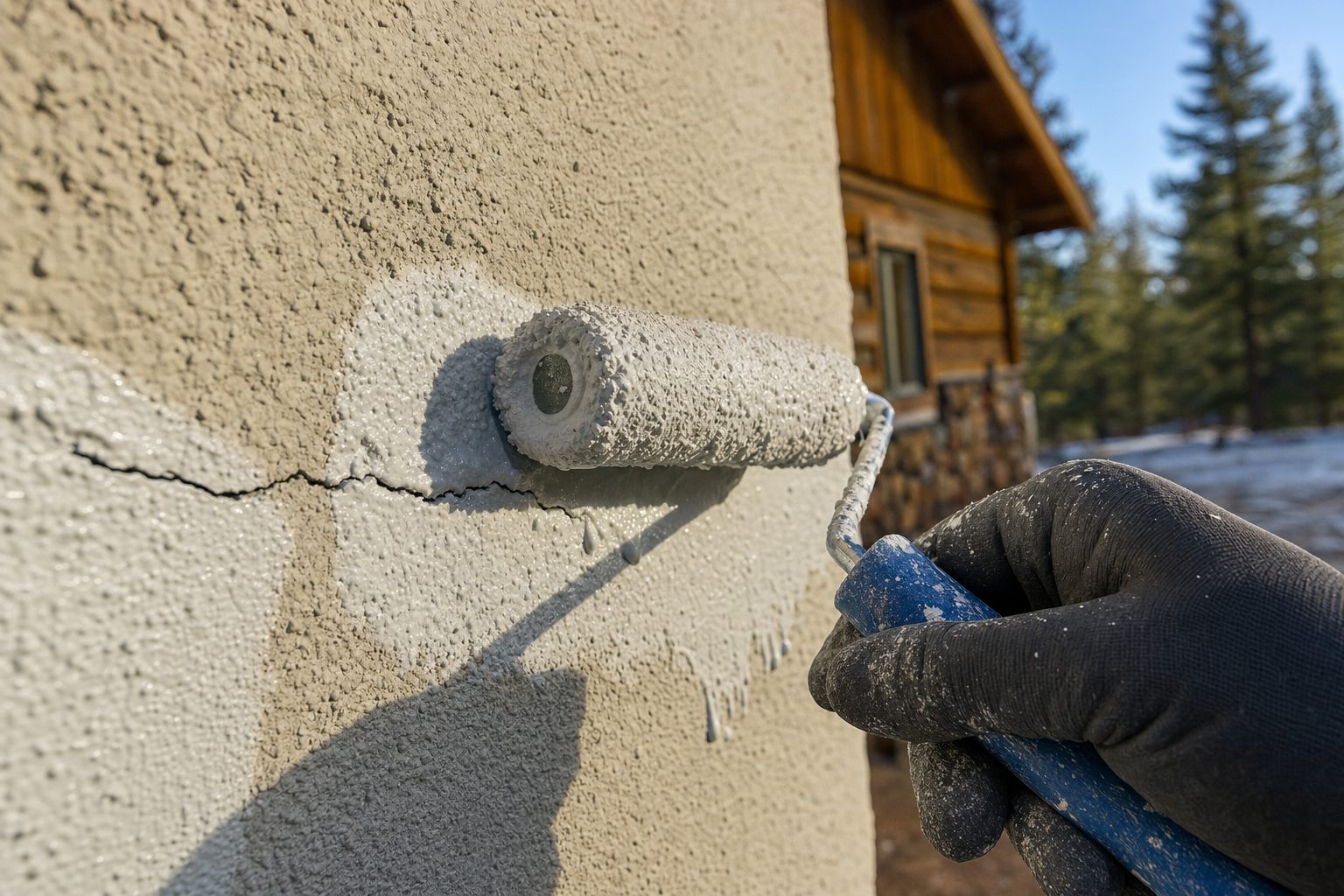
San Bernardino Mountains and experiences freeze-thaw cycles from November through March, sometimes later into spring. Every cycle expands and contracts the wood fibers in board-and-batten siding, tongue-and-groove cabins, and log homes. Ordinary latex paint cannot flex through that movement without cracking. Elastomeric formulas and penetrating oil-based stains cost more, take longer to apply correctly, and require more careful surface prep — all of which shows up in the estimate.
Prep time. Mountain cabins accumulate pine sap from
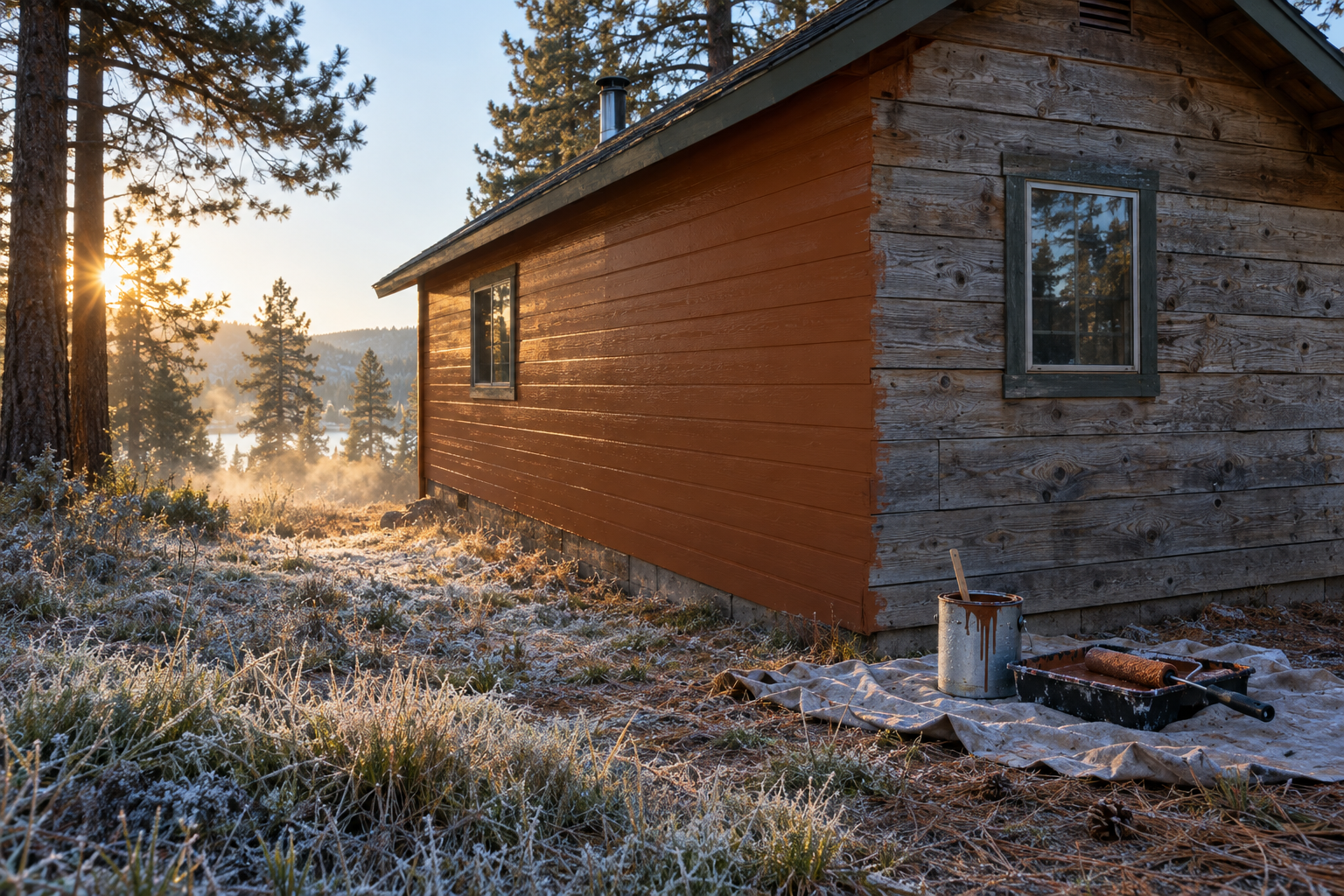
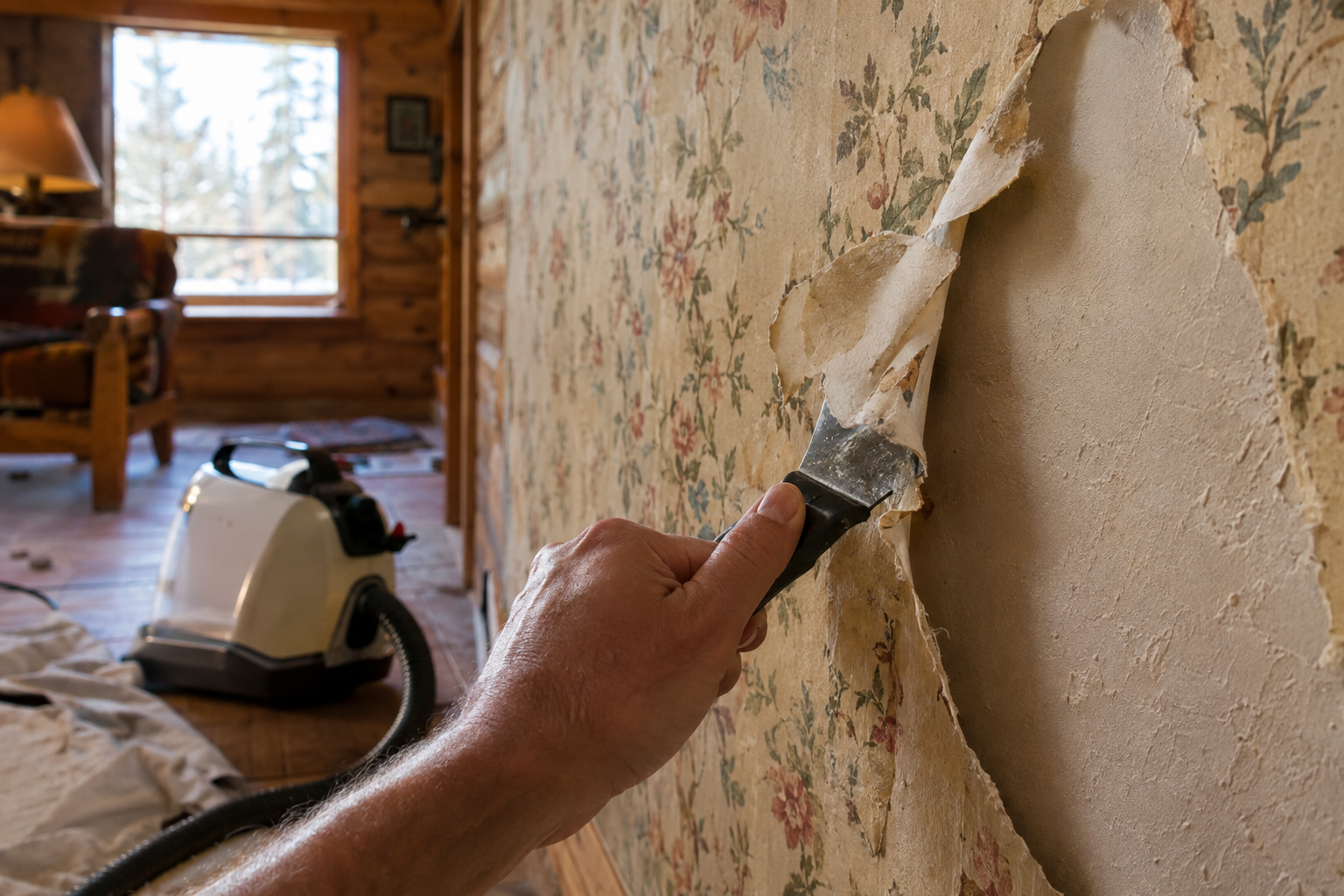
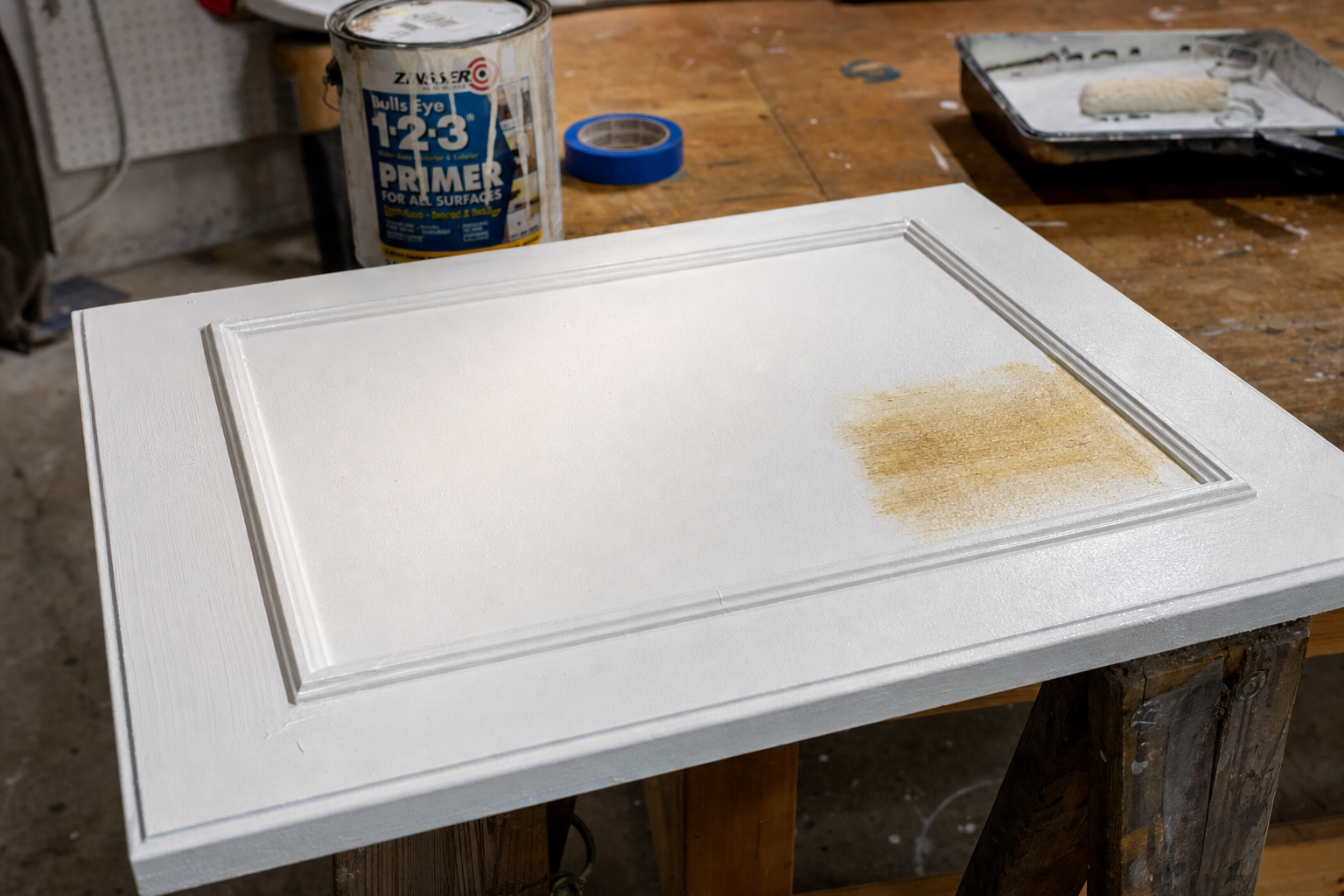
ponderosa pines, mildew on north-facing walls shaded year-round, algae near the lake, and years of UV-oxidized paint that has to come completely off before a new coat will bond. On a Big Bear City cabin that hasn't been painted in six or seven years, prep work — pressure washing, hand scraping, sanding, wood repair, and caulking — can take as long as the painting itself. Any contractor who skips prep to cut time is setting you up for a paint job that fails within eighteen months.
What Factors Drive the Price Up on Your Specific Job?
Does the type of siding change what you'll pay?
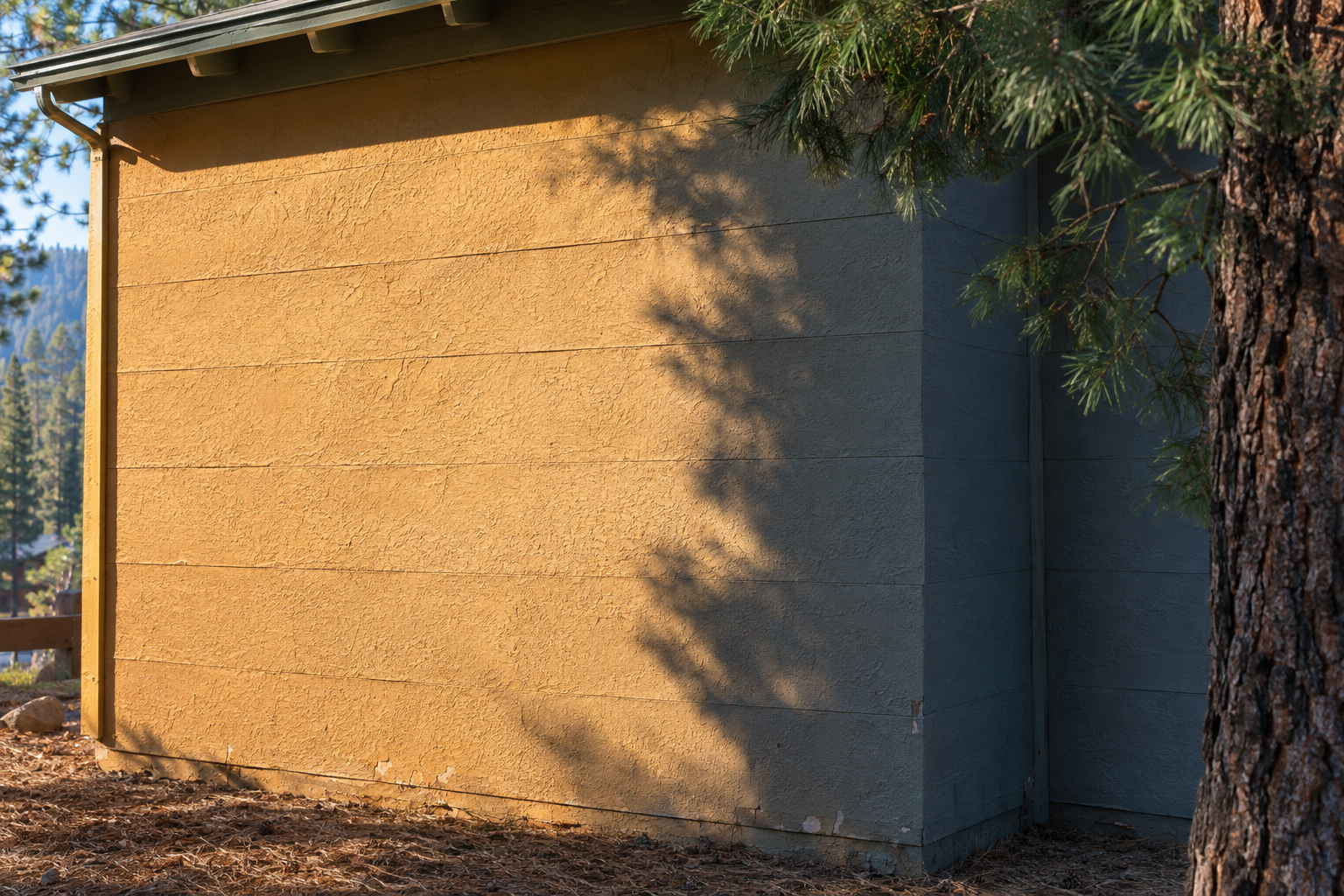
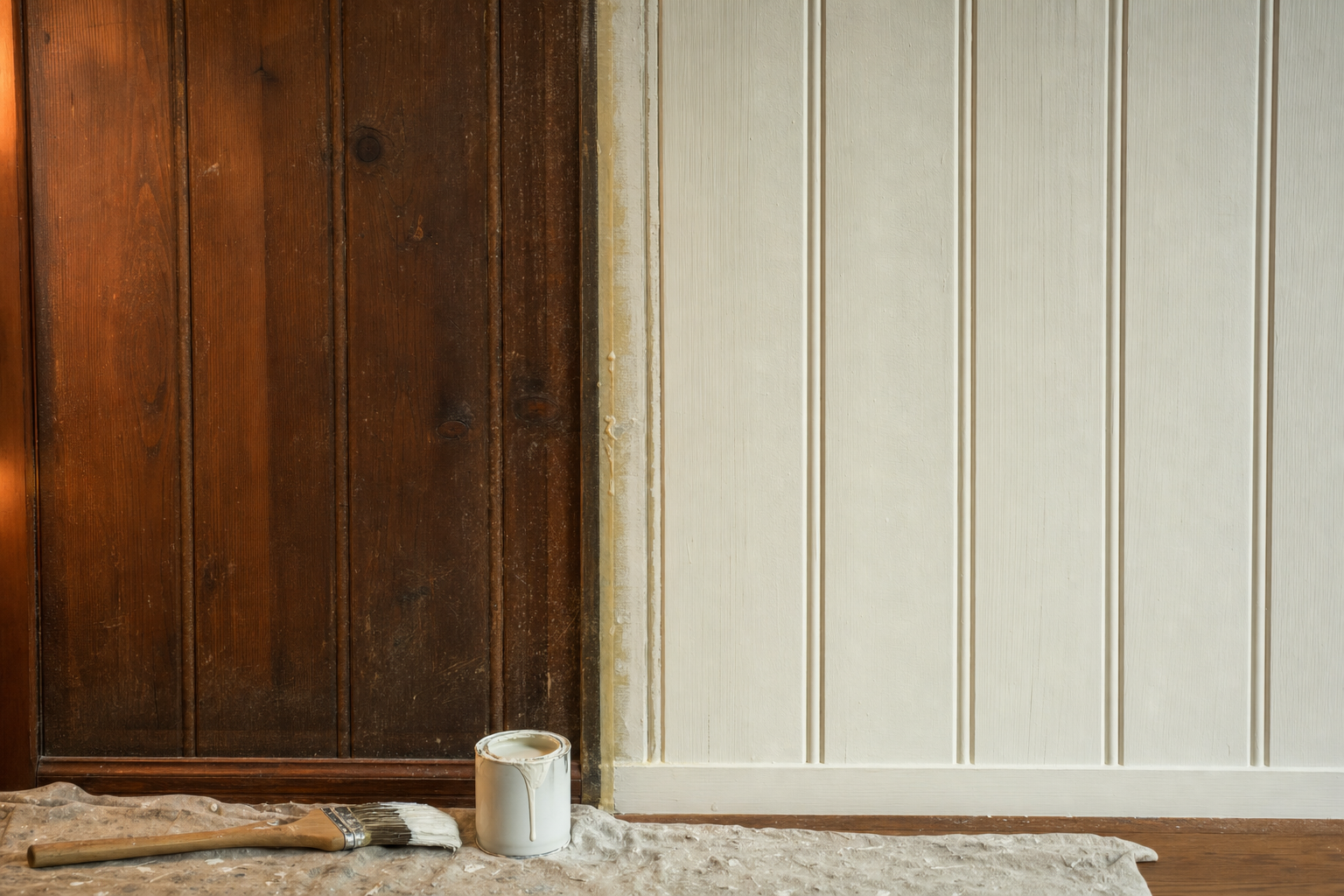
Yes — siding type is one of the biggest variables in a Big Bear exterior painting estimate. Standard painted wood siding (board-and-batten, lap siding, shingle) is the baseline. Log homes and round-log siding are more expensive because they require penetrating oil-based stains rather than surface paint, back-brushing technique to push the stain into the wood grain, and typically more prep to strip failing previous coatings. T&G siding falls in the middle — it holds paint reasonably well but requires careful caulking at every joint to prevent moisture infiltration at Big Bear's humidity levels.
Does the number of stories affect the cost?
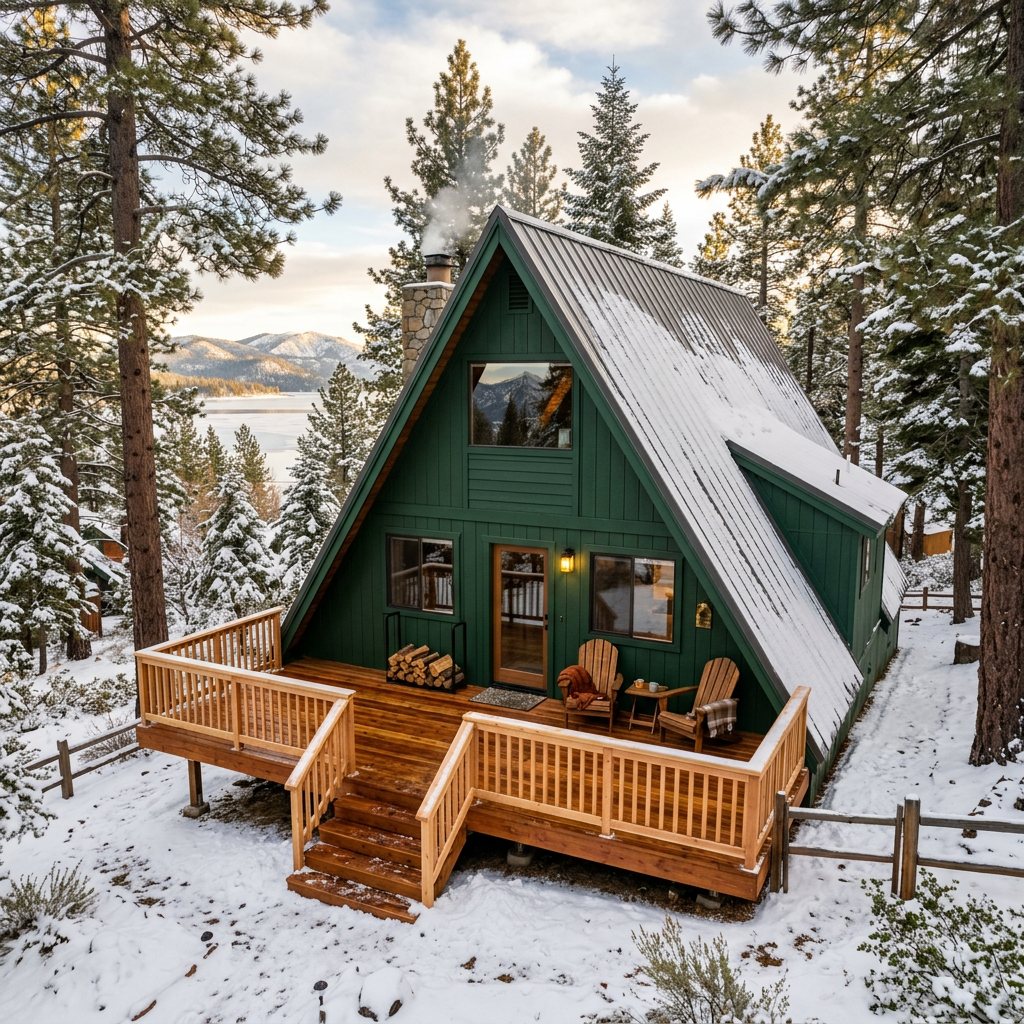
Single-story cabins are the most affordable to paint because a painter can reach most surfaces from ground level or a short ladder. Two-story homes require scaffolding or extension ladders on steeper sections, and the A-frames common in
Moonridge and Sugarloaf present unique geometry — the steep roof pitch and angular walls take more time to mask, cut in, and paint carefully. Expect to add $500–$1,500 to a base estimate for a two-story or A-frame structure.
How much does prep work add to the total?
On a cabin that's been properly maintained and painted within the last four years, prep is a morning of work — pressure wash, light scraping, caulking touch-ups, and primer on bare spots. On a cabin that hasn't been painted since 2019 or earlier, or one where a previous contractor used the wrong product, prep can add $800–$2,500 or more to the job. Wood repair — replacing checked boards, fixing rot at the base of posts and trim, reseating popped nails — is more common on Big Bear Valley cabins than anywhere else in San Bernardino County because of the moisture and freeze-thaw exposure.
Does location in the valley affect price?
Slightly. Contractors working from the valley floor typically quote the same rate across Big Bear Lake,
Big Bear City, Moonridge, and Sugarloaf since they're all within a 15-minute drive. Properties in
Fawnskin on the north shore, Arrowbear, or more remote areas above
Baldwin Lake may carry a small travel premium.
Running Springs and the
Lake Arrowhead area are typically a separate market from the Big Bear Valley.
What Should a Legitimate Big Bear Painting Estimate Include?
A written estimate from a licensed painting contractor in San Bernardino County should always specify: the full scope of prep work, the number of coats of primer and finish paint, the specific products being used by name and sheen, the payment schedule, and the warranty or guarantee terms. If an estimate doesn't list paint products by name, ask — and if the answer is a generic or unfamiliar brand with no published spec sheet for high-altitude use, that's a red flag.
Any contractor working legally in California must hold an active license with the
California Contractors State License Board (CSLB) and carry general liability and workers' compensation insurance. For painting contractors, the relevant CSLB license classification is
C-33 (Painting and Decorating). You can
verify any contractor's license status on the CSLB website at no cost before signing anything.
Derek Walsh and the Big Bear Painters team are fully licensed and insured — proof of coverage is available in writing before any job begins.
How Often Will You Need to Repaint a Big Bear Cabin Exterior?
Most wood-sided homes and cabins in Big Bear Lake, Moonridge, and Sugarloaf need a full exterior repaint every
4–6 years under normal conditions. South and west-facing elevations — catching the most direct sun off
San Gorgonio Mountain — often hit the 4-year mark first. North-facing walls may hold paint longer but are more susceptible to mildew and algae growth that requires treatment before the next paint cycle.
Log homes and T&G cabins using penetrating oil-based stains rather than surface paint typically need restaining every
3–5 years because the stain absorbs into the wood rather than forming a surface film — and as the wood naturally expands, contracts, and weathers at elevation, the stain depletes faster than film-forming products would at lower elevations.
The signs you're due for a full repaint rather than touch-ups: visible peeling or bubbling anywhere on the siding, chalking when you run your hand along the surface, noticeable color fade on sun-exposed walls compared to shaded sections, or bare wood showing through in high-wear areas around windows and trim.
Frequently Asked Questions
Is it cheaper to paint my Big Bear cabin myself?
Material costs for a quality exterior paint job on a standard cabin run $600–$1,200 in product alone if you use Sherwin-Williams Duration or Dunn-Edwards EVERSHIELD at the quantities required. The savings from DIY are real, but the prep work — pressure washing, scraping, wood repair, caulking — is where most amateur jobs fail. At Big Bear's elevation, inadequate prep is the primary reason paint jobs fail early.
What's the difference between painting and staining a log home in Big Bear?
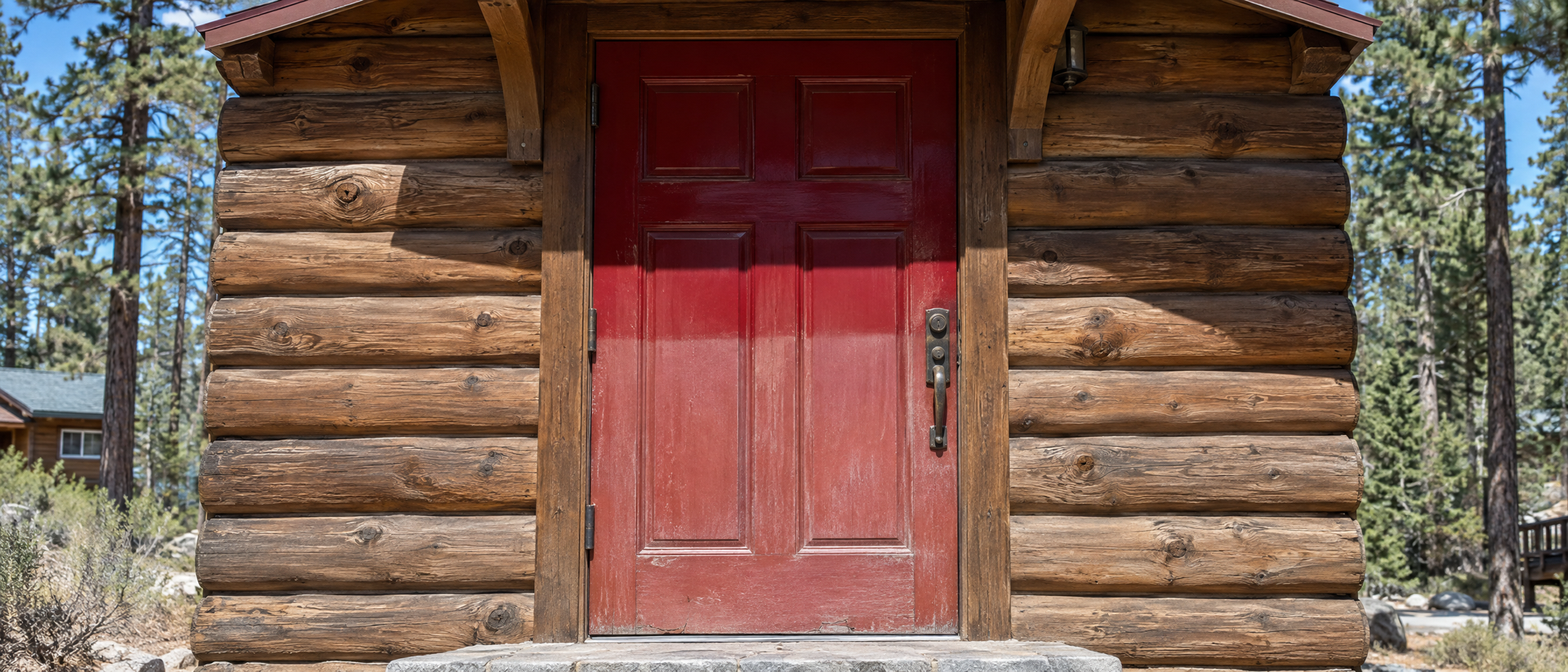
Log homes in Big Bear City, Moonridge, and Fawnskin require penetrating oil-based stains, not surface paints. The wood needs to breathe, and a film-forming paint traps moisture inside the logs — which accelerates rot and checking at Big Bear's temperature swings. A penetrating stain soaks into the wood fibers, provides UV and moisture protection, and allows the wood to move through freeze-thaw cycles without cracking the finish.
Do I need to be in Big Bear when my cabin gets painted?
No. The majority of our clients are second-home owners based in
Los Angeles,
Orange County, and the
Inland Empire who aren't able to be on-site. We coordinate access through a lockbox or property manager, send photo updates throughout the job, and deliver final walkthrough documentation before marking the project complete.
Will fresh paint improve my Airbnb or VRBO listing performance?
Consistently yes. A fresh exterior repaint dramatically changes listing photos, and
Airbnb and
VRBO guests frequently mention cabin condition and freshness in reviews. Interior painting carries an even faster ROI for rental hosts: new paint photographs better, guests rate cleanliness higher, and hosts report measurable improvements in nightly rates within the first booking cycle after a refresh.
Big Bear Painters serves Big Bear Lake, Big Bear City, Moonridge, Sugarloaf, Fawnskin, Baldwin Lake, Arrowbear, and Running Springs.
Get a free estimate for your Big Bear property →